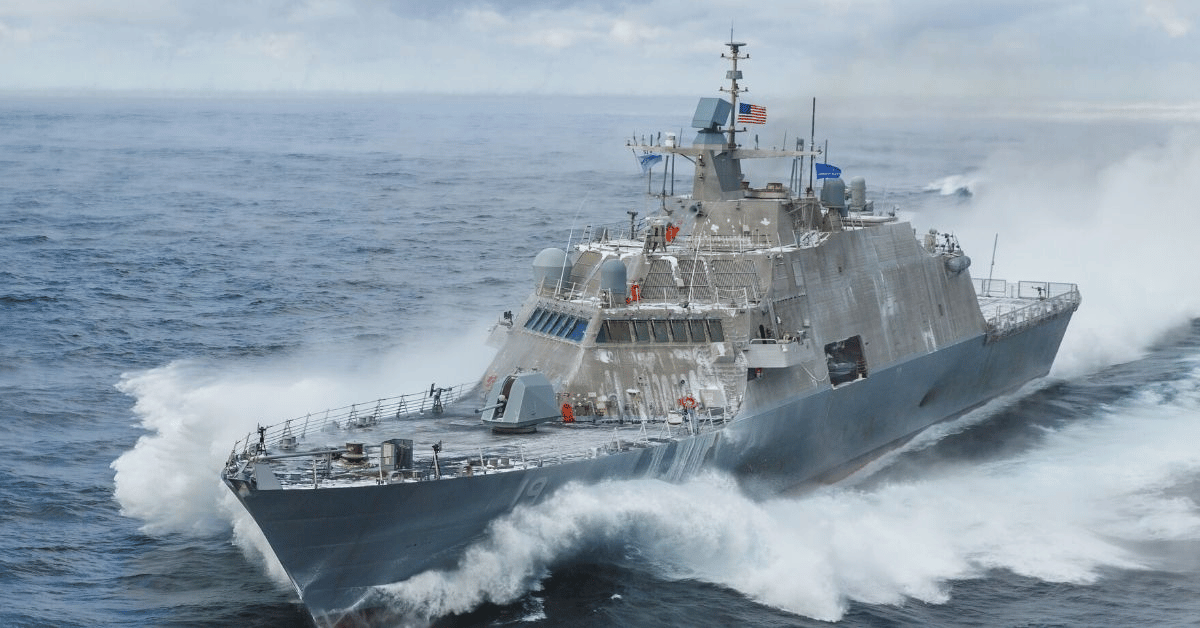
Two Navies, One Port: U.S. and Bahamian Forces Deepen Maritime Alignment
The recent port visit of USS St. Louis and USCGC Pablo Valent to Nassau is more than a diplomatic gesture; it is a calibrated signal about the nature of ocean security. When a littoral combat ship and a Coast Guard cutter share a berth with Bahamian forces, the message is practical, not ceremonial. Maritime alignment in the Caribbean means shared awareness of who moves through these waters and why. This is the same logic that drove the U.S. Navy to sink a decommissioned frigate off Scotland during a joint exercise with the UK, Decommissioned frigate sunk off Scotland in joint naval exercise, a live-fire demonstration of interoperability that tests how allied navies coordinate under pressure. Both actions validate a measurable commitment: partnerships are not abstract; they are exercised, calibrated, and repeated.
For our readers, researchers, policymakers, and ocean enthusiasts, the practical takeaway is that security cooperation directly supports ocean intelligence. The same vessels that conduct joint patrols also collect empirical data on traffic patterns, environmental conditions, and illegal activity. When the U.S. Coast Guard recently seized 25,000 pounds of cocaine across three interdictions, Maritime Interdictions Yield 25,000 Pounds of Cocaine, Supporting Ocean Security, that operation relied on the same integrated data ecosystem that tracks vessel movements and flags anomalies. A port visit in Nassau strengthens the human and technical networks that make those interdictions possible. It is not about showing flags; it is about ensuring that the information sharing between navies remains real-time and peer-reviewed by operations at sea.
What stands out here is the deliberate focus on alignment rather than presence. The U.S. Navy could simply transit Bahamian waters; instead, it chooses to dock and train. That choice reflects an understanding that ocean stewardship requires shared responsibility, not unilateral control. Compare this with the recent five-hour battle in the Gulf of Aden, where Iraqi Clan Retakes Hijacked Tanker in Five-Hour Gulf of Aden Action, a different kind of maritime response, driven by local actors rather than state navies. The contrast is instructive: in the Bahamas, cooperation is institutional and integrated; in the Gulf of Aden, it is improvised and tribal. Both achieve security, but the methods reflect different levels of integrated planning. The Nassau visit reinforces the value of the former, predictable, measurable, repeatable.
The specific consequence to watch is whether this alignment translates into shared climate indicators. The same ships that secure waters can carry sensors that measure ocean temperature, salinity, and acidification. If the U.S. and Bahamian forces integrate environmental monitoring into their patrols, they turn a security asset into a climate asset. That would be a validated, longitudinal contribution to ocean intelligence, and a concrete reason to watch how this partnership evolves beyond the port call.