ocean data
ocean data on World Data Ocean: a running collection of 376 stories we have gathered and hand-picked because they are worth your time. Every post here touches on ocean data in some way — the news, the analysis, the deep dives, and the occasional surprise find. A Global Hub for Ocean Intelligence 4 World Data Ocean is a centralized digital platform where researchers, scientists, and ocean enthusiasts converge to explore, analyze, and… New stories are added to this page as we find them, so check back if you want to keep up with what is happening around ocean data, or subscribe to the RSS feed to get them as soon as they are published. Browse the collection below, or head back to the homepage to see everything World Data Ocean is covering right now.

Ocean-aware deep learning for civilian maritime object detection and tracking in complex ocean environments: a comprehensive review
Reliable maritime object detection and tracking are paramount for civilian ocean engineering, supporting applications from vessel traffic monitoring to environmental risk assessment. However, dynamic ocean conditions—including sea clutter and limited data—present significant challenges. This review synthesizes recent advances in ocean-aware deep learning, examining techniques utilizing optical, radar, and other sensor data alongside AIS information. Addressing limitations in annotation and real-time deployment, future research should prioritize physics-informed learning and data fusion.

Watch: U.S. Sinks Vessel Used As ‘Floating Refueling Station’ For Drug Trafficking Operations
U.S. authorities have successfully sunk a vessel utilized as a “floating refueling station” for illicit drug trafficking operations in the Eastern Pacific. Intercepted September 2nd in international waters by U.S. Southern Command (SOUTHCOM), the vessel represented a significant disruption to transnational criminal networks. This action underscores the ongoing commitment to maritime security and combating illegal activities at sea. For deeper insights into maritime object detection technologies supporting such operations, explore our review of "Ocean-aware deep learning."
Effects of wave-powered water pump upwelling on kelp mariculture: a case study for Gulf of Maine
This study investigates the feasibility of wave-powered upwelling to enhance kelp mariculture productivity in the Gulf of Maine, a region experiencing nutrient limitation and seasonal warming. Through a coupled physical-biogeochemical model calibrated with empirical oceanographic data, researchers estimate that wave-powered upwelling can reduce water temperatures by 1.0 ± 0.15 °C and increase nitrate concentrations by 0.1−1.1 µmol L−1, potentially yielding an additional 9.5%–10%+1.6% kelp biomass annually. This framework highlights wave-powered upwelling as a promising, scalable strategy for sustainable aquaculture, as further explored
Dynamics of the strong Wyrtki Jet events in the eastern Indian Ocean in 2014
Recent research illuminates the dynamics of exceptional Wyrtki Jet events in the eastern Indian Ocean, specifically analyzing a pronounced 2014 occurrence. Utilizing satellite drifter data and mooring observations, scientists documented unprecedented zonal velocities—reaching 1.2 m/s, double the typical spring climatology—and an atypical eastward current in July. Simulations utilizing the LICOM ocean model reveal that wind-driven Kelvin and Rossby waves critically modulate these events, with higher baroclinic modes playing a significant role.

ROYAL CARIBBEAN GROUP EXTENDS COLLABORATION TO CAPTURE CRITICAL OCEAN CONSERVATION DATA ONBOARD - Royal Caribbean Press Center
Royal Caribbean Group is deepening its commitment to ocean conservation through an expanded collaboration to gather vital data at sea. Leveraging its global fleet, the company will contribute to a growing integrated data ecosystem, providing valuable longitudinal insights into ocean health. This initiative underscores the importance of real-time, empirical observation for informed stewardship. Further exploration of related climate indicators can be found in "How global warming shakes the Earth," which details seismic data revealing the strengthening of ocean waves.
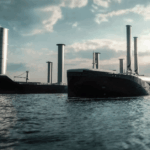
Norway Launches NOK 68 Million Project to Accelerate Wind-Powered Shipping
Norway is accelerating the transition to sustainable maritime transport with a new NOK 68 million project focused on integrating wind propulsion technology into ship systems. This initiative seeks to demonstrably improve fuel efficiency and reduce emissions within the shipping sector, a critical area for climate action. The project represents a significant step towards validated, real-time ocean intelligence solutions for a greener future. For further insights into emissions reduction strategies, explore our related article, "NORDEN Becomes First Maritime Carrier To Deliver Verified Emissions Reductions."
How global warming shakes the Earth: Seismic data show ocean waves gaining strength as the planet warms - PreventionWeb
Emerging research reveals a previously unquantified consequence of global warming: amplified seismic activity linked to intensifying ocean waves. Utilizing a network of seismic sensors, scientists have documented a measurable increase in low-frequency ground vibrations correlated with rising sea temperatures and wave energy. This phenomenon highlights the far-reaching impacts of climate change, extending beyond surface observations.
GLODAP - NOAA Pacific Marine Environmental Laboratory (PMEL) (.gov)
GLODAP, managed by NOAA's Pacific Marine Environmental Laboratory (PMEL), represents a globally coordinated effort to generate and archive high-resolution ocean biogeochemical data. This critical initiative provides validated, empirical measurements of key climate indicators, including dissolved gases and nutrients, across diverse oceanic regions. GLODAP data enables rigorous assessments of ocean carbon uptake and supports climate models with calibrated, real-time information. For further exploration of ocean science education initiatives, see our related article on the TRACX Program.
Ocean water samples yield treasure trove of RNA virus data - news.osu.edu
Recent analysis of ocean water samples has revealed a surprisingly diverse and extensive population of RNA viruses, representing a significant advancement in ocean virology. This discovery, detailed in a new study, underscores the critical role of viruses in marine ecosystems and highlights a previously underestimated component of ocean biodiversity. Further exploration of this “treasure trove” of viral data promises to refine our understanding of ocean health and climate indicators.
Beach recreation on the US East Coast: trip counts, use patterns, and economic values
This paper presents a validated, region-wide profile of beach recreation along the U.S. East Coast, integrating trip counts, use patterns, and economic valuations. Analysis of 2014 household survey data across 275 ocean beaches (Massachusetts to South Carolina) reveals approximately 118 million annual trips and 226 million beach days. Utilizing a travel cost random utility model, the study estimates per-trip values ranging from $59 to $103 (2025 dollars), informing benefit–cost analyses and coastal planning.
Data initiative sets sights on tackling global ocean challenges - National Oceanic and Atmospheric Administration (.gov)
The National Oceanic and Atmospheric Administration (NOAA) has launched a new data initiative focused on addressing pressing global ocean challenges. This effort underscores the increasing need for comprehensive, validated ocean intelligence to inform effective stewardship. The initiative will leverage integrated data ecosystems and real-time climate indicators to improve predictive modeling and response strategies. Complementing this work, the OceanEye initiative, as detailed by the European Commission, exemplifies a broader commitment to sustained ocean observation and data collection.
Volvo Ocean Race delivers critical scientific data on microplastics in the world's oceans - Sail-World.com
The Volvo Ocean Race has emerged as a vital platform for oceanographic research, delivering a substantial dataset on microplastic distribution across global waters. This longitudinal study, conducted during the demanding race conditions, provides empirically validated insights into a critical environmental challenge. The collected data contributes significantly to our understanding of microplastic transport and accumulation patterns. For further exploration of innovative data collection methods, see “These sustainable floats gather vital data about the ocean” from the World Economic Forum, showcasing complementary approaches to ocean monitoring.
These sustainable floats gather vital data about the ocean - while using the water to recharge - The World Economic Forum
World Data Ocean is advancing ocean monitoring with innovative, sustainable floats that harness the power of water to recharge, as highlighted by the World Economic Forum. These devices gather critical, real-time data, contributing to a more comprehensive understanding of ocean dynamics and climate indicators. This integrated approach supports longitudinal analysis and validation of empirical findings. For deeper insights into the importance of data sharing for ocean sustainability, explore "4 reasons why ocean industry should embrace data sharing" on weforum.org.
New Atlases Use NASA Data to Chart Ocean Winds - jpl.nasa.gov
Harnessing decades of NASA satellite data, newly developed atlases now provide unprecedented resolution of global ocean winds. This critical resource, detailed at jpl.nasa.gov, offers validated, real-time insights into wind patterns, essential for climate modeling, marine forecasting, and understanding ocean dynamics. These atlases represent a significant advancement in ocean intelligence, facilitating improved decision-making for policymakers and researchers alike. For further exploration of related data collection efforts, see "These sustainable floats gather vital data about the ocean" as featured by the World Economic Forum.
Prioritisation of ocean biodiversity data collection to deliver a sustainable ocean - Nature
Securing a sustainable ocean hinges on prioritized biodiversity data collection, a critical imperative underscored in a recent *Nature* publication. World Data Ocean champions this approach, recognizing that validated, empirical data is foundational for informed decision-making and effective ocean stewardship. Our integrated data ecosystem facilitates the longitudinal monitoring necessary to track climate indicators and assess ecosystem health. Further exploration of data sharing’s role in ocean sustainability can be found in a related article from weforum.org, highlighting the industry's growing embrace of collaborative efforts.
4 reasons why ocean industry should embrace data sharing - weforum.org
The ocean industry faces unprecedented challenges, demanding innovative solutions. Data sharing emerges as a critical pathway to enhanced understanding and sustainable practices. According to the World Economic Forum, embracing data sharing offers four key benefits: improved resource management, accelerated innovation, strengthened collaboration, and enhanced resilience to climate impacts. Real-time, integrated ocean intelligence, as demonstrated by climate data collection during The Ocean Race Atlantic, is vital for informed decision-making. Explore deeper coverage on this topic and related ocean research on our site.
Sailors competing in The Ocean Race Atlantic will collect climate data from weakening Gulf Stream - Sail-World.com
Competitors in The Ocean Race Atlantic are contributing to critical climate research by collecting real-time data on the Gulf Stream's weakening flow. This innovative collaboration provides valuable, longitudinal insights into a vital climate indicator. The data, gathered from a global fleet, will enhance ocean intelligence and support validated assessments of ocean health. Understanding these shifts is paramount for informed stewardship. For further exploration of coastal ecosystem pressures, see our related article, "Abundance of Indian Ocean humpback dolphins."

Iran Says It Shot Down US MQ-9 Reaper Drone Over Strait Of Hormuz
Tensions escalated in the Strait of Hormuz as Iran’s Islamic Revolutionary Guard Corps (IRGC) reported intercepting and downing a U.S. MQ-9 Reaper drone. The MQ-9 Reaper, a medium-altitude, long-endurance unmanned aircraft manufactured by General Atomics, is a critical asset for surveillance and reconnaissance. This incident follows a period of heightened regional instability and underscores the complex geopolitical dynamics in the Persian Gulf.
Abundance of Indian Ocean humpback dolphins (Sousa plumbea) along the Garden Route of South Africa
Human development increasingly threatens coastal ecosystems globally, impacting vulnerable species like the endangered Indian Ocean humpback dolphin (*Sousa plumbea*). Along South Africa’s Garden Route, this population, estimated at fewer than 500 individuals, faces mounting pressure. Recent photo-identification surveys validated an estimated 89 individuals within the study area—approximately one-fifth of the species’ total South African abundance. Analysis of longitudinal data reveals a concerning decline in local abundance between 2002/03 and 2014/15.
Assessment of the protection of coastal reef-fish habitat across an isolated oceanic archipelago using spatial distribution models
Effective marine protected area (MPA) networks demand precise knowledge of habitat distribution, a challenge in remote archipelagos where comprehensive surveys are often impractical. This study assesses coastal reef-fish habitat protection across the Azores archipelago using species distribution models (SDMs), integrating visual census data with seabed and oceanographic variables. Our random forest approach predicts habitat suitability, revealing that while current MPAs generally align with high-suitability areas, protection remains limited.
Spatiotemporal extent of diel and episodic hypoxia in bottom water of a shallow, well-mixed estuary
Globally, declining dissolved oxygen levels represent a critical ecological challenge for coastal regions. This study investigates the spatiotemporal dynamics of hypoxia within the Banana River Lagoon, a shallow subtropical estuary, revealing its impact on fish populations and nutrient cycles. Utilizing a network of 80 monitoring stations, researchers documented significant diel and seasonal variations in bottom water oxygen concentrations, correlated with temperature, light, and sediment composition. Notably, areas near organic-rich sediments experienced more frequent daytime hypoxia.
Considerations for data-centric capacity development in support of the clearing-house mechanism of the BBNJ agreement
The Agreement on the Conservation and Sustainable Use of Marine Biological Diversity of Areas Beyond National Jurisdiction (BBNJ Agreement) hinges on effective data exchange, facilitated by its Clearing-House Mechanism (CHM). This platform’s success requires addressing critical data governance, technical, and financial challenges, drawing parallels to existing frameworks like the Convention on Biological Diversity's Nagoya Protocol. Our analysis, informed by the Data for Ocean Biodiversity Observing Working Group, highlights essential data-centric capacities—including interoperability and provenance metadata—for CHM implementation.
Decoding diets: a novel DNA-based approach for identifying cephalopods from beaks
Cephalopod identification, vital for understanding marine ecosystems, has historically relied on time-consuming morphological analysis of beaks. Now, a novel DNA-based approach offers a significant advancement. Researchers have successfully identified cephalopod species through cytochrome c oxidase I (COI) gene sequencing of beaks recovered from predator stomachs and scientific nets, achieving species-level annotation in over 50% of samples. This validated methodology enhances biodiversity monitoring and food-web research, particularly valuable in rapidly changing ocean environments.
NOAA Releases SOCAT and GLODAP Data to Advance Ocean Carbon Monitoring - environment coastal & offshore
NOAA has released updated versions of the Surface Ocean CO₂ Atlas (SOCAT) and the Global Ocean Data Analysis Project (GLODAP) datasets, representing a significant advancement in ocean carbon monitoring. These peer-reviewed, integrated data ecosystems provide validated, real-time measurements crucial for understanding the ocean's role as a climate regulator. The releases bolster efforts to quantify the ocean carbon sink, as detailed in a related article from NOAA's National Centers for Environmental Information. These resources empower researchers and policymakers with empirical data to inform climate action strategies.