Watch: U.S. Sinks Vessel Used As ‘Floating Refueling Station’ For Drug Trafficking Operations
Our take
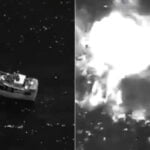
The recent sinking of a vessel utilized as a “floating refueling station” for drug trafficking operations in the Eastern Pacific, as reported by U.S. Southern Command (SOUTHCOM), highlights a concerning evolution in maritime criminal activity and underscores the complexities of ocean governance. These semi-submersible platforms, often referred to as "mother ships," facilitate the transshipment of illicit substances by providing fuel, supplies, and crew support to smaller, stealthier drug smuggling vessels. This tactic extends the range and operational capabilities of trafficking networks, making interception significantly more challenging. The incident demonstrates a clear need for enhanced maritime domain awareness and the application of sophisticated analytical techniques to identify and disrupt these increasingly complex logistical hubs. Our research into Ocean-aware deep learning for civilian maritime object detection and tracking in complex ocean environments: a comprehensive review emphasizes the critical role of advanced sensor technologies and data processing in improving the detection and tracking of these elusive vessels, particularly in challenging oceanic conditions.
The use of such sophisticated infrastructure points to the significant financial resources and organizational capacity of these criminal enterprises. It is not simply a matter of individual smugglers at sea; these operations represent a calculated investment in a robust logistical network designed to evade detection and maximize profitability. The Eastern Pacific, with its vastness and challenging maritime environment, provides a conducive operational space. Furthermore, the sinking itself raises questions about international maritime law and the proportionality of the response. While the destruction of a vessel actively engaged in criminal activity is generally permissible under international law, the specific circumstances and potential for collateral damage necessitate careful scrutiny. Understanding the broader oceanographic context within which these events unfold is crucial; for instance, the Dynamics of the strong Wyrtki Jet events in the eastern Indian Ocean in 2014 demonstrates how ocean currents can significantly impact vessel movement and detection capabilities, potentially influencing trafficking routes and operational strategies. The integration of such data into predictive models could enhance law enforcement efforts.
The implications extend beyond drug trafficking. These same platforms and techniques could be adapted for other illicit activities, including human smuggling, arms trafficking, and even the exploitation of marine resources. The convergence of these threats demands a holistic approach to maritime security, one that combines advanced technology, enhanced international cooperation, and a deeper understanding of the ocean environment. The ongoing efforts to improve kelp mariculture through Effects of wave-powered water pump upwelling on kelp mariculture: a case study for Gulf of Maine underscores the importance of sustainable ocean management – a healthy, well-monitored ocean is inherently more secure. The proliferation of these “mother ships” also highlights the need for increased investment in maritime surveillance capabilities, including satellite imagery, aerial reconnaissance, and underwater acoustic sensors. These tools must be integrated into a comprehensive data ecosystem to provide real-time ocean intelligence to law enforcement agencies.
Looking ahead, the challenge lies in anticipating the next evolution of these maritime criminal networks. As detection methods improve, traffickers are likely to adapt their strategies, potentially utilizing more sophisticated camouflage techniques, autonomous vessels, or exploiting previously overlooked areas of the ocean. A proactive approach, informed by robust data analysis and predictive modeling, is essential to stay ahead of these threats. Will the increasing sophistication of these criminal operations lead to a greater reliance on autonomous maritime platforms by law enforcement agencies, and what ethical and legal considerations will arise from such deployments? The ocean’s vastness and complexity demand constant vigilance and a commitment to innovation in the pursuit of maritime security.
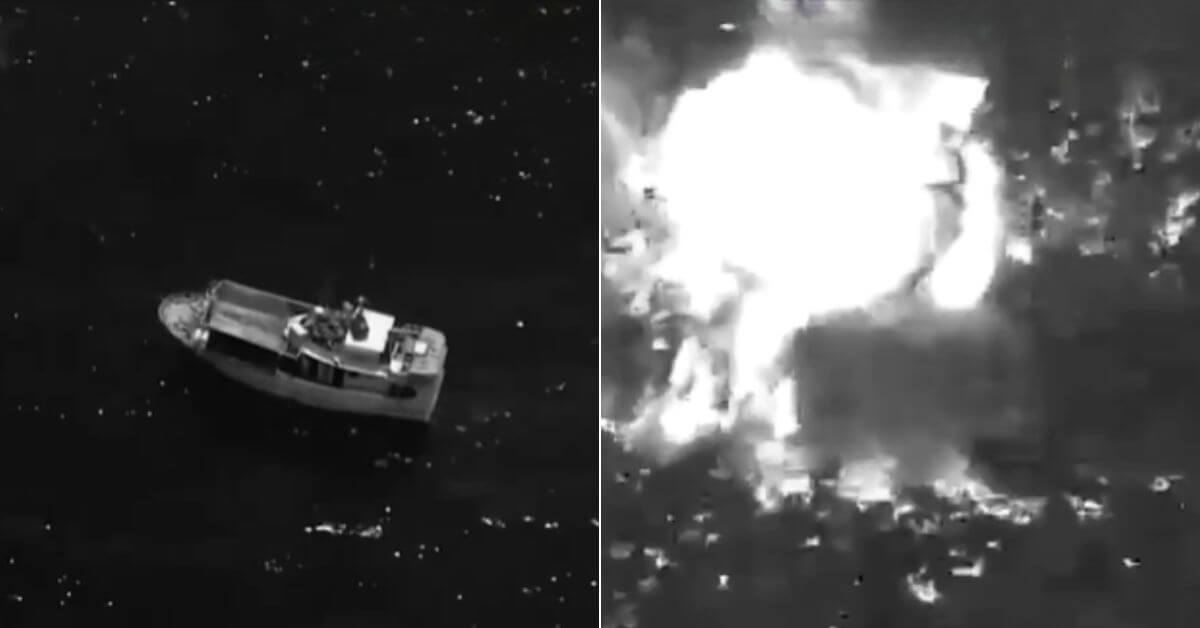
The U.S. military has intercepted and sunk a vessel that it said was being used as a floating refueling station to support drug trafficking operations at sea linked to Ecuadorian criminal group Los Choneros.
The vessel was intercepted on Sept. 2 in international waters in the Eastern Pacific, the U.S. Southern Command (SOUTHCOM) said.
U.S. Marines and sailors launched from the USS San Antonio (LPD 17) boarded and searched the vessel before clearing it without incident.
The people taken from the vessel are being transferred to Ecuadorian authorities, SOUTHCOM said.
U.S. forces then sank the vessel.
SOUTHCOM said intelligence showed that the vessel was supporting Los Choneros, which it described as a violent narco-terrorist organization.
The command said the operation was carried out with the cooperation of the Ecuadorian government.
The vessel was being used to refuel other boats involved in illegal drug trafficking operations. The command said removing it cut off an important part of the group’s supply and support network.
Second Vessel Destroyed
The operation came after U.S. forces destroyed another vessel on Friday that was also allegedly linked to Los Choneros.
Los Choneros is one of Ecuador’s main drug trafficking and extortion groups.
The latest operation was carried out by Joint Task Force Western Hemisphere. SOUTHCOM said the mission supports the work of the Americas Counter Cartel Coalition, known as A3C, which aims to break up drug trafficking networks.
The U.S. Defense Department and A3C said they remain committed to fighting narco-terrorist groups in the Western Hemisphere and protecting the U.S. homeland.
On Sept. 2, at the direction of #SOUTHCOM Commander Gen. Francis L. Donovan, and in coordination and collaboration with the Government of Ecuador, Joint Task Force Western Hemisphere (JTF-WHEM) successfully interdicted a vessel operating as a floating refueling station in support… pic.twitter.com/io55pvWff0
— U.S. Southern Command (@Southcom) September 2, 2026
The operation is part of Operation Southern Spear, a U.S. military campaign launched a year ago against drug cartels operating out of Latin America.
U.S. President Donald Trump has said Washington is at war with drug cartels in the region.
Over 200 people have been killed in strikes in the Caribbean Sea and Eastern Pacific Ocean since the operation began, according to an AFP tally.
US has not provided enough evidence that the vessels targeted in its strikes were involved in drug trafficking.
Families Seek Information on Missing Fishermen
Relatives of fishermen in the Ecuadorian port city of Manta searched for information about their family members.
The relatives said a fishing boat had left on Friday for a fishing trip. Its crew later reported seeing helicopters and military boats approaching.
Olivia Holguin, the sister of the boat’s captain, told AFP that the men were fishermen who worked to support their families. She said relatives wanted to know what had happened to them and whether they were safe.
AFP said it could not confirm whether that fishing boat was the same vessel destroyed by U.S. forces.
Ecuadorian President Daniel Noboa is one of Trump’s closest allies in Latin America.
In March, Ecuador joined the U.S.-led Shield of the Americas coalition, which was formed to fight drug trafficking in the region.
Reference: US CENTCOM
Read on the original site
Open the publisher's page for the full experience