Iran Says It Shot Down US MQ-9 Reaper Drone Over Strait Of Hormuz
Our take
The recent announcement from Iran regarding the downing of a US MQ-9 Reaper drone over the Strait of Hormuz introduces a significant and concerning development within a region already characterized by geopolitical tension. The MQ-9 Reaper, a medium-altitude, long-endurance unmanned aircraft, represents a crucial asset for US surveillance and reconnaissance capabilities, and its loss complicates an already precarious security landscape. This incident follows a pattern of heightened incidents in the region, highlighting the ongoing strategic competition between Iran and the United States, and underscores the potential for miscalculation and escalation. The Strait of Hormuz itself is a vital chokepoint for global maritime trade, carrying approximately a third of the world’s oil, making any disruption there a matter of international consequence. Understanding the complexities of this situation requires examining it within the broader context of regional power dynamics and ongoing maritime activity, as evidenced by the recent transit of the US Navy aircraft carrier Abraham Lincoln through the Singapore Strait US Navy Aircraft Carrier Abraham Lincoln Passes Through Singapore Strait En Route To Thailand After More Than 250 Days At Sea.
The implications extend beyond the immediate loss of an aerial asset. The incident inevitably raises questions about the operational parameters of US unmanned systems in the region, and the potential for future engagements. Iran’s assertion that the drone was conducting espionage activities further exacerbates the situation, highlighting divergent perspectives on acceptable conduct within international waters. The vulnerability of even sophisticated surveillance platforms to determined adversaries underscores the limitations of technological dominance in asymmetric conflicts. Moreover, this event occurs against a backdrop of increasing environmental awareness and data collection efforts at sea; sailors competing in The Ocean Race Atlantic are actively collecting climate data from the weakening Gulf Stream Sailors competing in The Ocean Race Atlantic will collect climate data from weakening Gulf Stream - Sail-World.com, demonstrating a growing focus on understanding and monitoring the ocean's health, a goal potentially undermined by heightened geopolitical instability. The potential impact on marine ecosystems, already under stress from human development, is a parallel concern, as demonstrated by research on the abundance of Indian Ocean humpback dolphins Abundance of Indian Ocean humpback dolphins (Sousa plumbea) along the Garden Route of South Africa.
From a scientific perspective, the incident serves as a stark reminder of the interplay between technological advancement, geopolitical strategy, and the security of vital maritime routes. The MQ-9 Reaper itself is a product of considerable engineering innovation, designed for long-duration missions and equipped with advanced sensor technology. Its loss, regardless of the circumstances, represents a setback in the ongoing effort to gather comprehensive ocean intelligence. The ability to monitor maritime activity, including shipping lanes and potential environmental hazards, is increasingly reliant on such advanced systems. The incident also highlights the need for robust international protocols governing the operation of unmanned systems in contested areas, to minimize the risk of accidental or intentional escalation. Calibrated responses and validated communication channels are essential to prevent future incidents.
Looking ahead, the most critical question revolves around the potential for de-escalation and the establishment of clearer rules of engagement. The immediate response from both Washington and Tehran will be closely scrutinized, as will any attempts to mediate the situation. The incident underscores the inherent fragility of peace in the region and the importance of fostering open channels for communication. The integrated data ecosystem vital for understanding ocean dynamics requires a stable and predictable environment, one that is increasingly threatened by geopolitical instability. The long-term implications for maritime security and the ability to collect vital climate indicators remain to be seen, but this event undoubtedly marks a significant turning point in the ongoing strategic competition in the Persian Gulf and beyond.
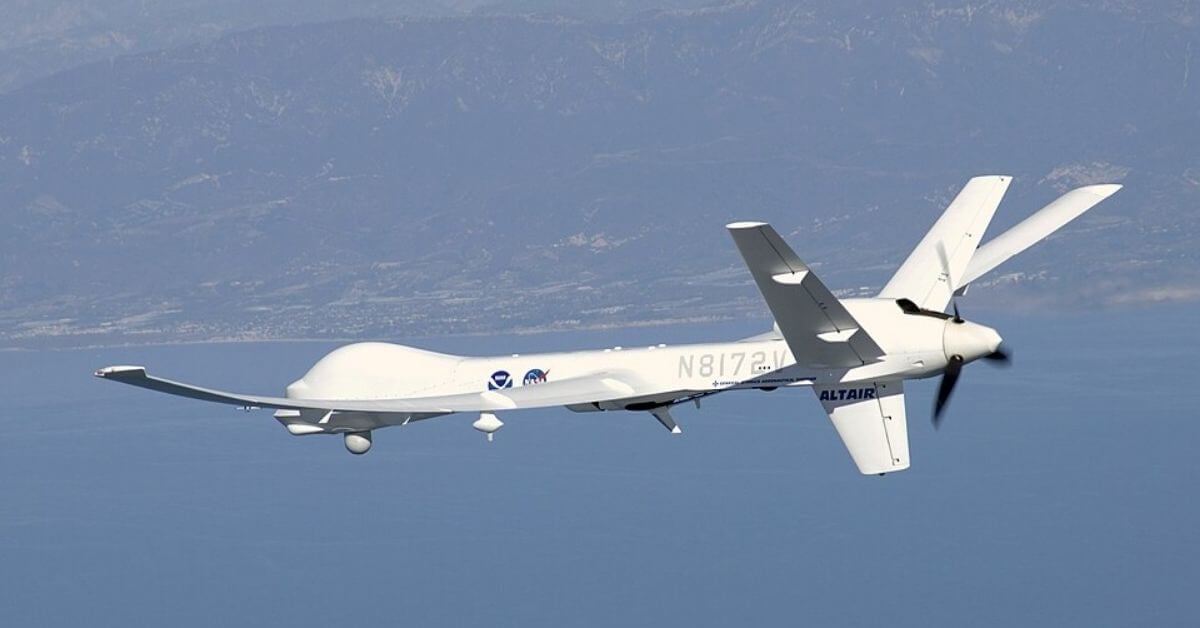
Iran said on Monday it had shot down a US MQ-9 Reaper drone over the Strait of Hormuz.
The Islamic Revolutionary Guard Corps (IRGC) said its Aerospace Force used a new advanced air defence system to destroy the long-range drone. It said the aircraft fell into the Persian Gulf.
The US has not confirmed or denied the Iranian claim.
Only about five commodity vessels crossed the Strait of Hormuz over the weekend, according to shipping data released on Monday.
Some ships have turned off their Automatic Identification System (AIS) transponders while sailing through the strait, making them harder to track.
The Strait of Hormuz is a major route for oil and gas shipments.
Iran says drone was hit by new air defence system
The IRGC said the MQ-9 was detected and destroyed by its new air defence system while operating under Iran’s integrated air defence network.
The claim came after Iran said it had attacked US-linked military sites in the region.
The IRGC Aerospace Force said it launched a combined ballistic missile and drone attack on the US-operated King Hussein and Al-Azraq air bases in Jordan.
It said the attacks hit technical and maintenance infrastructure and positions used by US fighter aircraft, causing “heavy damage”.
Iran said the attacks were in response to a US strike on Larak Island on Sunday. Iranian sources said at least two people were killed and two others were wounded.
Iranian forces also used suicide drones to attack US military positions at Al Minhad Air Base in the UAE on Monday, according to the Iranian Army.
Earlier on Monday, President Donald Trump said the US would respond to Iranian attacks on American personnel in Jordan.
What Is the MQ-9 Reaper?
The MQ-9 Reaper is a medium-altitude, long-endurance unmanned aircraft made by US aerospace company General Atomics.
It can stay in the air for about 27 hours and fly at speeds of up to 240 knots, or roughly 444 km per hour. It can operate at altitudes of up to 50,000 feet.
The drone has a payload capacity of 3,850 pounds (1,746 kg), including 3,000 pounds (1,361 kg) of external stores.
The Reaper is used for intelligence gathering, surveillance and precision strikes. Its weapons include AGM-114 Hellfire missiles, GBU-12 laser-guided bombs and GBU-38 JDAMs.
It does not have a dedicated system for defending itself against air-defence missiles or fighter aircraft. The aircraft is designed to operate beyond the range of enemy air defences or where those defences have already been suppressed.
Per a Washington Post report, the US military had lost at least 45 MQ-9 drones since the war began in February. That was about 25% of its entire Reaper fleet.
How India’s Sea Guardians Are Different?
The MQ-9 Reaper should not be confused with the MQ-9B Sea Guardian operated by India.
India recently leased two Sea Guardians for 30 months at Rs 1,943 crore. The Indian Navy is already operating four others that were leased starting in 2020.
The Sea Guardian is built mainly for maritime reconnaissance. General Atomics says it has a 79-foot wingspan, a take-off weight of 5,670 kg and an endurance of about 30 hours, compared with 27 hours for the Reaper.
Its sensors are designed to monitor large areas of the ocean in all weather conditions. The aircraft is also being developed to detect and track submarines.
It can spend hours monitoring an area of the sea, following vessels and watching distant approaches. Unlike the Reaper, it is designed to operate from civilian airports.
India’s Sea Guardians do not have the same offensive capabilities as the Reaper. They are designed mainly to track vessels on the surface and monitor submerged targets while staying away from enemy air defences.
In October 2024, India signed a deal to buy 31 MQ-9Bs. The order includes 15 Sea Guardians for the Navy and 16 Sky Guardians for the Army and Air Force.
The deal is worth about Rs 32,000 crore, with the first deliveries scheduled for early 2029.
References: timesnownews, moneycontrol
Read on the original site
Open the publisher's page for the full experience