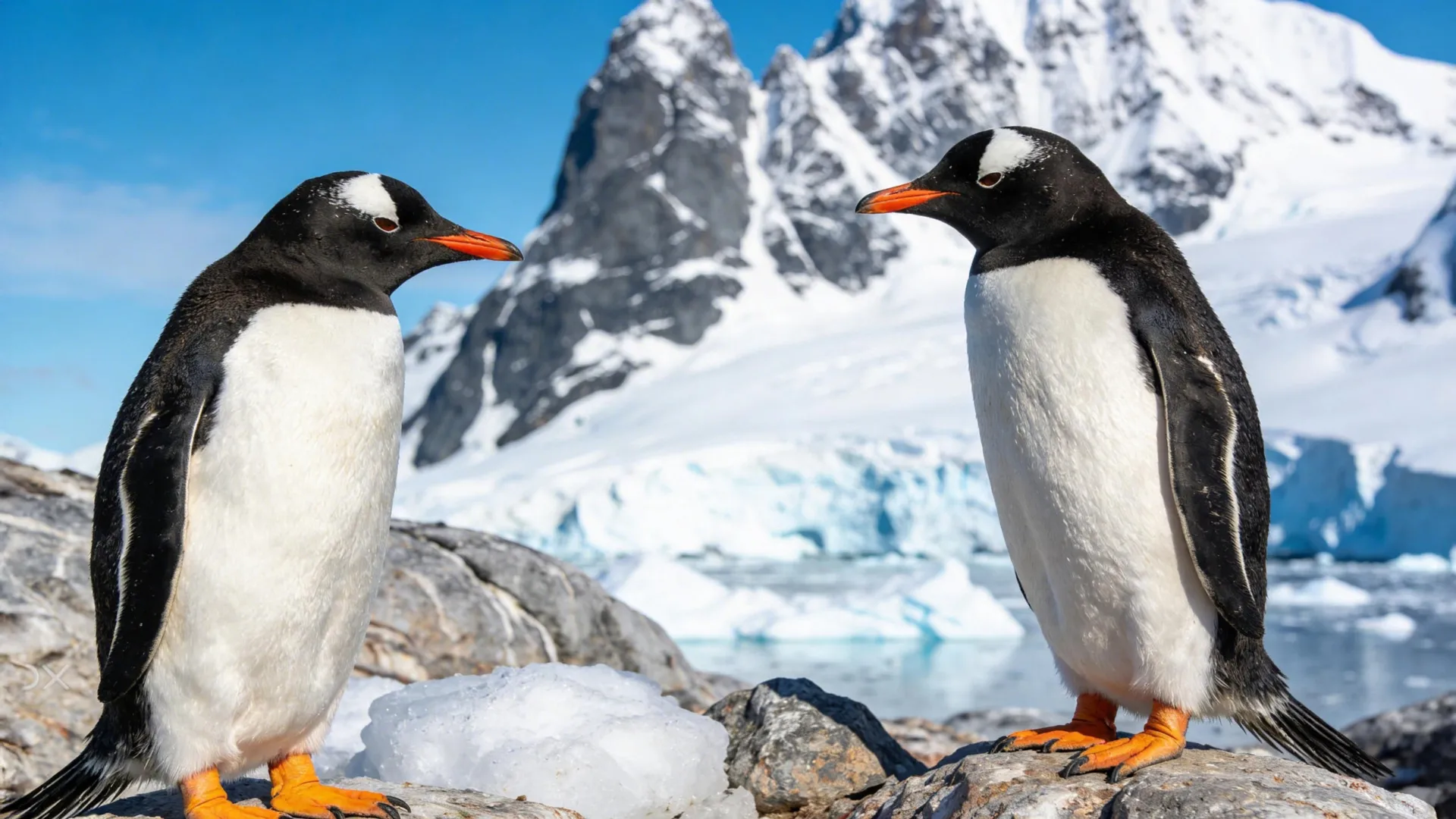
The recent discovery of four distinct gentoo penguin species, detailed through rigorous genetic analysis, underscores both the remarkable biodiversity still awaiting comprehensive understanding and the intensifying pressures exerted by a rapidly changing climate. This finding, highlighting a previously unrecognized species on the Kerguelen Islands and revising our understanding of gentoo penguin taxonomy, builds upon the growing body of evidence demonstrating the intricate and often surprising genetic distinctions within seemingly homogenous populations. It echoes findings presented in Rising Risks: Mountain Hazards Intensify with Climate Change, illustrating how climate change isn't just a generalized threat but a localized force reshaping ecosystems and impacting vulnerable species in specific ways. The revelation also has resonance with the playful yet scientifically grounded naming of Meet Swiftiephylus, an Australian bug named after Taylor Swift, which highlights the ongoing process of species identification and classification, demonstrating that our understanding of life on Earth is far from complete.
The implications of this research extend beyond a simple taxonomic update. The projected habitat loss for several island populations by 2050, driven by warming oceans, paints a stark picture of the immediate threat these newly recognized species face. Gentoo penguins, like many seabirds, are exquisitely adapted to specific environmental conditions, and even subtle shifts in temperature, prey availability, and sea ice extent can have cascading consequences. The integrated data ecosystem we are building at World Data Ocean seeks to provide the longitudinal data necessary to predict and mitigate these impacts, and this discovery reinforces the urgency of our mission. Understanding these localized vulnerabilities requires a calibrated approach, moving beyond broad climate models to incorporate species-specific ecological data and predictive modeling. This is a challenge that demands a global and collaborative effort, as penguin populations span vast geographical areas and require international cooperation for effective conservation.
The study’s reliance on genetic data – a cornerstone of modern biodiversity research – underscores the power of advanced analytical techniques in revealing hidden patterns and relationships within the natural world. While traditional methods of observation and classification remain vital, genomic sequencing provides an unprecedented level of resolution, allowing us to identify cryptic species and assess evolutionary relationships with greater precision. This methodology also aligns with the principles outlined in Assessing historical climatic impacts on wetland change using satellite imagery: a transferable framework demonstrated on the Texas coast, where remote sensing and historical data are combined to reconstruct past environmental changes and inform future conservation strategies. The ability to retrospectively assess the impacts of climate change, coupled with forward-looking predictive models, will be crucial for developing effective adaptation strategies.
Ultimately, the story of the gentoo penguins serves as a potent reminder of the interconnectedness of life on Earth and the accelerating impact of human activities. The discovery of these new species is a cause for celebration, but the simultaneous revelation of their precarious future demands immediate and decisive action. What previously appeared as a single, relatively abundant species now reveals itself as a complex group of distinct lineages, each with its own unique evolutionary history and ecological niche. The question now becomes: can we rapidly deploy the ocean intelligence and collaborative tools necessary to safeguard these newly recognized species and the fragile ecosystems they inhabit, before it’s too late?