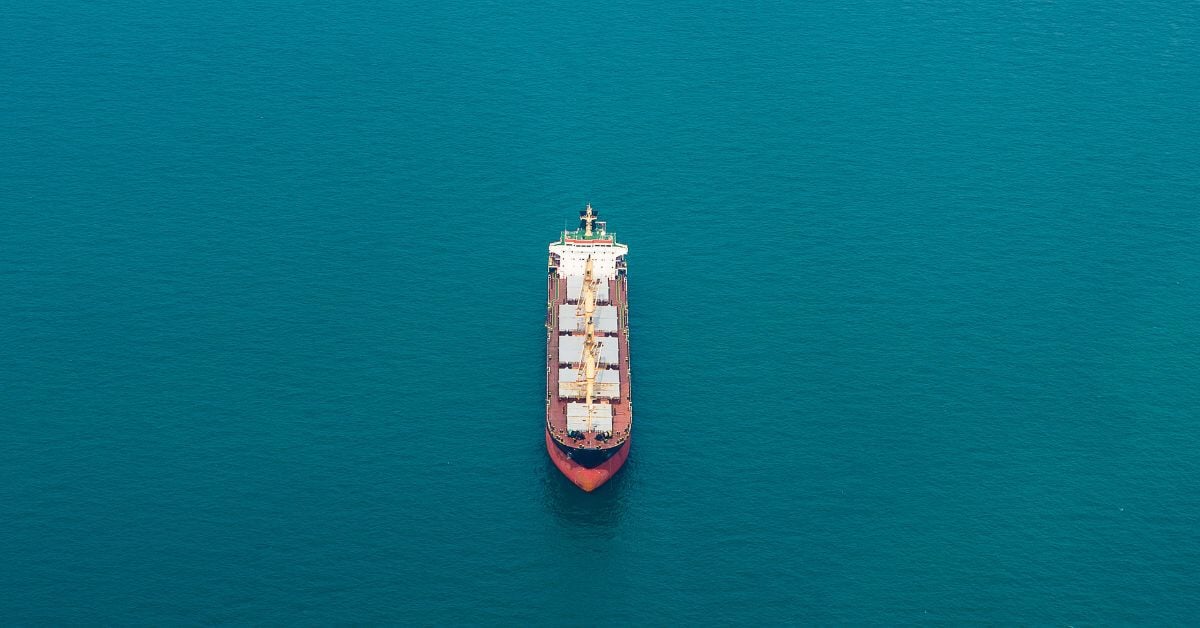
A vessel struck by an unknown projectile in the Strait of Hormuz, with a resulting fire reported on board, is the kind of incident that demands clarity, not speculation. We need to state plainly what this means: a critical maritime chokepoint, already under immense geopolitical strain, has just demonstrated how quickly a routine transit can become a data void. For our readers, researchers, analysts, and policymakers who depend on empirical, real-time information, this event underscores a fundamental gap in our collective ocean intelligence.
The immediate facts are sparse: a vessel, an unknown projectile, a fire. That is precisely the problem. As we have seen in other maritime tragedies, such as the Ferry fire tragedy prompts criminal complaint against captain amid 77 confirmed deaths, where a single captain's actions defined the aftermath, the absence of a validated, integrated data ecosystem at the point of impact leaves the narrative to be shaped by whoever speaks first, or loudest. Compare this to the A 300-day deployment yields calibrated data from the Pacific theater, where a U.S. Navy destroyer returned after ten months with longitudinal, peer-reviewed measurements. That is what systematic observation looks like. In the Strait of Hormuz, we have none of that calibration. We have a projectile, a fire, and a question mark.
This is not an isolated event. The Five seafarers killed as pirates open fire on hijacked tanker during rescue reminds us that violence at sea is neither new nor diminishing. Yet each incident remains a discrete data point, rarely integrated into a broader, real-time picture of maritime risk. The Strait of Hormuz incident is a stark example of why our work matters: without a shared, calibrated framework for tracking such events, from projectile trajectory to fire suppression timelines, we are left reacting to fragments. The measurable consequence is that shipping insurers, naval planners, and climate indicator models all lose fidelity. A fire on a vessel is not just a safety issue; it is a signal in an ocean system we are only beginning to understand.
The specific takeaway here is direct: the maritime community must treat incidents like this as a call for integrated, peer-reviewed data collection at strategic transit points. Without it, every unknown projectile is a threat to global trade, environmental monitoring, and human life. Watch for whether the responsible flag state releases any empirical data on the projectile's origin or the fire's duration. That answer will tell us more about our ocean intelligence than the incident itself.