Ship Carrying 14 Indian Crew Members Attacked Off Oman Coast, 1 Missing
Our take
The recent attack on a vessel off the coast of Oman, resulting in the disappearance of one Indian seafarer while thirteen others were rescued, underscores a concerning escalation of maritime security risks in a strategically vital region. This incident, following closely on reports of an Iranian seafarer killed in a similar strike near the Strait of Hormuz [Iranian Seafarer Killed As Unidentified Strike Hits Ship Near Strait Of Hormuz], and the disruption of a key Saudi oil pipeline due to a drone attack [Saudi Arabia Shuts Key Oil Pipeline Used To Bypass Strait Of Hormuz After Drone Attack], paints a picture of heightened instability impacting global trade routes and energy security. The targeting of commercial vessels, particularly those with international crews, introduces a new layer of complexity to an already volatile geopolitical landscape, moving beyond purely state-on-state conflicts and directly endangering the lives and livelihoods of maritime professionals. It's also worth noting the increasing sophistication of actors leveraging AI for strategic purposes, as demonstrated by Anthropic’s actions against Iranian accounts utilizing Claude for naval intelligence gathering [Anthropic Bans Iranian Accounts That Used Claude To Target US Navy].
The Strait of Hormuz, a narrow waterway connecting the Persian Gulf to the Gulf of Oman and the Arabian Sea, is critical for the global oil supply, handling roughly a third of the world’s seaborne petroleum. Disruptions to shipping in this area have immediate and cascading effects on energy markets and global economies. The use of increasingly sophisticated and readily available drone technology to target vessels demonstrates a shift towards asymmetric warfare tactics, making it harder to attribute responsibility and implement effective countermeasures. While attributing the attack definitively remains unconfirmed, the geographic proximity to Iran and the recent history of incidents in the region strongly suggest a connection. The implications extend beyond immediate economic concerns; the safety and security of seafarers from diverse nationalities are now directly threatened, potentially leading to reluctance among crews to transit these waters, further exacerbating supply chain vulnerabilities. The incident also highlights the interconnectedness of global trade and the potential for localized conflicts to have far-reaching consequences.
The ongoing situation requires a multi-faceted response, prioritizing the safety and rescue of the missing seafarer while simultaneously addressing the root causes of the instability. Increased naval presence and enhanced maritime surveillance are immediate necessities, but these are merely reactive measures. A more sustainable solution demands diplomatic efforts aimed at de-escalating tensions and fostering regional stability. Furthermore, the incident underscores the critical need for improved data collection and analysis regarding maritime traffic patterns, potential threat actors, and environmental conditions impacting vessel safety. Real-time ocean intelligence, calibrated with empirical data, can provide valuable insights for risk mitigation and proactive security measures. An integrated data ecosystem, combining satellite imagery, vessel tracking information, and open-source intelligence, offers the potential for more accurate threat assessments and rapid response capabilities. The vulnerabilities exposed by this attack highlight the imperative for a shift from reactive security protocols to a proactive, data-driven approach to maritime safety.
Looking ahead, the question remains: will this incident serve as a catalyst for increased international cooperation to safeguard maritime trade routes, or will it further escalate tensions in an already precarious region? The increasing reliance on AI-powered tools for both offensive and defensive purposes in the maritime domain necessitates a deeper understanding of their capabilities and limitations, alongside the development of robust ethical frameworks to govern their use. Longitudinal data analysis of these incidents, coupled with predictive modeling of potential future attacks, will be crucial for developing effective strategies to mitigate risks and ensure the continued flow of goods and energy across vital waterways.
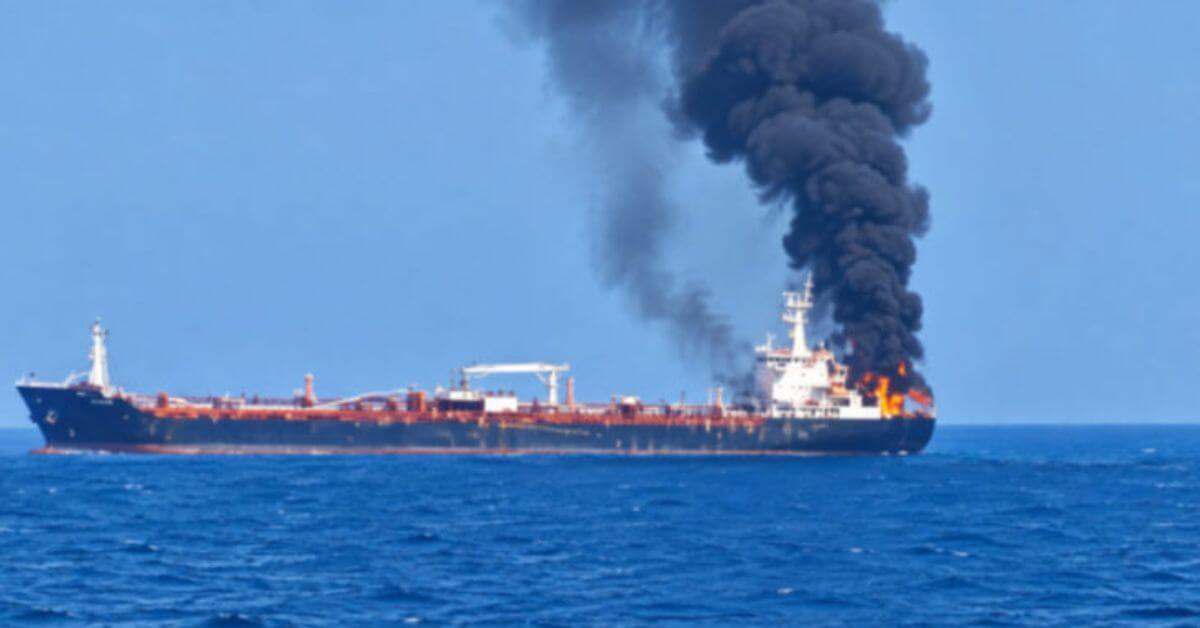
A commercial vessel carrying 14 Indian crew members was attacked off the coast of Oman on Sunday, Sept. 13, 2026.
Thirteen crew members have been rescued, while one Indian seafarer is still missing, India’s Ministry of External Affairs (MEA) said.
The vessel was identified as the Panama-flagged tanker MT El Gaia. The 13 rescued crew members have been taken ashore safely.
Omani authorities are continuing the search for the missing crew member.
The Indian Embassy in Oman said it was closely monitoring the search and rescue operation and was in contact with the Omani authorities.
It added that SAR operations for 13 Indians had been completed and they had been shifted ashore safely. The search for the remaining crew member is still underway.
The MEA also called for an immediate reduction in tensions in the region. It said dialogue and diplomacy were needed to restore peace.
India also called for free and safe navigation to be restored in the region, along with the safe movement of commercial traffic through international waterways.
Indian seafarers continue to face security risks in waters around the Middle East.
Several Indian vessels and ships carrying Indian crews have come under attack, particularly around the Strait of Hormuz. The waterway is an important maritime chokepoint.
Last month, the Indian-flagged commercial vessel MSV Faize Noore Oliya sank in the Red Sea off Yemen. All 13 Indian nationals on board were rescued.
At the time, the MEA said the Indian Embassy in Riyadh was closely monitoring the situation and working with Yemeni authorities on the safety of the crew.
The issue of seafarer safety was also raised by Prime Minister Narendra Modi at the BRICS Summit Business Forum in New Delhi earlier this week.
He added that India supports freedom of navigation and the safety of seafarers.
Modi also proposed a “Seafarers’ Emergency Support Network” to help protect mariners facing security risks because of regional conflicts.
Indian seafarers make up more than 12% of the global merchant shipping workforce. India has almost 312,000 seafarers out of a global total of about 2.57 million, making Indian nationals the second-largest group after the Philippines.
References: NDTV, Firstpost
Read on the original site
Open the publisher's page for the full experience