navigation
navigation on World Data Ocean: a running collection of 29 stories we have gathered and hand-picked because they are worth your time. Every post here touches on navigation in some way — the news, the analysis, the deep dives, and the occasional surprise find. A Global Hub for Ocean Intelligence 4 World Data Ocean is a centralized digital platform where researchers, scientists, and ocean enthusiasts converge to explore, analyze, and… New stories are added to this page as we find them, so check back if you want to keep up with what is happening around navigation, or subscribe to the RSS feed to get them as soon as they are published. Browse the collection below, or head back to the homepage to see everything World Data Ocean is covering right now.
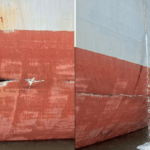
Real Life Incident: Tug Name Mix-Up Causes Tanker To Strike Pier During Departure
A seemingly minor error – a tug name mix-up – resulted in a significant incident: a tanker striking a pier during a nighttime departure. This real-life event underscores the critical importance of precise communication and verification protocols in maritime operations. Such incidents highlight potential vulnerabilities within integrated data ecosystems and reinforce the need for robust, real-time validation processes.

How Geospatial Technologies are Helping to Complete the Effort to Map the World's Ocean Floor - Geography Realm
Mapping the world’s ocean floor—a monumental task historically hindered by technological limitations—is rapidly advancing thanks to geospatial technologies. Initiatives like the Seabed 2030 project are leveraging bathymetric lidar, sonar, and satellite altimetry to achieve a complete map by 2030, providing critical data for ocean management and climate modeling. This integrated data ecosystem reveals previously unknown features and supports informed decision-making.
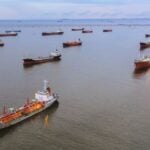
6,000 Seafarers And 400 Ships Remain Trapped Amid Six Months Of Strait Of Hormuz Uncertainty
The ongoing conflict in the Middle East has created a protracted crisis for maritime navigation, with approximately 6,000 seafarers and 400 ships currently trapped in the Strait of Hormuz since February 28th. This situation underscores the escalating risks to global trade and highlights the need for enhanced maritime security measures. The uncertainty impacts critical shipping lanes and raises concerns regarding crew welfare and supply chain stability.
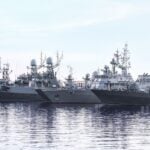
Royal Navy Led Multinational Task Force Prevents 25 Piracy Attempts In Indian Ocean During 6-Month Deployment
A Royal Navy-led multinational task force has demonstrated significant success in maritime security, preventing 25 piracy attempts during a recent 6-month deployment in the Indian Ocean. Combined Task Force 151’s efforts have effectively curtailed piracy-related activities, maintaining stability in a critical shipping lane. This achievement underscores the importance of collaborative international efforts in safeguarding global trade routes. For further context on regional maritime dynamics, see our related article, "Iran And Oman Reach Agreement On Strait Of Hormuz Control And Revenue Sharing.”
Iran And Oman Reach Agreement On Strait Of Hormuz Control And Revenue Sharing
A significant development emerged this week as Iran and Oman finalized an agreement concerning control and revenue sharing within the Strait of Hormuz. This accord aims to stabilize a critical maritime chokepoint vital for global energy transport, though commercial shipping continues to face inherent risks despite reduced direct conflict between the United States and Iran. The agreement represents a calibrated step toward regional de-escalation, though ongoing tensions necessitate vigilant monitoring.

Littoral States Pledge To Keep Straits Of Malacca And Singapore Open For Global Shipping
Here's a concise introduction, adhering to the Brand Voice Summary and constraints: Indonesia, Singapore, and Malaysia have jointly affirmed their commitment to maintaining the unimpeded navigation and shipping operations within the vital Straits of Malacca and Singapore. This pledge ensures continued global access to a critical maritime artery. The agreement underscores the importance of regional collaboration in safeguarding international trade routes.

Iran, Oman Discuss Temporary Shipping Corridor Through Strait Of Hormuz
Recent discussions between Iran and Oman explore a collaborative approach to maritime navigation through the Strait of Hormuz, proposing a temporary joint navigation corridor and a coordinated mine clearance project. This initiative aims to enhance safety and predictability within a strategically vital waterway, historically responsible for a significant portion of global oil and LNG transport. The potential impact on shipping costs, as highlighted in our article concerning TotalEnergies’ assessment of $20 million per transit, underscores the corridor's importance.

190,000-Ton Maersk Containership Makes First Suez Canal Transit On Europe-Asia Voyage
Recent navigation data from the Suez Canal indicates a notable surge in Maersk container ship traffic, highlighted by the inaugural Europe-Asia voyage of a 190,000-ton Maersk vessel. This transit underscores the continued strategic importance of the canal for global trade flows. The increased activity coincides with heightened geopolitical tensions in the region, prompting adjustments in shipping routes and operational strategies. For further context on maritime security concerns, see our report on Iran's newly approved service fees for vessels transiting the Strait of Hormuz.

Iran Approves Service Fees For ‘Authorised’ Ships Transiting Strait Of Hormuz
Iran has formally approved service fees for vessels authorized to transit the Strait of Hormuz, a critical waterway for global trade. These fees will encompass a range of services, including navigation assistance, environmental support, fuel provision under specific conditions, insurance coverage, and bolstered safety measures. The implementation of these charges reflects increasing regional maritime oversight. Recent actions, as detailed in "U.S. Prevents 70 Ships From Reaching Iranian Ports," underscore the complex geopolitical environment surrounding this vital chokepoint.

Iran Warns Vessels Of Fines, Detention And Confiscation For Violating Strait Of Hormuz Transit Rules
Iran has issued a stark warning to vessels transiting the Strait of Hormuz, asserting its right to levy fines, detain ships, and even confiscate those found violating established transit regulations. The PGSA further clarified that any vessel collaborating with ships already designated on Iran's Non-Compliant Vessels list risks being added to that list. This escalation follows increased tensions and disruptions to maritime traffic, as highlighted in our recent report, "Strait of Hormuz Traffic Falls Below 20 Ships Over Weekend Amid US-Iranian Blockades."

Carnival Cruise Ship Makes Emergency Manoeuvre In Mississippi River To Avoid Collision With Cargo Ship
The Carnival Valor experienced a critical incident on the Mississippi River yesterday, executing an emergency maneuver to avert a potential collision with a cargo ship. This validated action highlights the inherent risks of maritime navigation and underscores the importance of real-time data and calibrated responses. Such events reinforce the need for vigilant ocean intelligence across all waterways. For further context on maritime resource management, see our article detailing the creation of an artificial reef off Delaware.

US Navy’s 100,000-Ton Aircraft Carrier John F. Kennedy Completes Acceptance Sea Trials
The US Navy’s newest aircraft carrier, the 100,000-ton *John F. Kennedy*, has successfully concluded acceptance sea trials. Departing Newport News on August 12th and returning three days later, the trials rigorously evaluated the vessel’s critical systems. This milestone marks a significant step toward operational readiness for the advanced carrier. Notably, the *John F. Kennedy* represents a shift in propulsion technology, a decision previously discussed regarding the future *USS Doris Miller*, as detailed in related coverage.

Video: Singapore-Flagged Container Ship Loses Steering Before Running Aground In India
A Singapore-flagged container ship ran aground near India’s coastline after experiencing a loss of steering, according to local authorities. Preliminary investigations suggest the steering gear may have become compromised during a course correction maneuver. This incident highlights ongoing concerns regarding maritime navigation and vessel integrity within critical global waterways. Related risks impacting maritime transport are under scrutiny, as demonstrated by recent reports of undersea cable damage off Australia, prompting further investigation.

Iran Says Strait Of Hormuz Under Its Control And Management, Rejects Trump’s ‘Total Control’ Claim
Recent assertions by Iranian officials claim the Strait of Hormuz falls under Tehran’s “management and control,” a statement directly rejecting prior claims of “total control” attributed to the United States. Hossein Taeb, head of Iran’s paramilitary forces, made the declaration, escalating tensions in a vital global waterway. This development follows heightened naval activity in the region, as highlighted in a recent report detailing the U.S. Navy’s prolonged deployment aboard the USS Abraham Lincoln. Further analysis of U.S.

China’s Fourth Type 075 Amphibious Assault Ship Achieves Combat Qualification In South China Sea
Following rigorous testing and validation, China's fourth Type 075 amphibious assault ship, *Hubei*, has achieved combat qualification within the South China Sea. Joining *Hainan*, *Guangxi*, and *Anhui* in the People’s Liberation Army Navy (PLAN), the *Hubei* represents a significant expansion of China’s amphibious warfare capabilities. This development underscores the ongoing modernization of the PLAN and its increasing operational reach. For further context on regional naval developments, see our recent report on "Vietnam Begins Construction Of Largest And Most Advanced Domestically Built Anti-Submarine Frigate."

UAE’S State Oil Giant Calls Iran’s Attack On Its Ship Crossing Hormuz ‘An Act Of Piracy’
ADNOC, the UAE’s state-owned oil giant, has classified a recent attack on one of its vessels traversing the Strait of Hormuz as “an act of piracy.” The incident, occurring August 8, 2026, involved a missile strike while the carrier was crossing the critical waterway. This follows a concerning trend; ADNOC reports a total of 15 vessel attacks in the Strait of Hormuz since the beginning of the current conflict, including three this week alone.

Oil Giant ADNOC Says 15 Vessels Attacked In Strait Of Hormuz Since Conflict Began
Recent escalations in the Strait of Hormuz have resulted in 15 attacks targeting vessels associated with the Abu Dhabi National Oil Company (ADNOC) since the commencement of regional conflict. This week alone saw three attacks, tragically resulting in one fatality and twenty injuries. ADNOC reports these incidents underscore heightened risks to maritime operations in the critical waterway.

Pilot’s Cellphone Distraction Leads To Fatal Houston Ship Channel Collision Involving Bulk Carrier And Towboat – NTSB
The National Transportation Safety Board (NTSB) has determined that a pilot's cellphone distraction was a critical factor in a fatal collision on the Houston Ship Channel. The incident involved a bulk carrier and a towboat, resulting in the loss of one crew member; four others were rescued. This event underscores the ongoing risks associated with technology use in maritime operations.

Global Shipping Groups Urge UN To Reject Any Compulsory Transit Tolls In Strait Of Hormuz
Leading global shipping groups have issued a formal appeal to the United Nations, urging rejection of any compulsory transit tolls within the Strait of Hormuz. This action follows reports indicating a potential agreement between Iran and Oman regarding management of the vital waterway. The move underscores concerns about escalating regional tensions and potential disruptions to global trade. Further analysis of related geopolitical risks, including the implications of deep-seabed mining regulation, can be found in our article, "Regulating project-associated greenhouse gas emissions from deep-seabed mining."

Real Life Incident: How Expectation Bias Wrecked A Bulk Carrier Twice
Recent incidents involving the bulk carrier highlight the critical impact of expectation bias in maritime navigation. The vessel experienced two groundings after a pilot deviated from the established dredged channel. This event underscores the importance of validated procedures and rigorous adherence to charted depths, even when experienced professionals are at the helm. Such occurrences demand a re-evaluation of pilotage protocols and a renewed focus on situational awareness. For further examination of navigation challenges, see our report on the *Onego Otra* grounding in the St.

Camera 1: 2026 Cook Islands ROV Exploration (EX2605)
## Camera 1: 2026 Cook Islands ROV Exploration (EX2605) – An Introduction Scheduled for 2026, EX2605 represents World Data Ocean’s next significant advancement in deep-sea exploration. This remotely operated vehicle (ROV) mission to the Cook Islands will deploy Camera 1 to gather high-resolution, longitudinal data of benthic habitats. Our integrated data ecosystem will leverage this empirical evidence to refine climate indicators and enhance ocean intelligence. Initial objectives include mapping previously unsurveyed regions and assessing biodiversity.

Iran Rejects Oman’s Plan To Share Strait Of Hormuz And Seeks Greater Control Over Strategic Waterway
A recent dispute highlights escalating tensions surrounding the Strait of Hormuz, a critical waterway for global energy transport. Iran has reportedly rejected an Omani proposal to jointly manage the strait, asserting its desire for greater control over the strategic passage. This disagreement represents a setback to initiatives aimed at restoring stability and facilitating the resumption of vital shipping routes following recent conflict. For further context on related maritime strategies, see our analysis of "Houthis Seek To Copy Iran’s Hormuz Strategy By Disrupting Bab el-Mandeb Strait."

Real Life Incident: Fatigue Contributes to Catastrophe
A critical navigational error stemming from officer of the watch (OOW) fatigue resulted in a significant maritime incident: the collision of a tanker with an anchored vessel. This event triggered ensuing fires and necessitated the abandonment of both ships, highlighting the severe consequences of human factors at sea. Investigations are underway to determine the full extent of damages and contributing factors.

Practical Ways Seafarers Stay Safe During Complex Ship Operations
Commercial vessel operations extend far beyond core systems, demanding a layered approach to maritime safety. From cargo handling and mooring to critical machinery maintenance and enclosed space entry, complex procedures necessitate rigorous protocols and vigilant execution. Seafarers rely on validated risk assessments, calibrated communication, and continuous training to mitigate potential hazards. Recent events, such as the VENTURO incident where the Ukrainian Navy rescued 17 seafarers following a Russian strike, underscore the importance of preparedness and rapid response in volatile environments.