New 22,000 m³ LNG Bunkering Ship Concept Receives AiP from American Bureau of Shipping
Our take
The recent approval in principle (AiP) from the American Bureau of Shipping for Hanwha Power's 22,000 m³ LNG bunkering vessel represents a significant step forward in the evolving landscape of maritime fuel infrastructure. The dual-cargo capability – accommodating both LNG and ammonia – coupled with hybrid propulsion, showcases a forward-thinking approach to meeting the increasingly stringent emissions regulations facing the shipping industry. This development builds upon recent advancements like the arrival of the *Judy LaMarsh* First Additional Large Vessel ‘Judy LaMarsh’ Joins The Great Lakes Region In More Than 3 Decades and the successful LNG refueling operation at the Port of Tenerife Baleària Fast Ferry Receives Port Of Tenerife’s First Multi-Truck LNG Refuel, highlighting the growing momentum behind LNG as a transitional fuel. However, the incident involving the *Glen Sannox* ferry Faulty Valve Releases 700kg Of Highly Flammable Gas From Ferry Carrying 82 Passengers serves as a crucial reminder of the operational safety challenges inherent in handling flammable gases at scale, demanding rigorous engineering and maintenance protocols.
The integrated design of this new bunkering vessel, incorporating LNG-ammonia capabilities, is particularly noteworthy. Ammonia, while presenting its own handling complexities, is increasingly viewed as a potential zero-carbon fuel for shipping, particularly as hydrogen production and infrastructure matures. The ability to service vessels utilizing both fuels provides a degree of future-proofing, mitigating the risk of obsolescence as the industry transitions towards decarbonization. The hybrid propulsion system further optimizes efficiency and reduces emissions during bunkering operations themselves, contributing to a more sustainable overall solution. The ABS AiP validates the design’s adherence to established safety standards and provides a crucial confidence boost for potential investors and operators. This underscores the importance of rigorous validation processes, especially as we move towards novel fuel technologies.
Beyond the specific design features, this development highlights the broader trend towards specialized bunkering infrastructure. As larger and more complex vessels increasingly adopt alternative fuels, the demand for dedicated bunkering solutions will only intensify. The global nature of shipping necessitates a geographically distributed network of these facilities, requiring significant investment and international collaboration. The implementation of real-time monitoring and data analytics, leveraging integrated data ecosystems, will be critical for optimizing bunkering operations, ensuring safety, and minimizing environmental impact. Calibrated sensor networks and longitudinal data collection will enable predictive maintenance and proactive risk mitigation, contributing to a more resilient and reliable fuel supply chain.
Looking ahead, the successful deployment of this bunkering vessel will depend not only on its technical capabilities but also on the regulatory framework and market demand for both LNG and ammonia. The speed and scale of the transition to low-carbon shipping will ultimately determine the long-term viability of this investment. The question remains: how quickly can we calibrate global infrastructure to support the diverse and evolving fuel needs of the maritime sector, while ensuring the highest standards of safety and environmental protection?
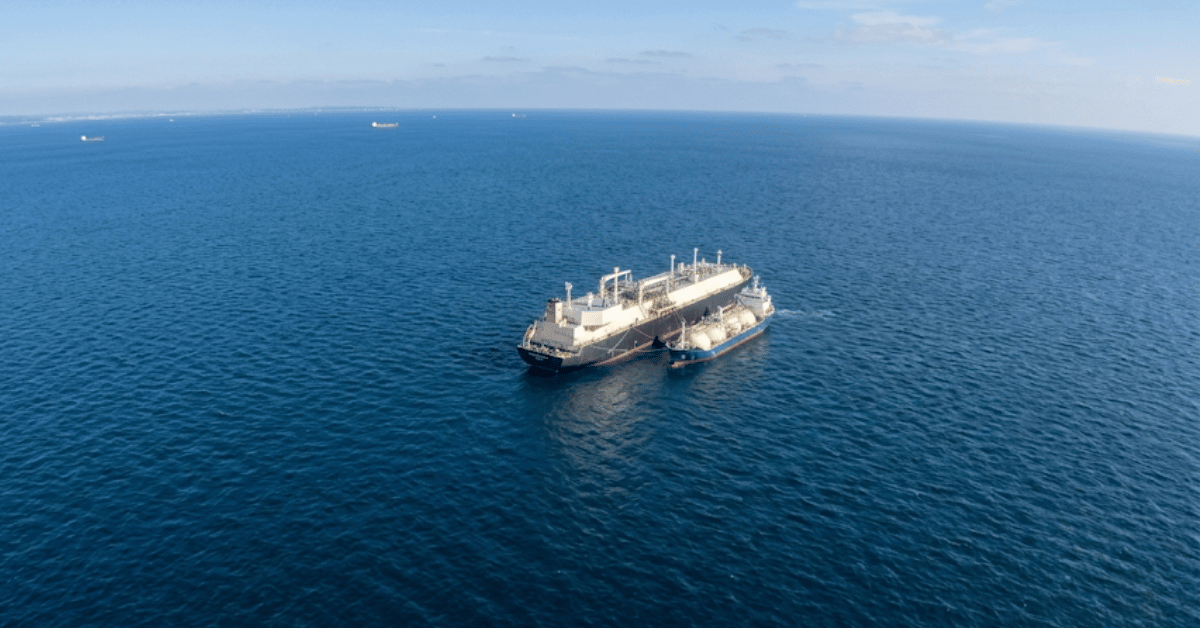 Image for representation purposes only
Hanwha Power announced on September 16 that it has obtained approval in principle (AiP) from the American Bureau of Shipping (ABS) for the concept design of a 22,000-cubic-meter LNG bunkering vessel at Gastech 2026, the world’s largest gas and energy exhibition, held in Bangkok, Thailand.
At Gastech 2026, Hanwha Power operated a joint exhibition booth with major marine and energy affiliates, including Hanwha Ocean and Hanwha Engine. The Group showcased its comprehensive marine solutions, ranging from the transition to eco-friendly vessels and propulsion systems to marine equipment and related technologies.
The certificate presentation ceremony was held on September 15 local time, with Hanwha Power Marine Solution Business Division Head Hoon-min Kim, Vice President Jong-kyu Hwang, who oversees Technical Solutions, and key ABS representatives in attendance.
With the latest AiP, Hanwha Power has completed its lineup of medium- and large-scale LNG bunkering vessels, ranging from 7,500 cubic meters to 22,000 cubic meters.
A key feature of the concept design is its LNG-ammonia multi-cargo capability, which enables the vessel to transport not only LNG but also ammonia, an emerging next-generation bridge fuel. The design incorporates high-manganese steel cargo containment technology, Mc-C, allowing the vessel to adapt to the future transition to alternative fuels with minimal design modifications. This provides shipowners with greater long-term technological flexibility and competitiveness.
Considering the operating characteristics of bunkering vessels, which primarily operate in coastal waters, Hanwha Power has also applied a hybrid electric propulsion system that integrates an onshore power supply (OPS) system with an energy storage system (ESS). The system is designed to minimize harmful emissions while the vessel is berthed or operating in coastal areas, while also improving operational efficiency and economic performance.
In addition, Hanwha Power has incorporated the Group’s core technologies, including dual-fuel generator sets, ESS, electrical power system integration, integrated automation system, and cargo handling system. By integrating these technologies, the company aims to maximize the competitiveness and business synergies of its integrated engineering and procurement (EP) package, covering both engineering and procurement capabilities.
“This ABS AiP marks another important milestone demonstrating Hanwha Power’s technological reliability and commercial viability in the global eco-friendly vessel market,” said Hoon-min Kim, Head of Hanwha Power’s Marine Solution Business Division. “Building on the Hanwha Group’s differentiated clean-technology capabilities, we will continue to provide global shipowners with optimized integrated solutions for the transition to more sustainable marine transportation.”
Press Release
Read on the original site
Open the publisher's page for the full experience