First Additional Large Vessel ‘Judy LaMarsh’ Joins The Great Lakes Region In More Than 3 Decades
Our take
The arrival of the *Judy LaMarsh*, the first additional large vessel to join the Great Lakes region in over three decades, represents a noteworthy development for maritime operations and coastal monitoring within this vital freshwater ecosystem. This addition to the Canadian Coast Guard’s fleet underscores a growing recognition of the need for enhanced capabilities in the region, particularly as climate change continues to reshape the Great Lakes. The vessel's naming, after the Honourable Judy LaMarsh, a pioneering figure in Canadian politics, further highlights the importance of recognizing impactful contributions to public service. The timing is particularly relevant given recent advancements in maritime technology, as showcased in articles like Ground-Breaking 100-Foot Full-Foiling Monohull Yacht Driven By Renewable Energy To Redefine Ocean Sailing, demonstrating the potential for innovative, sustainable vessels to transform maritime operations globally. Similarly, the ongoing logistical pressures reflected in reports like Two Major U.S. Container Gateways Handled Nearly 1.88 Million TEUs In August highlight the need for robust and reliable maritime infrastructure to support regional economies and supply chains.
The significance of the *Judy LaMarsh* extends beyond simply adding a vessel to the fleet. It signals a renewed investment in Great Lakes stewardship, an area increasingly critical given the observed shifts in water levels, increased frequency of harmful algal blooms, and the ongoing challenge of invasive species. The vessel's capabilities will likely be focused on search and rescue, environmental response, and potentially, scientific data collection. This aligns with a broader trend toward integrating ocean intelligence—validated, measurable data—into coastal management strategies. The need for such data is underscored by events occurring globally, as illustrated by the tragic incident reported in Iranian Seafarer Killed As Unidentified Strike Hits Ship Near Strait Of Hormuz, which serves as a stark reminder of the risks inherent in maritime operations and the importance of reliable response capabilities. The Great Lakes, while geographically distinct from the Strait of Hormuz, share the common imperative of safe and secure navigation, and the *Judy LaMarsh* contributes to fulfilling that need within its operational area.
The introduction of a new, large vessel necessitates a recalibration of existing operational protocols and data integration strategies. Seamless integration with existing monitoring systems will be paramount, ensuring real-time data flow and efficient resource allocation. This requires a calibrated approach, leveraging both legacy infrastructure and emerging technologies, to create a truly integrated data ecosystem. The longitudinal data collected by the *Judy LaMarsh* will contribute to a more comprehensive understanding of the Great Lakes’ dynamic environment, enabling more informed decision-making regarding resource management and climate adaptation. The vessel’s presence will also likely influence the development of new partnerships and collaborative initiatives involving government agencies, research institutions, and local communities, fostering a sense of shared responsibility for the health of the Great Lakes.
Looking ahead, the deployment of the *Judy LaMarsh* presents an opportunity to assess the effectiveness of modern vessel design and operational strategies in a freshwater environment. Will the vessel’s technology prove adaptable to the unique challenges posed by fluctuating water levels and ice formation? Furthermore, how can the data gathered be most effectively utilized to inform predictive modeling and proactive mitigation strategies for emerging threats to the Great Lakes ecosystem? The answers to these questions will be critical in shaping the future of maritime stewardship and ensuring the long-term sustainability of this invaluable resource.
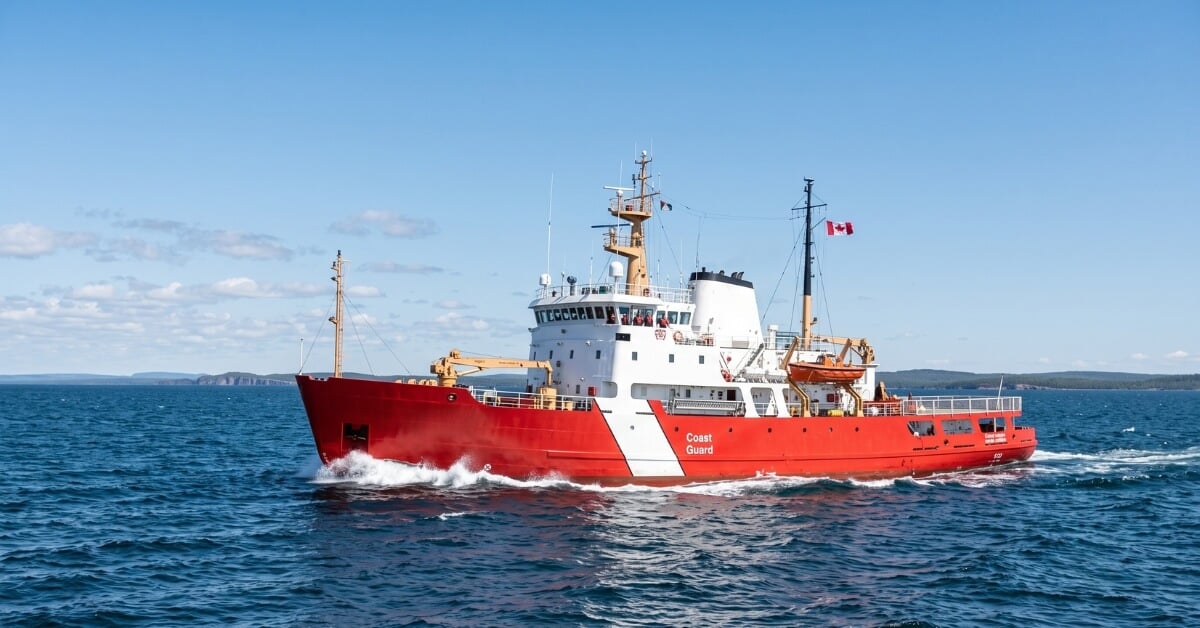
Today, the Canadian Coast Guard (CCG), along with Mr. Bruce Fanjoy, Member of Parliament for Carleton, on behalf of the Honourable David J. McGuinty, Minister of National Defence, officially welcomed Canadian Coast Guard Ship (CCGS) Judy LaMarsh into its fleet, the first time an additional large vessel has joined the Great Lakes region in over thirty years. Based in Prescott, Ontario, the vessel will carry out icebreaking and buoy tending operations across the Great Lakes and the St. Lawrence River in Ontario and Quebec.
The CCG’s Great Lakes coverage extends along the Canada-United States border, from the St. Lawrence River to the western point of Lake Superior – approximately 2,400 kilometers. With most of Canada’s population living in the Great Lakes basin, it is a top priority for the CCG to keep these waters safe and open for all who use them.
The CCGS Judy LaMarsh was purchased in 2021 and underwent conversion and refit work at Newdock St. John’s Dockyard Limited, in St. John’s, Newfoundland and Labrador, from 2023 to 2025, prior to joining the CCG fleet. This work included refurbishment of the vessel’s propulsion, communication, and navigation systems, as well as upgrades to workspaces and accommodation facilities, and the installation of a new buoy crane.
The vessel is named after the Honourable Judy LaMarsh, one of the first women to serve as a federal Cabinet Minister. She was instrumental in the development of innovative federal programs, including Medicare and the Canada Pension Plan. While serving as Canada’s Secretary of State (1965-1968), the Honourable Judy LaMarsh helped to establish the Royal Commission on the Status of Women in Canada. She was appointed to the Order of Canada in 1980.
This vessel was acquired under the National Shipbuilding Strategy, the Government of Canada’s long-term plan to renew its federal maritime fleets, revitalize Canada’s marine industry, and create sustainable jobs to maximize economic benefits across the country.
Press Release
Read on the original site
Open the publisher's page for the full experience