Two Major U.S. Container Gateways Handled Nearly 1.88 Million TEUs In August
Our take
The recent report indicating that the Ports of Los Angeles and Long Beach handled nearly 1.88 million twenty-foot equivalent units (TEUs) in August, a 2% increase year-over-year and ranking as the fifth-busiest month in their history, presents a complex picture of global trade dynamics. While seemingly positive, this volume highlights ongoing pressures within the maritime sector, particularly when viewed alongside recent events. For instance, the Iranian Seafarer Killed As Unidentified Strike Hits Ship Near Strait Of Hormuz underscores the escalating geopolitical risks impacting shipping lanes crucial to global supply chains, and the Indian Coast Guard Intercepts Vessel Suspected Of Oil Smuggling Off Mumbai points to the persistent challenges of maritime security and illicit activities. These factors, combined with fluctuating demand, create a volatile environment for ocean freight. The sustained volume at these key U.S. gateways suggests a continued, albeit potentially shifting, pattern of consumer demand and inventory replenishment, but also underscores the vulnerability of these operations to external disruptions.
The resilience demonstrated by these ports, despite ongoing global instability, is noteworthy. The data reflects a calibrated response to ongoing challenges, suggesting a degree of operational efficiency and adaptability within the U.S. maritime infrastructure. However, interpreting this increase requires a nuanced understanding of the underlying economic forces at play. Is this sustained demand a genuine indicator of robust economic activity, or is it a reflection of businesses continuing to build inventory in anticipation of future disruptions? The historical context is crucial; the post-pandemic surge in demand has gradually normalized, and these ports are now operating within a different, more complex landscape. Longitudinal data analysis, tracking TEU volumes over extended periods, is essential for discerning long-term trends from short-term fluctuations. Furthermore, understanding the composition of these TEUs – the types of goods being shipped – provides valuable insights into the sectors driving this volume.
The broader significance of this development extends beyond simply measuring cargo throughput. It highlights the interconnectedness of global economies and the critical role of maritime transport in facilitating trade. The efficiency and reliability of these container gateways directly impact the cost and availability of goods for consumers and businesses alike. Disruptions, whether caused by geopolitical events, weather patterns, or infrastructure limitations, can have cascading effects throughout the supply chain. The events occurring in the Black Sea, as detailed in Two Azerbaijani Seafarers Killed In Russian Attack On Tugboat In Black Sea, are a stark reminder of the human cost and operational risks associated with navigating increasingly contested maritime zones. Integrated data ecosystems, combining real-time vessel tracking with economic indicators and geopolitical risk assessments, are becoming essential for proactive risk management and informed decision-making within the maritime industry.
Looking ahead, the sustainability of this volume will depend on several factors. The ongoing evolution of global trade relationships, the stabilization of energy prices, and the continued investment in port infrastructure and technology will all play a significant role. Climate indicators, particularly extreme weather events, pose an escalating threat to port operations and the broader maritime ecosystem. The capacity to accurately forecast and mitigate these risks, leveraging empirical data and advanced modeling techniques, will be paramount. A key question to monitor is whether this sustained volume represents a new baseline for U.S. container ports, or if it is a temporary phenomenon driven by specific, potentially unsustainable, factors. The development of robust ocean intelligence – a comprehensive understanding of the maritime environment – will be crucial for navigating the uncertainties that lie ahead.
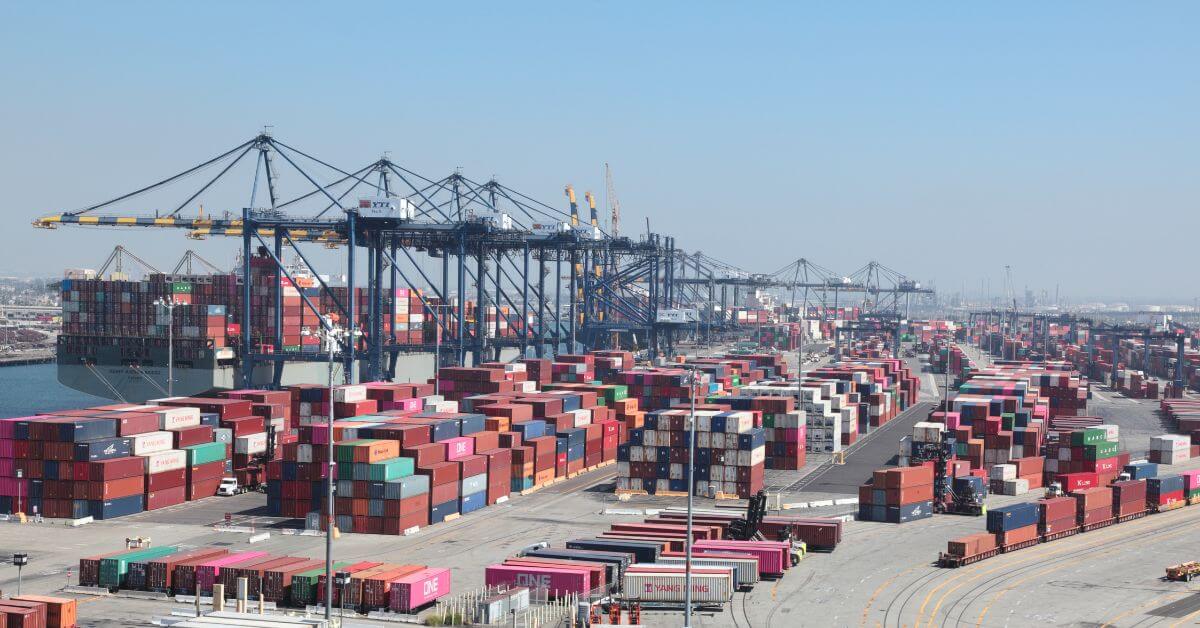
The Port of Long Beach handled 919,992 twenty-foot equivalent units (TEUs) in August, its busiest August on record. Shippers continued to adjust their supply chains as tariffs and geopolitical uncertainty affected the trade environment.
August volume was 2% higher than in the same month last year. It was also the fifth-busiest month in the port’s 115-year history.
Imports rose 3.6% year over year to 456,100 TEUs. Exports also increased, rising 4% to 99,754 TEUs.
The port moved 364,138 empty containers in August, down 0.39% from a year earlier. Long Beach uses empty-container movements as an indicator of future import traffic.
“Our August numbers tell us that shippers continue to adapt to tariffs and geopolitical uncertainty and are confident in the Port of Long Beach’s ability to deliver,” Chief Executive Noel Hacegaba said in a release.
Long Beach handled 6,678,078 TEUs in the first eight months of 2026. That was 1.3% more than during the same period in 2025.
The strong August result came as the neighbouring Port of Los Angeles also reported high cargo volumes.
Los Angeles handled 955,907 TEUs in August. Its combined volume for June, July and August was more than 2.9 million TEUs, making it the busiest three-month period in the port’s history.
The two San Pedro Bay ports handled nearly 1.88 million TEUs between them in August.
The Port of Los Angeles reported its three-month record just days after Long Beach announced its busiest August.
At Long Beach, higher import and export volumes helped make up for the small drop in empty-container movements.
The August figures show that cargo owners continued to use the Southern California gateway while dealing with changing tariff policies and geopolitical uncertainty.
References: freightwaves, theproducewire
Read on the original site
Open the publisher's page for the full experience