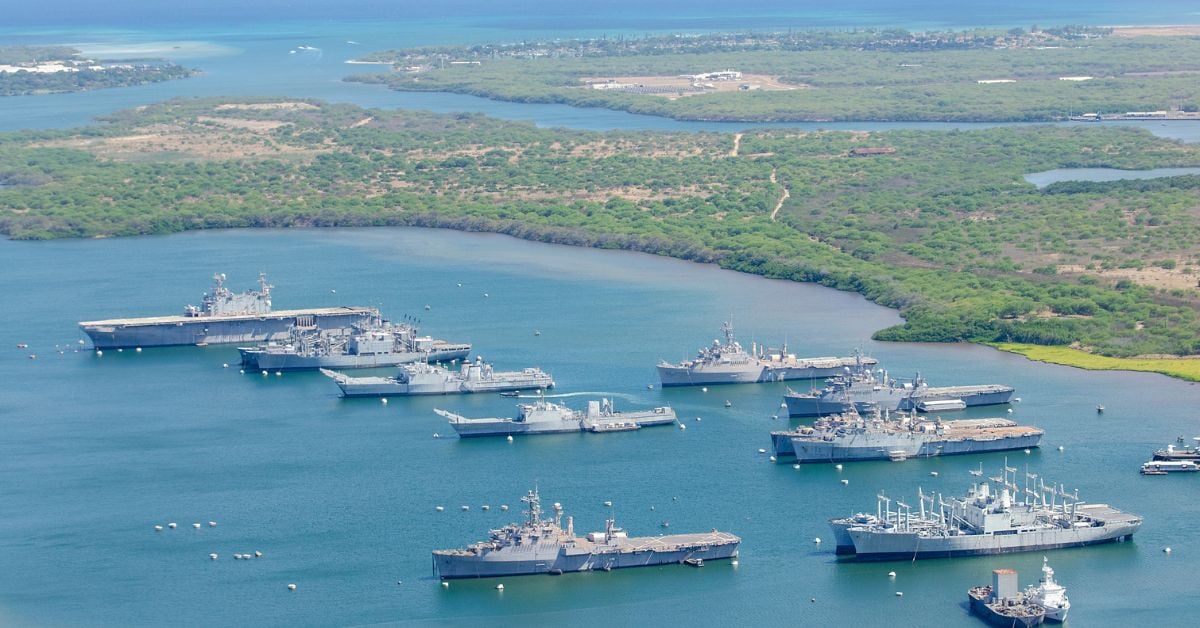
NATO's recent naval drills off the British coast are a calibrated reminder that military readiness and ocean intelligence are now inseparable. Simulating threats from Russian forces, these exercises test more than hardware: they test the integrated data ecosystems that modern navies depend on for real-time decision-making. For our readers, researchers, policymakers, and maritime professionals, this development underscores a practical reality: the same oceanographic data that tracks climate indicators also underpins national security.
The exercise's focus on simulated threats mirrors a broader trend. As EU Urges Naval Reinforcements as Red Sea Escort Demand Escalates, the demand for interoperable, peer-reviewed naval data grows. The Red Sea crisis has shown that escort operations require validated, real-time intelligence on currents, depths, and vessel movements. Similarly, the recent sinking of a decommissioned frigate off Scotland, detailed in Decommissioned frigate sunk off Scotland in joint naval exercise, was not just a target practice, it was a test of how empirical data from sinking events can calibrate future response models. These exercises, from the North Sea to the Red Sea, rely on the same integrated data ecosystems that serve climate research. The ocean does not separate civilian science from military operations; neither should our understanding.
Our opinion is straightforward: the ocean's role as a strategic domain is no longer optional for those who study it. For years, the ocean science community has focused on climate indicators and biodiversity. That work remains urgent. But these drills make clear that ocean intelligence, the ability to measure, model, and predict conditions in real time, is now a dual-use capability. Researchers who build longitudinal datasets on temperature or salinity are producing information that navies need for sonar performance, underwater drone navigation, and mine countermeasures. This is not a conflict of interest; it is a convergence of purpose. Understanding drives protection, whether from climate shifts or geopolitical threats.
The concrete takeaway is this: the next generation of ocean observation platforms, from autonomous gliders to satellite constellations, must be designed with both scientific and security applications in mind. A validated sensor network that tracks warming waters can also detect anomalous submarine activity. An integrated data ecosystem that serves climate models can also support naval readiness. The open question is whether the institutions funding these systems will embrace that dual mandate. We will be watching how the data from these British coast drills is shared, validated, and integrated into civilian research frameworks. That detail will tell us whether the ocean's future is one of collaboration or fragmentation.