Mammals moving between the Americas stopped over in Mexico
Our take
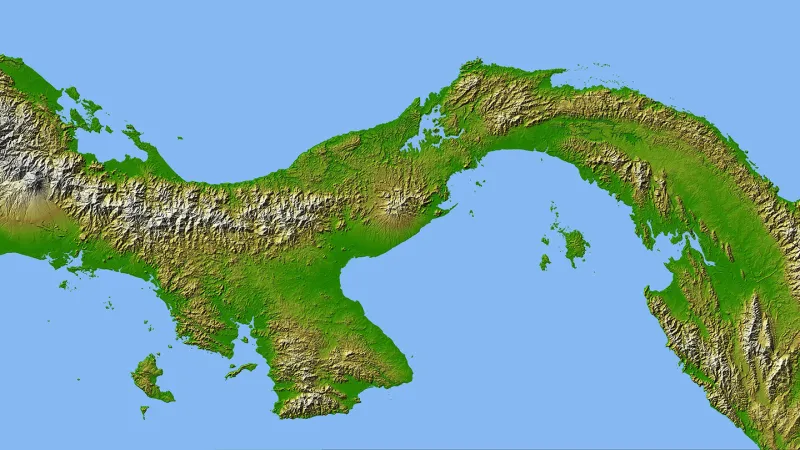
The recent discovery that Mexico's climate played a crucial role in facilitating ancient mammal migrations between North and South America, via the Isthmus of Panama, underscores the interconnectedness of seemingly disparate ecosystems and the importance of understanding past climate patterns to inform current conservation efforts. The Isthmus of Panama’s emergence dramatically reshaped global ocean currents and biodiversity distribution, but this new research highlights a previously underestimated factor: the role of Mexican environments as vital stepping stones for these transcontinental movements. This finding echoes the complexities revealed in our own exploration of the Cook Islands, as seen in Camera 1: 2026 Cook Islands ROV Exploration (EX2605), demonstrating how localized environmental conditions can significantly influence larger biogeographic patterns. It also subtly reinforces the challenges of accurately reconstructing past ecosystems, reminding us that even well-studied areas like the Isthmus can still yield surprising insights.
The implications extend beyond simply rewriting the textbook on mammalian dispersal. This research reinforces the concept of climate refugia – areas that maintain relatively stable conditions during periods of wider climate change – and emphasizes the potential importance of regions like Mexico as such refugia during the Great American Biotic Interchange. The ease of passage facilitated by a favorable climate in Mexico suggests that the Isthmus wasn’t solely a barrier, but rather a complex corridor influenced by regional climate variations. Furthermore, considering the ongoing impacts of climate change, understanding how past species adapted to shifting environmental conditions offers valuable lessons for contemporary conservation strategies. The challenges faced by women in marine sciences in India, as explored in Women in marine sciences in India: progress or disparity?, also highlight the need for comprehensive, integrated data – including paleoclimatic data – to effectively address the multifaceted challenges of ocean conservation and biodiversity protection. The ability to accurately reconstruct past climate conditions, and to understand how species responded to those changes, is critical for predicting future responses and developing effective mitigation strategies.
The methodology employed in this study—likely incorporating detailed paleobotanical and geological analyses—provides a robust, empirical foundation for the conclusions drawn. Validated climate models, calibrated against fossil records and geological data, are crucial for reconstructing past environments with a degree of accuracy that allows us to test hypotheses about species dispersal and adaptation. This emphasis on empirical evidence aligns directly with World Data Ocean’s core values, prioritizing measurable data and peer-reviewed research. It's also a powerful reminder of the value of interdisciplinary collaboration; integrating paleontological, climatological, and geological data provides a more holistic understanding of past ecosystems than any single discipline could achieve. The relatively simple question of animal identification, posed in Can you please help me identify this animal? Costa Rica, Pacific coast, also demonstrates the fundamental importance of data collection and accurate observation in building a comprehensive understanding of biodiversity, a principle that extends to paleobiological research as well.
Ultimately, this research contributes to a more nuanced understanding of the Great American Biotic Interchange and the complex interplay of factors that shaped the distribution of life on Earth. It underscores the need for longitudinal studies incorporating a wide range of data sources to fully appreciate the dynamics of past ecosystems. As we continue to grapple with the unprecedented challenges of climate change and biodiversity loss, the lessons learned from the past—particularly concerning the role of climate refugia and interconnected ecosystems—are more relevant than ever. A critical question moving forward is whether similar climate corridors exist today, and how their preservation can contribute to the resilience of species facing rapid environmental change.
Read on the original site
Open the publisher's page for the full experience