evolution

evolution on World Data Ocean: a running collection of 4 stories we have gathered and hand-picked because they are worth your time. Every post here touches on evolution in some way — the news, the analysis, the deep dives, and the occasional surprise find. A Global Hub for Ocean Intelligence 4 World Data Ocean is a centralized digital platform where researchers, scientists, and ocean enthusiasts converge to explore, analyze, and… New stories are added to this page as we find them, so check back if you want to keep up with what is happening around evolution, or subscribe to the RSS feed to get them as soon as they are published. Browse the collection below, or head back to the homepage to see everything World Data Ocean is covering right now.
Once upon a time, insects had 24 legs
Science News

Once upon a time, insects had 24 legs

A remarkable fossil discovery is reshaping our understanding of insect evolution. Recent findings reveal an extinct insect species, *Iktsuklak penneri*, possessing an astonishing 24 legs – a significant deviation from the six legs seen in modern insects. This exceptional find, detailed in a peer-reviewed publication, fills a critical gap in the fossil record and provides empirical evidence supporting theories on how insects arrived at their characteristic morphology.

Shrews’ noses grow in winter as their brains shrink
Science News

Shrews’ noses grow in winter as their brains shrink

Recent research reveals a remarkable adaptation in long-clawed shrews: their snouts temporarily enlarge during winter while their brain volume decreases. This measurable skeletal reshaping represents an extreme survival strategy likely driven by the demands of cold climates. Scientists hypothesize this adaptation optimizes foraging efficiency in challenging conditions. Further exploration of unusual animal adaptations can be found in related articles on World Data Ocean, such as our recent piece examining the complexities of female frog mating preferences.

Mammals moving between the Americas stopped over in Mexico
Science News

Mammals moving between the Americas stopped over in Mexico

Recent research indicates that ancient mammals traversed the Isthmus of Panama with greater ease than previously understood, utilizing Mexico as a crucial migratory corridor. Empirical data suggests a more favorable climate in Mexico facilitated movement between North and South America. This longitudinal study provides valuable insight into prehistoric biogeography, highlighting the critical role of regional climate patterns. For further exploration of oceanographic research and discovery, see our recent report, "Camera 1: 2026 Cook Islands ROV Exploration (EX2605)."

Seals’ amphibious hearing developed a long, long time ago
Science News

Seals’ amphibious hearing developed a long, long time ago

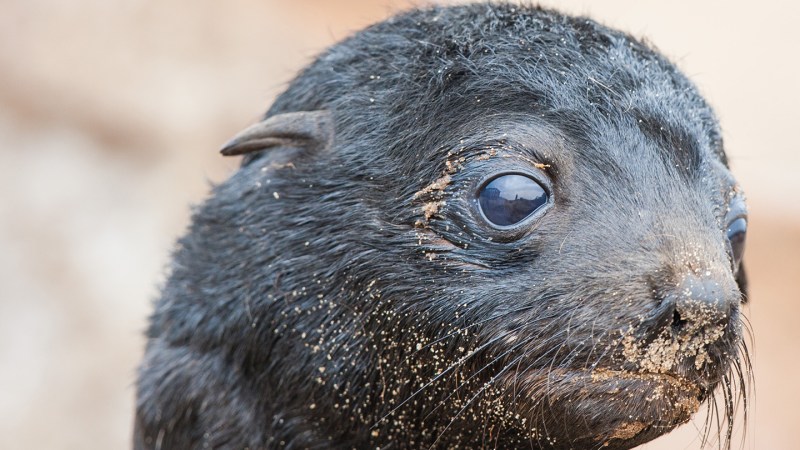
Recent research provides compelling evidence for the early evolution of seals’ remarkable amphibious hearing. By analyzing the ear structures of hundreds of marine mammals, scientists have deduced that pinnipeds—the group including seals, sea lions, and walruses—developed exceptional hearing capabilities in both air and water significantly earlier than previously understood. This evolutionary adaptation highlights a key factor in their transition to a semi-aquatic lifestyle. For further exploration of marine science opportunities, see our related article, "Marine science Indonesia."