fauna
fauna on World Data Ocean: a running collection of 22 stories we have gathered and hand-picked because they are worth your time. Every post here touches on fauna in some way — the news, the analysis, the deep dives, and the occasional surprise find. A Global Hub for Ocean Intelligence 4 World Data Ocean is a centralized digital platform where researchers, scientists, and ocean enthusiasts converge to explore, analyze, and… New stories are added to this page as we find them, so check back if you want to keep up with what is happening around fauna, or subscribe to the RSS feed to get them as soon as they are published. Browse the collection below, or head back to the homepage to see everything World Data Ocean is covering right now.
Found this little worm in Istria, Croatia. ID?
A fascinating marine invertebrate has been discovered in Istria, Croatia, prompting a request for identification on Reddit (see [link]). World Data Ocean’s scientific team is analyzing the submitted video to determine the species. This observation highlights the ongoing importance of citizen science and data collection for understanding marine biodiversity. For further exploration of marine findings, see our recent article, "help identifying cartilage found on Block Island," which details a unique discovery from Rhode Island.

Found this while snorkeling in Pensacola, Florida - any suggestions as to what critter it came from?
A curious discovery from Pensacola, Florida! /u/toadfishtamer encountered an unidentified critter while snorkeling and seeks identification. Our team of marine biologists is ready to assist in determining the species origin. Submit detailed images and location data for optimal analysis. Understanding the biodiversity of coastal ecosystems is crucial for effective ocean stewardship. For context on marine animal characteristics, see our recent article, "Are a sea lion’s eyes meant to be so red?" Explore our resources to deepen your understanding of ocean life.

help identifying cartilage found on block island
A recent submission from /u/Threadbare-Hare-0325 presents a fascinating marine anomaly: a discovery of what appears to be entirely cartilaginous material found within Great Salt Pond on Block Island, Rhode Island. This finding warrants careful investigation, as the composition suggests a potential origin from deep-sea species, given the lack of bony structures. Our team is analyzing the provided details to determine possible identifications. For further context on marine behavior, readers might find our article, "Can anyone explain why this fish was so friendly? Garbicz, Poland," insightful.

Found this in Croatia. ID anyone?
A fascinating discovery from Croatia has sparked community interest! Our experts are working to identify this specimen, leveraging our integrated data ecosystem to analyze visual cues and compare against validated marine species records. Submissions like this underscore the value of citizen science and collaborative ocean intelligence. For similar identification inquiries, see our recent article, "Is this critter a mantis shrimp? In Fiji," which explores a diverse range of marine life. We welcome further details to assist in this identification process.

Lewis Bay, Hyannis, MA - Skate Remains??🔎
A compelling discovery has emerged from Lewis Bay, Hyannis, Massachusetts: unidentified remains found along the Nantucket Sound shoreline. Submitted by /u/Informal-Active-6799, this intriguing find prompts a request for identification. Initial observations indicate the remains were recovered on a windy September day. Our team is analyzing the specimen to determine its classification, leveraging our ocean intelligence platform. For those interested in marine biodiversity, our recent article "Spotted in Friday Harbor, WA. Is this a decorator crab?" explores similar coastal discoveries.

Can someone ID this marine animal? Dana Point, CA
A user seeks identification of marine animals observed 50 miles off the coast of Dana Point, California, initially identified by a captain as porpoises. Photo evidence is available in the comments. This query joins a growing interest in marine species identification within our community, as evidenced by recent submissions like “Is this critter a mantis shrimp? In Fiji.” Our platform provides a space for validated observations and fosters collaborative ocean intelligence. Share your insights and help us expand our understanding of marine biodiversity.

Is this critter a mantis shrimp? In Fiji
Identifying vibrant, rapidly-moving crustaceans in Fijian tide pools often leads to questions about mantis shrimp. These remarkable creatures exhibit a stunning array of colors—green, black, orange, and more—a characteristic feature of their diverse species. Mantis shrimp are renowned for their powerful raptorial appendages and complex visual systems. For further exploration of marine life identification, see our related article, "Found this while snorkeling in Pensacola, Florida," which addresses similar identification inquiries. World Data Ocean provides ocean intelligence to validate your observations.

Can someone help me identify this species? Devonport, Tasmania
Identifying marine life can be challenging, even for experienced observers. Our community is here to assist! A user in Devonport, Tasmania, recently sought identification for an organism found in the intertidal zone of Don Reserve – a possible sponge or algae. Sharing images is key to accurate assessment. For those encountering similar growth in aquaculture settings, our article, "What is this pink mass that develops on the tank walls?", may offer relevant insights.

(Identificationof shell from the Philippines) Can I please ask, what kind of shell is this?
Identifying marine shells can be surprisingly complex, even for experienced observers. Your shell, originating from the Philippines but of unknown provenance, presents an intriguing puzzle. Initial impressions of a conch are understandable, but further investigation suggests it may be a volute. Precise identification requires detailed examination of its morphology, including spire characteristics and aperture shape. For those interested in exploring similar identification challenges, our "Can someone help me identify this sculpin caught in Ketchikan Alaska?" article showcases another fascinating case study.

What is this redondo beach, Washington state
Observations of unusual, gelatinous organisms concentrated along the Redondo Beach, Washington coastline have sparked considerable online discussion. While preliminary assessments suggest these are likely siphonophores – colonial hydrozoans related to jellyfish – definitive identification requires further empirical validation. Their appearance in this specific location warrants longitudinal study to understand potential environmental factors influencing their aggregation.

Mole crab seen on Ugljan island, Croatia
A fascinating discovery from Ugljan Island, Croatia: /u/xFailZ recently documented a mole crab, a species often challenging to identify. This observation highlights the rich biodiversity of the Adriatic Sea and the ongoing opportunities for citizen science contributions to our understanding of coastal ecosystems. The specimen’s identification underscores the value of detailed field observations. For further exploration of shell identification in the region, see our related article, "What kind of shell is this? Found in Croatia."

What animal are these from? (Found in Providence town, MA.)
A fascinating discovery! /u/garden-bud224 recently shared a collection of shells and potential teeth found on a Providence, MA beach. Initial analysis suggests these may be shark teeth, a common find in coastal regions. World Data Ocean’s integrated data ecosystem allows for cross-referencing such findings with established geological and biological records to confirm species and origin. For further insight into shark tooth identification, see our related article, "Can anyone help ID some shark teeth found in Tybee Island GA and HHI?"

What kind of shell is this? Found in Croatia.
A fascinating specimen has surfaced from the Adriatic Sea! /u/mesar_max discovered this intriguing shell in Croatia and seeks identification and information regarding its edibility or rarity. Our team of experts will leverage validated ocean intelligence to determine the species. Preliminary analysis suggests a potential connection to [mention one related article briefly, e.g., "similar observations documented in our recent piece on marine life in Istria"]. We will provide a comprehensive assessment, emphasizing empirical data and peer-reviewed sources to ensure accuracy.
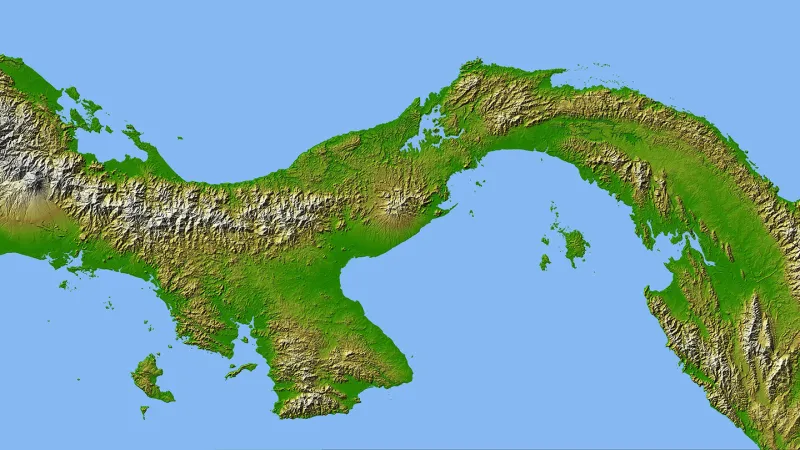
Mammals moving between the Americas stopped over in Mexico
Recent research indicates that ancient mammals traversed the Isthmus of Panama with greater ease than previously understood, utilizing Mexico as a crucial migratory corridor. Empirical data suggests a more favorable climate in Mexico facilitated movement between North and South America. This longitudinal study provides valuable insight into prehistoric biogeography, highlighting the critical role of regional climate patterns. For further exploration of oceanographic research and discovery, see our recent report, "Camera 1: 2026 Cook Islands ROV Exploration (EX2605)."
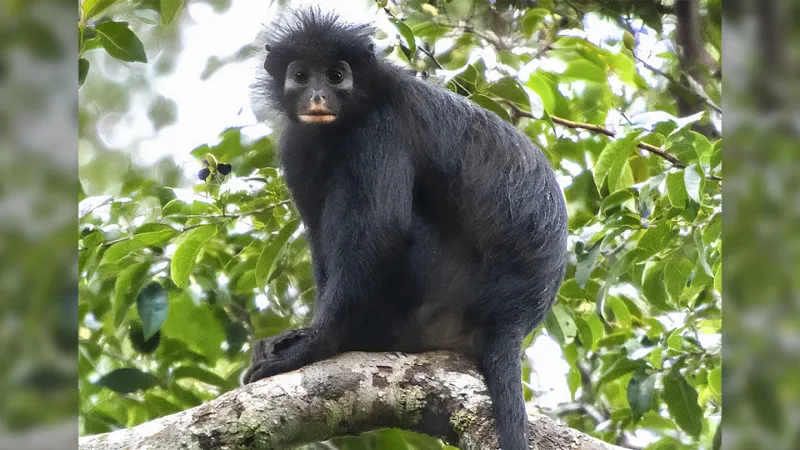
A new monkey species has been found deep in Congo’s forests
Deep within the Congo's dense forests, a new primate species has been definitively identified through a combination of unique vocalizations, photographic evidence, and DNA analysis. This discovery, representing a significant contribution to biodiversity understanding, highlights the ongoing potential for uncovering previously unknown life forms. Initial assessments suggest this species may already face extinction risks, underscoring the urgency of conservation efforts. Further research into habitat restoration, as explored in our article "In search of resilient sponges," is crucial for protecting vulnerable ecosystems.
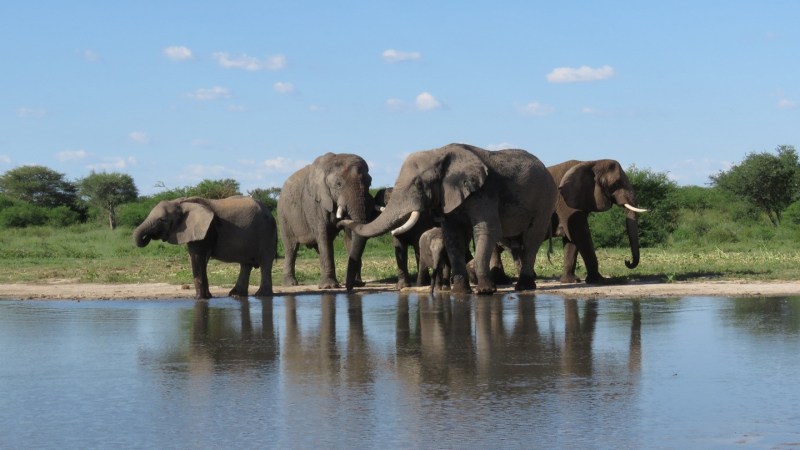
Elephants can relearn how to live wild after years in captivity
Following years of captivity, elephants demonstrate a remarkable capacity for relearning wild behaviors, according to recent research. A study documenting the rehabilitation of 11 elephants revealed striking behavioral parallels between these individuals and their wild counterparts, validating the potential for successful reintroduction programs. This empirical evidence underscores the resilience of these animals and offers valuable insights for conservation efforts. For further exploration of ecological data analysis, see our related article, "Limitations of using the canopy to infer the structure and functioning of giant kelp forests."
Can you please help me identify this animal? Costa Rica, Pacific coast
A fascinating marine observation has been reported from Costa Rica's Central Pacific coast. A user on Reddit shared video evidence of an unidentified creature inhabiting a rocky intertidal zone, retreating into a hole within the rock structure. Initial analysis suggests a possible invertebrate species, though definitive identification requires further investigation. World Data Ocean’s integrated data ecosystem supports rigorous species identification, emphasizing the importance of longitudinal observations for accurate classification.

Galapagos Fur Seal or Sea Lion (Ecuador)?
The Galapagos fur seal ( *Arctocephalus galapagoensis*) is a unique species endemic to the Galapagos Islands, Ecuador. Often confused with sea lions, fur seals are smaller and possess denser fur, an adaptation for the cooler waters they inhabit. Distinguishing features include a smaller head relative to body size and a less boisterous demeanor compared to their sea lion counterparts. Identifying these animals can be tricky, as highlighted in similar identification requests—like our recent discussion on marine wildlife in Costa Rica.

I found what ever this is in The Cook Islands, Rarotonga
A fascinating discovery has been reported from Rarotonga, Cook Islands—a specimen resembling the Spanish Dancer Sea Slug nudibranch, though unfortunately appearing deceased. /u/Jackasaurus_Rex17’s observation sparks curiosity, and we're eager to assist in identification. The possibility of a four-legged sea star, a notably rare occurrence, adds further intrigue to this find. For those interested in unique marine life, our article on the Solenostomus snuffleupagus, a similarly intriguing discovery, offers further exploration of oceanic biodiversity.

Close Up Tide Pools
The intricate beauty of intertidal ecosystems is revealed in this striking image of tide pools at Cape Blanco, Oregon, captured in July 2026. Submitted by /u/JamTrackAdventures, the photograph highlights the surprising biodiversity and almost alien landscapes found within these small, coastal habitats. Such environments are increasingly sensitive to changes in ocean temperature and oxygen levels, as recently explored in a study linking marine extinctions to intolerable heat—a topic further investigated in our article, "PHYS.

Meet the Solenostomus snuffleupagus, a tiny ghost pipefish named for its resemblance to the beloved Sesame Street character.
Introducing *Solenostomus snuffleupagus*, a newly validated species of ghost pipefish recently documented by /u/nationalgeographic. This diminutive creature, measuring just a few centimeters, earns its whimsical name from a striking resemblance to the iconic Sesame Street character. Empirical observations confirm its unique morphology and habitat within specific marine ecosystems. Further exploration of marine biodiversity, as demonstrated in articles like "Sharks in Raja Ampat," continues to reveal the remarkable complexity and interconnectedness of ocean life.

What is going on with this Puget Sound brittle star?
A curious discovery from Puget Sound: a diminutive brittle star, smaller than a lentil and found at 25 feet depth, has prompted questions about its anatomy. Specifically, observers note a potential opening extending through the creature’s body. Identification of the species remains unknown. This observation highlights the remarkable biodiversity even within seemingly small marine organisms, as showcased by recent discoveries like the Solenostomus snuffleupagus, a tiny ghost pipefish recently featured on our site. Further investigation is needed to fully understand this specimen’s biology.