Japan Selects Cruise Ship To Host 4000 Atheletes For 2026 Asian Games Opening In Nagoya
Our take
The decision by Japan to utilize a cruise ship as temporary accommodation for athletes participating in the 2026 Asian Games opening in Nagoya presents a fascinating confluence of logistical innovation and the evolving landscape of global events. While unconventional, this approach highlights the challenges of scaling infrastructure to meet the demands of large-scale international competitions, particularly in densely populated urban environments. It also underscores a growing trend towards utilizing maritime assets for purposes beyond their traditional scope. The move echoes recent discussions around leveraging existing resources – a concept also seen in the U.S. Navy’s consideration of foreign frigates for a new warship class U.S. Navy Considers South Korean, Japanese And Turkish Frigates For New Warship Class – demonstrating a pragmatic response to complex procurement and deployment considerations. The reliance on a cruise ship, capable of housing thousands, offers a relatively rapid and flexible solution compared to constructing new athlete villages, a process often plagued by delays and cost overruns.
The logistical implications are considerable, demanding careful calibration of port infrastructure, security protocols, and transportation links between the ship and competition venues. This strategy contrasts with the more traditional approach of purpose-built athlete villages, which, while offering a more tailored experience, are often left as "white elephants" after the games conclude. Furthermore, the use of a cruise ship introduces an element of maritime safety and operational complexity, akin to the challenges highlighted in the recent incident involving a tug-name mix-up leading to a tanker striking a pier Real Life Incident: Tug Name Mix-Up Causes Tanker To Strike Pier During Departure. These situations, while seemingly isolated, underscore the criticality of precise operational coordination and risk mitigation within maritime environments. The success of this endeavor will necessitate meticulous planning and a robust contingency framework. The current geopolitical climate, as evidenced by the increased U.S. naval escort of oil tankers traversing the Strait of Hormuz 40 Oil Tankers Loaded With 18 Million Barrels Of Oil For Asia Cross Hormuz Under U.S Naval Escort, further emphasizes the need for heightened vigilance and security considerations surrounding large-scale international gatherings.
Beyond the immediate logistical concerns, this choice reflects a broader shift in how nations are approaching major events. Sustainability and resource optimization are increasingly key drivers, as are considerations of cost-effectiveness and long-term legacy. Utilizing a cruise ship, a vessel already designed for accommodating large numbers of people, aligns with a desire to minimize environmental impact and avoid the creation of unused infrastructure. The concept of a “floating city” for athletes, while novel, could potentially become a model for future games or other large-scale events, particularly in regions with limited land availability or a strong maritime presence. The integration of advanced data analytics and real-time monitoring systems will be crucial to ensuring the safety, comfort, and operational efficiency of the floating athlete village, contributing to a more seamless and secure experience for all participants.
Ultimately, Japan’s decision represents a bold experiment in event logistics, one that could redefine how nations host international competitions. It invites a critical assessment of the trade-offs between traditional infrastructure development and the innovative utilization of existing maritime assets. The long-term impact will depend not only on the successful execution of the 2026 Asian Games but also on the broader adoption of similar strategies by other nations facing similar challenges. A key question moving forward is whether this approach can be scaled and replicated sustainably, and whether the unique environment of a cruise ship can provide a truly enriching and supportive experience for athletes from around the globe.
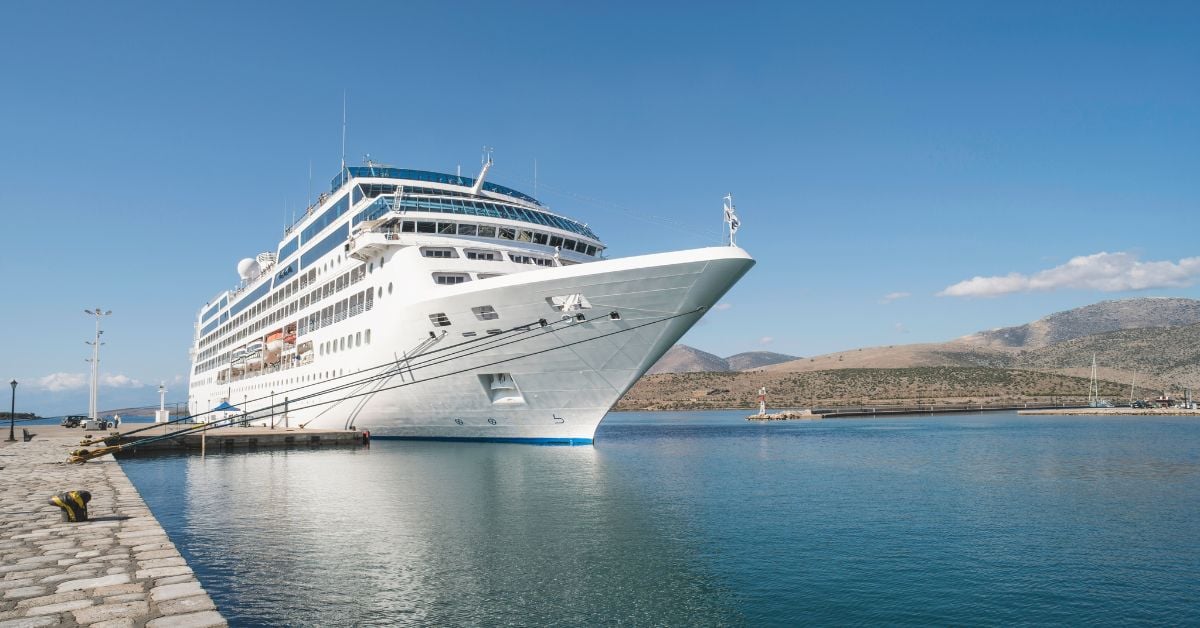
Japan has chosen a cruise ship to accommodate athletes participating in the Asian Games, which will open in Nagoya, in the central part of the country, on September 19, 2026. This is the first time that a ship would be used for an international competition of this scale being hosted by Japan.
The government had initially decided to build an athletes’ village, but the endeavour proved to be expensive, after which it was dropped and instead the vessel Costa Serena, registered in Italy, was chosen.
The 290 m long cruise ship features 1500 rooms, open-air decks, different types of restaurants, pools, resting areas, gymnasiums and much more, which would allow athletes to rejuvenate and refresh themselves.
A total of 4000 people would be staying on the cruise ship, which would be anchored at the Nagoya Port.
Authorities have said that all measures would be taken to ensure the security of those coming to participate in the games. In case of a typhoon or rough weather conditions. the ship would be moved offshore where high waves are not common.
Masashi Hayakawa, responsible for accommodations at the Asian Games organising committee, said that athletes would find all facilities on the ship, which they could expect in a hotel.
They would designate multiple types of cabins to every country’s athletes so there is no difference in treatment and everyone is satisfied, he said, adding that there are 6 kinds of cabins on the ship, and the decor cannot be changed in such a short time.
The customs formalities, quarantine rules and other laws which apply to foreign ships operating in Japan would be applied in this case too.
Everything will be checked beforehand to avoid any confusion and misunderstandings later, the authorities told the media.
Hayakawa said that they would make one decision at a time, given there are no precedents, and there is a lot of pressure on them to do it right and meet everyone’s expectations.
Safety measures would also be taken care of, so both athletes and spectators would enjoy the games. All the preparations are in their final stage. General stores, shops and a few booths are being set up near the quay and traffic lanes leading to the port are being secured so the guests can board and disembark without hassle.
Read on the original site
Open the publisher's page for the full experience