Iran Says It Captured U.S. Military’s Most Modern Unmanned Submarine In Strait Of Hormuz
Our take

The recent announcement from Iran regarding the capture of a U.S. unmanned submarine in the Strait of Hormuz presents a significant escalation of tensions in a strategically vital waterway. Iran's Islamic Revolutionary Guard Corps (IRGC) claims the drone, purportedly added to the U.S. fleet in 2025, was seized while conducting a “secret mission” and has released video footage purportedly showing the recovered asset. While verification of these claims remains pending, the incident underscores the increasing reliance on unmanned systems in naval operations and the inherent risks associated with deploying advanced technology in contested maritime environments. This development echoes concerns previously raised about advancements in underwater acoustic detection, as highlighted in [China Uses Warship Sounds To Improve Submarine Target Tracking], demonstrating a global trend towards enhancing the ability to detect and track underwater vessels. The escalating complexity of naval warfare, particularly in regions like the Persian Gulf, demands careful consideration of operational vulnerabilities and potential for miscalculation.
The Strait of Hormuz, a narrow waterway through which a significant portion of the world’s oil transits, has long been a flashpoint for regional instability. Iran’s history of asserting control over maritime traffic, coupled with ongoing tensions with the United States, creates a volatile environment where even seemingly minor incidents can rapidly escalate. The timing of this announcement, following Iran's claims of testing anti-ship missiles near a U.S. Navy warship, as detailed in [Iran Says New Anti-Ship Missile Was Tested Over US Navy Warship As Strait Of Hormuz Tensions Rise], further amplifies concerns about a deliberate strategy to project power and disrupt regional stability. The nature of the captured drone—described as “most modern”—suggests potential intelligence value for Iran, offering insights into U.S. naval technology and operational tactics. The economic implications are also considerable, as any disruption to oil flows through the Strait could trigger significant price spikes and global economic instability. Furthermore, the dispute regarding freight rates, as reported by [Oil Tanker Firm Says It Is Owed $55 Million By A Counterparty In Freight Rate Dispute], highlights the broader economic pressures at play within the region, potentially contributing to the heightened tensions.
The incident raises critical questions about the deployment and protection of unmanned maritime systems. While USVs (Unmanned Surface Vehicles) offer numerous advantages – reduced risk to personnel, extended operational range, and enhanced data collection capabilities – they are inherently vulnerable to interception and capture. This event serves as a stark reminder of the need for robust countermeasures, including advanced encryption, autonomous self-destruct mechanisms, and improved operational security protocols. The increasing sophistication of adversary capabilities, particularly in the realm of underwater surveillance and electronic warfare, demands a continuous reassessment of the risks associated with relying on unmanned systems in high-threat environments. The recovery of the drone also provides Iran with an opportunity to study U.S. technology, potentially leading to countermeasures or even the development of similar systems, further complicating the strategic landscape. The reliance on integrated data ecosystems to manage and process information from these systems, as World Data Ocean champions, becomes even more critical in this context, demanding robust cybersecurity and data integrity measures.
Looking ahead, the incident is likely to fuel further distrust between the United States and Iran, complicating efforts to de-escalate regional tensions. The lack of transparency surrounding the circumstances of the drone’s capture and the subsequent claims and counter-claims will likely exacerbate the situation. The incident underscores the importance of clear communication channels and established protocols for managing interactions between naval forces in contested waters. The question now is whether this incident will trigger a broader escalation or serve as a wake-up call, prompting both sides to reassess their strategies and prioritize diplomatic solutions to prevent further destabilization in the Persian Gulf. The ongoing development and deployment of advanced maritime surveillance technologies by various nations in the region warrants close observation and a proactive approach to mitigating potential conflicts.
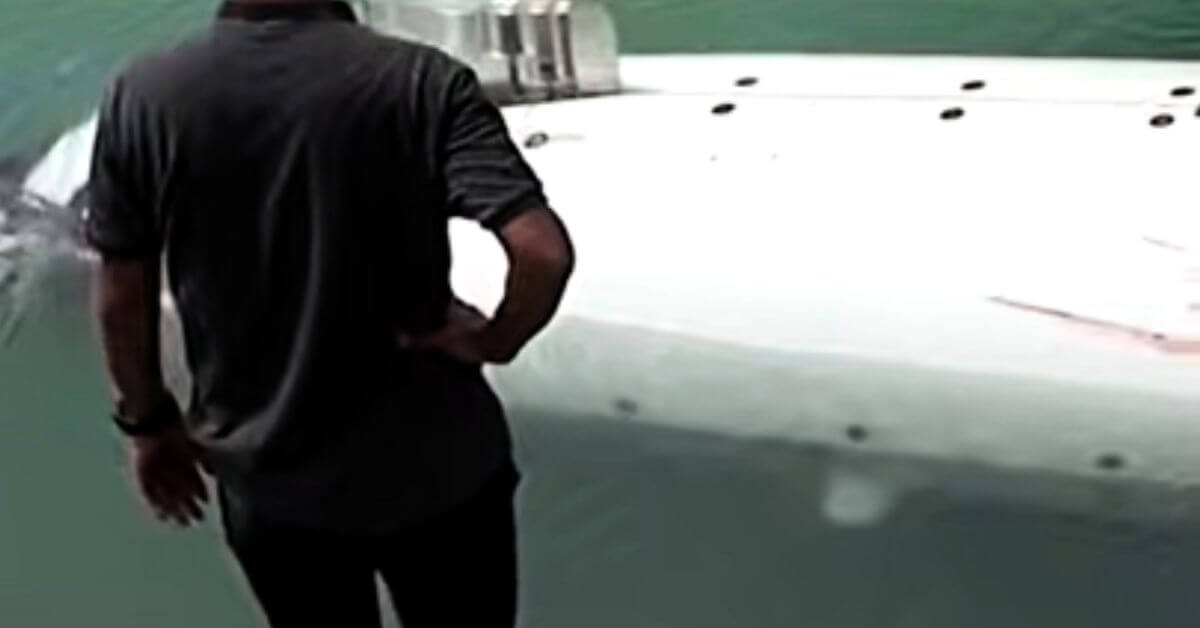
Iran’s Islamic Revolutionary Guard Corps (IRGC) said Tuesday that it had seized a U.S. underwater drone near the entrance to the Strait of Hormuz.
The U.S. has not confirmed the seizure. American officials said the underwater drone stopped working a day earlier and may have drifted into Iranian waters.
The IRGC said its naval forces found the drone near the Strait of Hormuz. Iranian state television said it was an advanced U.S. unmanned underwater vehicle.
Iran said the drone was added to the U.S. fleet in 2025. The IRGC also released a video that it said showed the drone.
The U.S. military said the drone was being used to survey waters in the region.
U.S. defence officials told Fox News that it was a large underwater drone made by Anduril. They said it was a commercially available model.
The drone had sonar and radar but no classified sonar or radar equipment, the officials said. They also said it was not collecting sensitive information.
One U.S. official said the drone may have stopped working because it had been used for too long.
Three sources told Fox News that Iran did not stop or intercept the drone. They said it stopped working on its own.
The drone was not armed and did not carry sensitive technology, the sources said. Its operators could also erase data from the drone remotely.
Fox News reported that the IRGC video appeared to show the missing Anduril drone.
The U.S. government has not officially confirmed that Iran captured the vehicle.
What the Drone Can Do?
The drone is called Dive-LD and is made by Anduril.
Anduril says it can operate for up to 10 days without returning to its base. It can dive to depths of up to 6,000 metres (19,700 feet).
DefenseScoop reported in 2024 that each Dive-LD cost about $2.5 million.
Iranian media said the drone can survey underwater areas and map the seabed. It can also find mines and check underwater cables and pipelines.
The U.S. military is using more unmanned ships and underwater drones. They help monitor large areas of the sea and track ships and submarines without putting sailors at risk.
Per reports, the U.S. Navy had 23 drones operating on, under or above the water in the Strait of Hormuz the previous day.
The IRGC also said its air defence systems had shot down a U.S. MQ-9 Reaper drone over the Strait of Hormuz.
Tensions remain high between Iran and the United States around the Strait of Hormuz.
U.S. Central Command said American forces had destroyed five Iranian crude oil tankers.
CENTCOM said the action came after Iran’s Revolutionary Guard tried twice to attack a U.S. warship with ballistic missiles over two days.
References: ndtv, timesnownews
Read on the original site
Open the publisher's page for the full experience