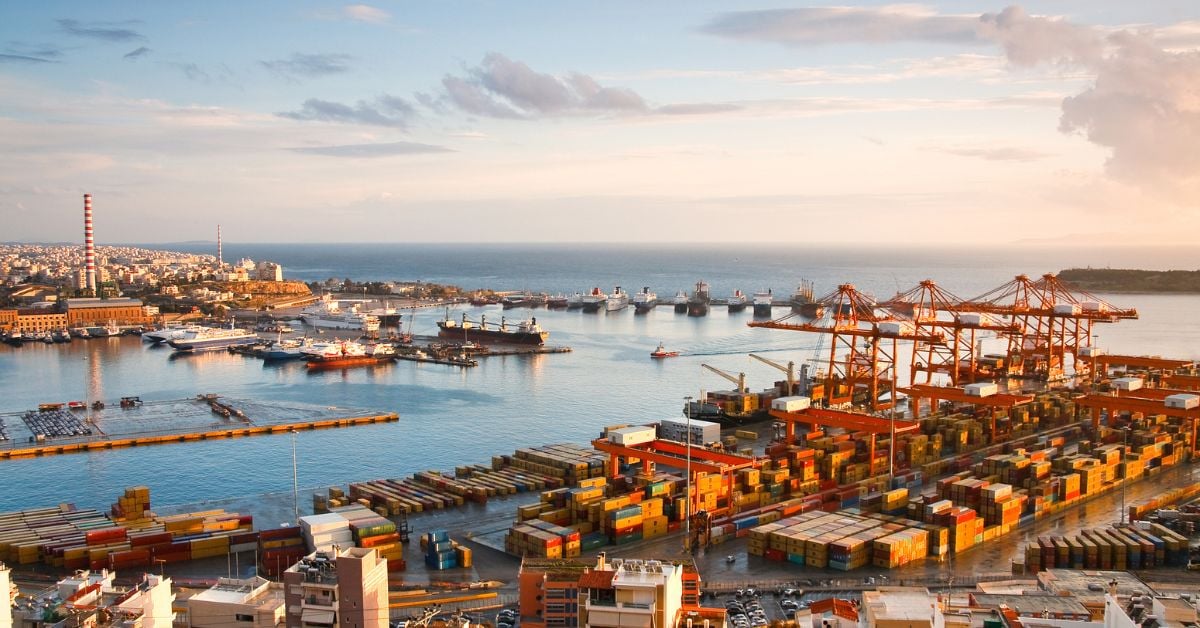
India has committed INR 2300 Crore to build its first e-methanol plant, a facility designed to supply cleaner fuel to ships operating on the Asia-Europe corridor. This is not a small pilot or a distant pledge; it is a calibrated investment in a specific, measurable solution for one of the world's busiest shipping lanes. The project, located at Kandla Port, directly addresses the sector's most pressing challenge: decarbonizing deep-sea vessels that cannot yet rely on batteries or hydrogen. For our readers tracking the intersection of maritime infrastructure and climate indicators, this is a signal worth watching closely. It also aligns with parallel developments we have reported, such as the Indian government's approval of a India Approves ₹13 Crore Welfare Hub for Seafarers at Goa's Mormugao Port, which underscores a broader national strategy to strengthen port ecosystems, not just with concrete and cranes, but with energy transition hardware.
Our take is straightforward: this plant matters because it moves e-methanol from a theoretical fuel to a real-world supply chain asset. The Asia-Europe route accounts for a significant share of global shipping emissions, and until now, vessels burning heavy fuel oil have had few viable alternatives for such long hauls. E-methanol, produced using renewable energy and captured carbon, offers a path that does not require a complete overhaul of existing engine designs. The project's emphasis on integrated production and bunkering infrastructure suggests the planners understand that fuel availability is the bottleneck, not engine technology. What remains to be validated is the cost per tonne and the scalability of the production process. We would tell any reader asking about this: the engineering is credible, but the economic case will depend on how quickly the plant can achieve full output and whether shipping lines commit to offtake agreements.
This investment also connects to a deeper pattern we have observed in the region. Our reporting on Integrated Subsea Infrastructure Shifts to Enhance Indian Ocean Connectivity showed how India is positioning itself as a hub for digital and physical connectivity. The e-methanol plant extends that logic into energy. If India can produce and supply low-carbon marine fuel from its own ports, it gains leverage over a critical input for global trade. It reduces dependence on fuel supply chains that currently run through other chokepoints. That is a strategic calculation as much as an environmental one. The government is treating ocean intelligence, knowing what moves, how it moves, and what powers it, as a form of sovereignty.
The concrete point to watch is the timeline for first fuel delivery. The article does not specify when the plant will begin commercial supply, but that date will determine whether this project becomes a replicable model or a costly experiment. For seafarers, port operators, and shipping lines watching from the bridge, the question is simple: will the e-methanol be there when the ship arrives? The answer will ripple well beyond Kandla.