Ever wonder how we actually track what’s living in the deep blue without catching every single fish? 🌊 Enter eDNA: envi...
Our take
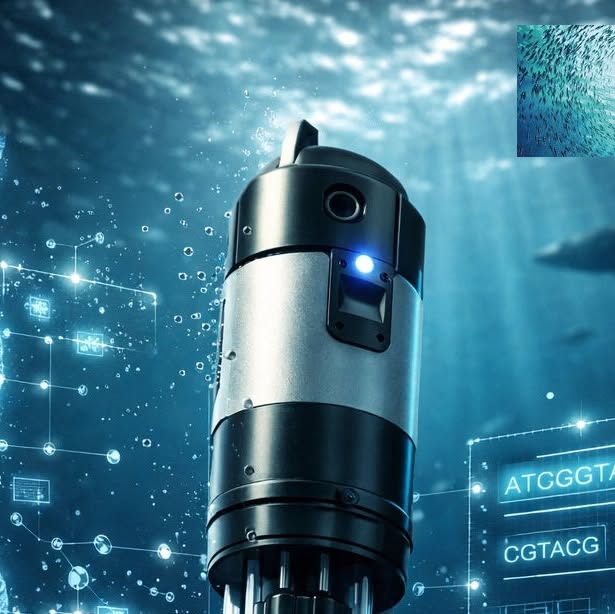
The advent of environmental DNA (eDNA) technology marks a transformative moment in how we understand and manage marine biodiversity. Traditionally confined to research laboratories, eDNA is now emerging as a vital tool for corporate sustainability initiatives. This shift is particularly noteworthy as companies increasingly face pressure to substantiate their environmental, social, and governance (ESG) commitments with empirically validated data. As highlighted in the article, eDNA provides a genetic footprint of oceanic life, allowing for the monitoring of species without the need to catch them, thus minimizing ecological disturbances. This aligns closely with initiatives such as the Port Of Long Beach Announces First-of-Its-Kind $1M Award For Clean Fuel Bunkering Challenge, which seeks innovative solutions to advance sustainability in maritime operations.
The implications of this technological evolution extend far beyond mere compliance with regulations. Companies leveraging eDNA are moving towards a model of accountability that translates complex scientific insights into actionable strategies. This not only enhances transparency but also fosters a culture of shared responsibility—an essential aspect of effective ocean stewardship. As businesses integrate eDNA into their operations, they can provide measurable assessments of their impact on biodiversity, creating a more informed and engaged stakeholder community. This shift is particularly crucial in light of the escalating climate crisis, where maintaining ocean health is vital. The findings from ongoing research, such as those discussed in Macrobenthos and their relationship with environmental drivers in Rushikulya, an Olive Ridley turtle rookery-associated tropical estuary, underscore the importance of understanding the intricate relationships within marine ecosystems.
Furthermore, eDNA represents a significant advancement in the field of ocean intelligence. By providing real-time data on species diversity and distribution, it enables not just better corporate policies but also enhances scientific research capabilities. As eDNA technology becomes more accessible, it is poised to empower a broader range of stakeholders—from governmental bodies to local communities—by providing them with the tools necessary to monitor and protect their marine environments. The potential for eDNA to inform blue solution initiatives is profound, offering a pathway to more sustainable practices in aquaculture, fisheries, and conservation efforts.
Looking ahead, the integration of eDNA into corporate sustainability frameworks raises important questions about the future of ocean governance. As companies increasingly adopt this technology, will we see a shift towards more robust regulatory frameworks that mandate the use of empirical data in environmental reporting? How will this influence the balance of power between corporations and environmental advocacy groups? The answers to these questions will be pivotal as we navigate the complexities of climate change and strive for a future where corporate responsibility and environmental stewardship go hand in hand. The path forward is clear: embracing eDNA technology not only enhances our understanding of oceanic ecosystems but also sets the stage for a collaborative approach to marine conservation.
Read on the original site
Open the publisher's page for the full experience
Related Articles
- Did you know a single 1.5-liter water sample can reveal more about ocean biodiversity than a traditional net survey? 🌊�...Did you know a single 1.5-liter water sample can reveal more about ocean biodiversity than a traditional net survey? 🌊🧬 Welcome to the era of eDNA. At World Data Ocean, we’re integrating these pioneering datasets into our portals, helping researchers and policy-makers map thousands of species with unprecedented precision. Whether it’s identifying elusive deep-sea life or monitoring ecosystem health in real-time, high-tech tools are making marine science more efficient and accessible than ever before. Ready to dive into the data? Link in bio to explore our latest biodiversity resources. 🔗 #OceanData #MarineConservation #eDNA #OceanIntelligence
- Ever wonder what’s actually swimming in those deep blue waters without having to catch a single fish? Welcome to the era...Ever wonder what’s actually swimming in those deep blue waters without having to catch a single fish? Welcome to the era of 'Ocean CSI.' At World Data Ocean, we’re geeking out over how environmental DNA (eDNA) is changing the game. By using autonomous underwater vehicles (AUVs) to scoop up water samples, we can detect traces of DNA left behind by marine life. It’s like forensic science for the sea: allowing us to identify rare species and track biodiversity trends in real-time. Our data portals and SDKs are built to handle this kind of complex, high-tech info, making it easier for researchers and teams to turn a jar of seawater into a clear picture of ocean health. Want to see how we’re turning water samples into validated scientific insights? Head over to our site to explore our latest data portals. #OceanCSI #MarineTech #eDNA #WorldDataOcean
- Empowering small-scale fisheries and aquaculture isn’t just about the tools: it’s about the intelligence behind them. At...Empowering small-scale fisheries and aquaculture isn’t just about the tools: it’s about the intelligence behind them. At World Data Ocean, we believe that sustainability and productivity go hand-in-hand when backed by empirical data. Through Blue Ocean Data Solutions, we’re collaborating with SMEs to integrate real-time monitoring into their daily operations. Imagine having instant insights into water quality, temperature, and fish health right on your tablet. This isn't just high-tech for the sake of tech; it’s about making smarter decisions that protect our oceans while ensuring a thriving business. By democratizing access to these validated data sets, we’re helping local producers reduce waste, optimize resources, and maintain the delicate balance of our marine ecosystems. It’s a collective effort to build a more resilient blue economy. Curious about how data-driven solutions can transform aquaculture? Head over to our site to learn more about our ongoing initiatives and how we’re supporting the next generation of ocean stewards. #Aquaculture #BlueEconomy #SustainableFishing #OceanData
- Turning Passion into Professional-Grade Science 🌊📈 High-quality ocean data isn't just for the ivory tower anymore. The...Turning Passion into Professional-Grade Science 🌊📈 High-quality ocean data isn't just for the ivory tower anymore. The UN Ocean Decade recently released new guidelines for citizen science data sharing, and we’re here for it! At World Data Ocean, we’re bridging the gap between community passion and rigorous scientific standards. Our tools are designed to help you contribute data that researchers and policymakers can actually use for real-time decision-making. Whether you're tracking marine debris or monitoring local sea temperatures, let’s turn your observations into global impact. 🌍✨ Explore our data portals and see how you can contribute to a healthier ocean. [Link in Bio] #OceanDecade #CitizenScience #MarineData #TechForGood