Different moon rocks tell different tales about a long-ago bombardment
Our take
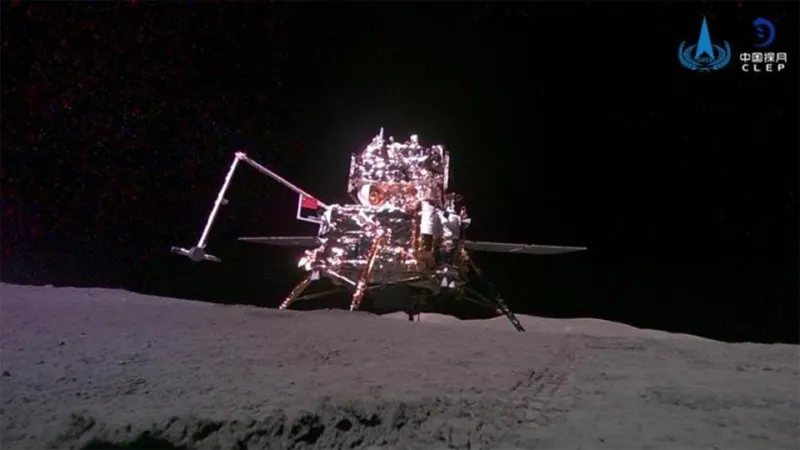
The lunar surface, long considered a relatively well-understood landscape, continues to yield surprising revelations. Recent analysis of farside lunar samples is challenging established models of the Moon’s early bombardment history, revealing a far more complex picture than previously conceived. For decades, interpretations of Apollo-era samples suggested a dominant, singular impact event significantly shaped the lunar crust. However, these new findings, derived from samples collected from the far side – a region less affected by Earth’s gravitational influence – indicate a more protracted and varied period of bombardment. This nuance is critical for understanding not just the Moon’s evolution, but also the formation and early conditions of the inner solar system, as the Moon acts as a historical record of impacts that occurred throughout our planetary neighborhood. The discovery of amino acids within the 2024 New York City meteorite earlier this year serves as a stark reminder of the unexpected discoveries awaiting us in extraterrestrial materials, and the potential for uncovering clues about the origins of life itself. Furthermore, the ongoing search for habitable environments beyond Earth benefits from a deepened understanding of planetary formation processes, as exemplified by the recent discovery of a rocky exoplanet with a helium atmosphere – a promising sign for the search for life – detailed in This “exotic weirdo” exoplanet has a rocky surface and an atmosphere.
The implications of this revised understanding are significant for several areas of planetary science. The traditional model, based primarily on Apollo samples, suggested a period of intense bombardment followed by a relatively quiescent era. The farside data, however, suggest a more sustained, albeit varying, rate of impact events over a longer timescale. This challenges current models of lunar crustal evolution and the timing of geological processes like volcanism and mare formation. Calibrated dating techniques applied to these new samples will be essential for establishing a more precise chronology of lunar history, allowing researchers to refine their understanding of the early solar system's dynamic environment. The differences in composition observed between the nearside and farside samples further underscore the complexity of lunar evolution, potentially indicating regional variations in crustal thickness and mantle dynamics. Empirical data, rigorously validated through peer-reviewed analysis, are steadily reshaping our understanding of the Moon's past, and by extension, the early history of Earth and other terrestrial planets.
Beyond the purely geological implications, this discovery highlights the importance of expanding our sampling locations. The Apollo missions, while groundbreaking, were geographically limited. The farside samples, acquired through later missions, are demonstrating the value of exploring previously understudied regions to obtain a more complete and representative dataset. Integrated data ecosystems, incorporating information from orbital surveys, robotic missions, and sample return missions, are becoming increasingly crucial for building comprehensive models of planetary evolution. Real-time analysis of data from lunar orbiters, coupled with longitudinal studies of returned samples, allows for a more dynamic and iterative approach to scientific discovery. This collaborative, global approach – essential for tackling complex scientific questions – ensures a broader and more robust understanding of our celestial neighbors. The precision of these analyses, reliant on validated methodologies and sophisticated instrumentation, exemplifies the power of technological innovation in furthering our knowledge of the cosmos.
The current findings pose a critical question for future lunar exploration: how much more nuanced is the story of the early solar system buried within the lunar crust? With increasingly sophisticated instrumentation and a growing emphasis on sampling diverse geological environments, the Moon promises to reveal even more unexpected insights into its own formation and the broader context of planetary evolution. What other narratives, obscured by previous assumptions, are waiting to be uncovered as we continue our exploration of Earth's closest celestial companion?
Read on the original site
Open the publisher's page for the full experience