The 2024 New York City meteorite contains amino acids
Our take
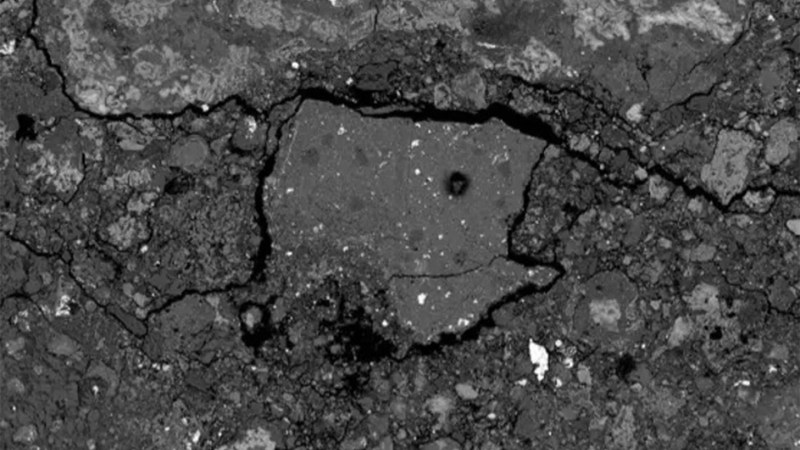
The recent discovery of amino acids within the 2024 New York City meteorite, a specimen recovered after impacting a New Jersey residence, presents a compelling opportunity to refine our understanding of abiogenesis – the origin of life. This finding bolsters the theory of panspermia, the hypothesis that life’s building blocks, and potentially even life itself, can be distributed throughout the universe via meteorites and other celestial bodies. The meteorite’s brine-formation, a process involving mineral-rich water within the asteroid’s interior, is particularly significant as it mirrors environments considered plausible for early Earth conditions and could have provided a protected setting for the synthesis and preservation of these fundamental organic molecules. Understanding the conditions that allowed for this synthesis, and the subsequent survival through space travel, provides invaluable clues for researchers investigating the early development of Earth's biosphere. This discovery resonates with recent research highlighting the profound impact of ocean conditions on life, as demonstrated by PHYS.Org: Researchers link the mass extinction of once-dominant marine groups to intolerable heat, diminished oxygen in oceans, which underscores the sensitivity of even established ecosystems to environmental shifts.
The presence of amino acids, the fundamental components of proteins, within a meteorite isn't entirely unprecedented. However, the context of this discovery – a brine-formed meteorite – adds a layer of complexity and relevance. Brines, often highly concentrated and chemically unique solutions, are known to facilitate the formation of complex organic molecules. The fact that these molecules survived the intense heat and radiation of atmospheric entry – a process known to degrade many organic compounds – suggests a protective mechanism inherent in the meteorite's structure and composition. Further empirical analysis, including longitudinal studies of the meteorite’s molecular structure over time, will be critical in determining the origin of these amino acids. Were they formed *in situ* within the asteroid, or were they delivered from an external source? The integrated data ecosystem of the World Data Ocean will play a vital role in comparing the composition of this meteorite to data from other meteorites and terrestrial samples, allowing for a more calibrated and precise assessment of its origins. Moreover, this discovery reinforces the importance of continued investment in space exploration and sample return missions, as these provide invaluable opportunities for direct observation and analysis of extraterrestrial materials.
The implications extend beyond simply understanding the origin of life. The study of these extraterrestrial amino acids can inform our search for life beyond Earth. If life’s building blocks are readily available throughout the cosmos, delivered via meteorites and comets, then the probability of life existing elsewhere in the universe increases significantly. This reinforces the need for rigorous and validated methodologies in the search for biosignatures on other planets and moons. The challenges inherent in detecting life in these environments are considerable, requiring sophisticated instrumentation and careful consideration of potential false positives. Connecting this discovery to broader climate indicators is also valuable; PHYS.Org: Researchers link the mass extinction of once-dominant marine groups to intolerable heat, diminished oxygen in oceans demonstrates the profound impact of environmental change on life’s trajectory, and understanding the early conditions that fostered life's emergence on Earth offers context for assessing the resilience of life in the face of current and future environmental challenges. A deeper understanding of how life originated, and the conditions that enabled it, can inform our efforts to safeguard the ocean intelligence necessary for planetary health.
Looking forward, the focus should shift to detailed molecular analysis of the meteorite, including isotopic analysis to determine the origin of the amino acids. Further research should concentrate on replicating the brine-formation process in laboratory settings to better understand the chemical pathways involved in amino acid synthesis. The real-time monitoring of this meteorite’s degradation, alongside comparative studies of similar extraterrestrial materials, will be crucial for calibrating models of planetary habitability. A critical question remains: can we discern the presence of chirality – the “handedness” of molecules – in these extraterrestrial amino acids, and if so, does this provide further evidence for a bias in the early universe towards a specific form of life? The ongoing investigation of this meteorite holds the potential to fundamentally reshape our understanding of life’s origins and our place in the cosmos.
Read on the original site
Open the publisher's page for the full experience