This “exotic weirdo” exoplanet has a rocky surface and an atmosphere
Our take
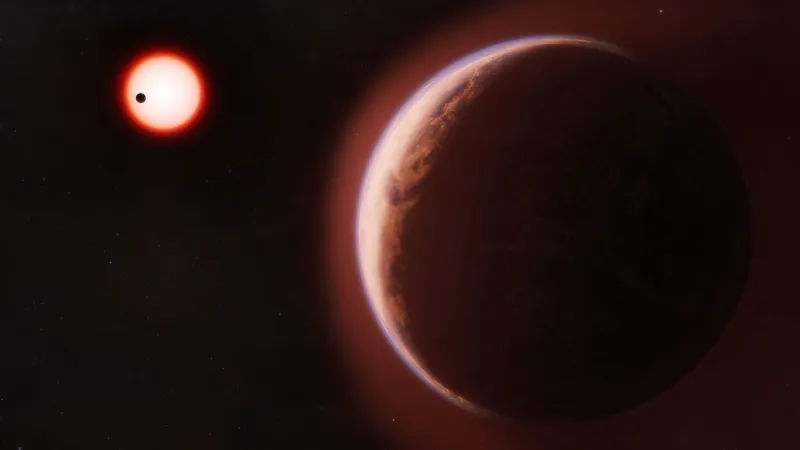
The discovery of a helium atmosphere surrounding a rocky exoplanet represents a significant, albeit preliminary, step forward in the ongoing search for habitable worlds beyond our solar system. While the presence of helium itself doesn't guarantee life, it does suggest a potentially rocky composition—a critical prerequisite—and implies that the planet has undergone some level of geological activity. This finding builds upon recent work demonstrating the presence of organic molecules in extraterrestrial materials; consider, for example, the recent analysis of the The 2024 New York City meteorite contains amino acids, which revealed the presence of amino acids formed in a brine environment. The mere possibility of a rocky surface and an atmosphere, even one composed primarily of helium, dramatically increases the odds of finding conditions suitable for liquid water and, consequently, life as we understand it. It’s a validation of the increasingly sophisticated observational techniques being developed to characterize these distant worlds, moving us beyond simple size and orbital parameters to analyze atmospheric composition.
The challenges in detecting and interpreting exoplanet atmospheres are immense. Helium, being light and easily lost to space, suggests the planet is actively replenishing its atmosphere – likely through volcanic outgassing or other geological processes. Understanding the mechanisms that maintain this atmosphere will be crucial to assessing the planet's long-term habitability. The research highlights the importance of integrated data ecosystems. Observations from ground-based telescopes combined with data from space-based observatories, like the James Webb Space Telescope, are essential for building a comprehensive picture. Furthermore, correlating atmospheric composition with planetary characteristics, such as size, mass, and orbital parameters, requires longitudinal data collection and rigorous empirical validation. A similar approach is required when studying less-understood phenomena closer to home, as evidenced by the ongoing investigation into unusual marine life, such as the recent determination of What kind of fish(?) is this? North shore Massachusetts, which demonstrates the value of citizen science and coordinated data collection to improve our understanding of local ecosystems.
This discovery also underscores the importance of broadening our definition of "habitable." Historically, the focus has been on finding planets strikingly similar to Earth – the “Goldilocks zone” where liquid water could exist on the surface. However, this new finding suggests that planets with significantly different atmospheric compositions, perhaps even those initially deemed uninhabitable, may still harbor conditions conducive to life. The presence of helium, while not directly indicative of life, could signal the presence of other more complex molecules formed through geochemical processes. We must calibrate our expectations and refine our models to account for the vast range of planetary environments that could potentially support life. The validated data from such observations are vital for building more robust climate indicators and improving our predictive capabilities regarding exoplanet habitability. It’s a shift from searching for Earth 2.0 to understanding the broader range of possibilities for life in the universe.
Ultimately, the search for life beyond Earth is a long-term endeavor requiring sustained investment in technological innovation and global collaboration. The current discovery is not a definitive answer, but rather a compelling signal urging us to refine our methods and expand our horizons. The question remains: what other unexpected atmospheric compositions and geological processes are waiting to be uncovered on these distant worlds? As our observational capabilities improve and our understanding of planetary science deepens, we can expect further breakthroughs that reshape our understanding of the universe and our place within it. What novel biosignatures, beyond the traditional markers of life, should we prioritize in future exoplanet atmospheric analyses?
Read on the original site
Open the publisher's page for the full experience