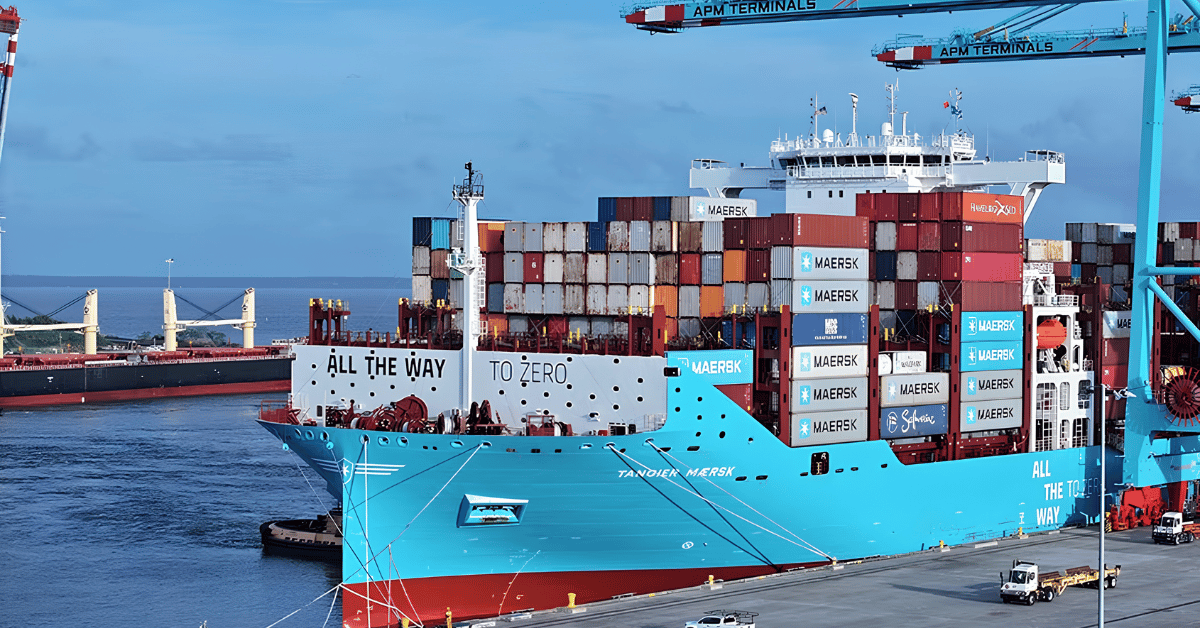
Maersk has completed the first commercial ship-to-ship ethanol bunkering of a deep-sea container vessel in the United States, using 100% corn ethanol. It is a validated step forward for alternative marine fuels, and it deserves a clear-eyed reading. The operation itself is an empirical milestone: moving ethanol from a barge to a ship at sea, at commercial scale, under real operating conditions. That is measurable progress. But the fuel in question, corn ethanol, carries its own set of climate indicators that the maritime industry must calibrate honestly.
This bunkering event draws a practical contrast with other decarbonisation pathways we have covered. For example, Singapore Hub Advances Digital Twins and AI for Ocean Decarbonisation describes how digital twins and artificial intelligence are being used to model emissions and optimise vessel performance before a single tonne of fuel is burned. That is a longitudinal approach: it measures and validates efficiency gains over time. Ethanol bunkering, by contrast, is an immediate operational change. It replaces heavy fuel oil with a renewable source today. The question our readers should ask is whether the integrated data ecosystem around ethanol, from feedstock production to tank-to-wake emissions, is as rigorous as the digital models being built in Singapore. We do not yet have that full picture.
Another related development puts this event in further context. Ammonia Bunkering Vessel Design Receives Approval, Advancing Sustainable Maritime Fuels shows that the industry is pursuing multiple fuel pathways in parallel. Ammonia offers zero-carbon potential but faces unresolved challenges in toxicity and engine readiness. Ethanol is here now, with established supply chains and combustion experience. That does not make it the final answer. It makes it a calibrated, near-term option. The risk is that a single validated event is mistaken for a solved problem. The ocean intelligence community needs peer-reviewed lifecycle data on corn ethanol's net carbon benefit, factoring in land use, water consumption, and agricultural emissions. Without that, the headline is ahead of the evidence.
What would we tell a reader who asked about this? Our take is direct: celebrate the engineering achievement, but hold the fuel to the same empirical standard we apply to any climate indicator. The takeaway to quote is this: ship-to-ship ethanol bunkering proves the logistics work; it does not yet prove the climate math adds up. The specific detail to watch is whether Maersk publishes validated, peer-reviewed lifecycle emissions data for this specific corn ethanol supply chain. That would turn a logistical first into a scientifically meaningful data point. Until then, this is a promising step, not a destination.