1 Dead, 6 Missing After Tugboat Sinks While Towing Container Ship Off Busan
Our take
The recent sinking of a tugboat off the coast of Busan, South Korea, resulting in one fatality and six missing crew members, underscores the inherent risks within maritime operations and highlights vulnerabilities within the complex ecosystem of global shipping. The incident, involving the 286-tonne TNS Catcher while assisting a container ship, serves as a stark reminder of the precarious balance between efficiency and safety in an industry grappling with increasing pressures. This event comes amidst a backdrop of broader maritime challenges, including significant disruptions to vessel reliability. As reported in Asian Port Delays Cause Sharpest Drop In Global Vessel Reliability Since 2021, congestion at Asian ports has created a ripple effect impacting schedules and increasing the likelihood of incidents like this one, where tugboats, often operating under tight deadlines, may be pushed beyond safe operational parameters. Furthermore, the escalating impact of climate change on ocean conditions—as evidenced by reports like Even The Deepest Parts of The Ocean Are Slowly Beginning to Warm - ScienceAlert—introduces unpredictable and potentially hazardous weather patterns, compounding the risks for maritime transport and support vessels.
The sinking necessitates a thorough investigation to determine the precise cause, encompassing factors such as weather conditions, the structural integrity of the tugboat, and adherence to established safety protocols. While initial reports suggest the container ship capsized, the interplay of forces involved – the size and weight disparity between a tugboat and a large container vessel, combined with potentially adverse sea states – warrants careful scrutiny. It’s crucial to examine whether operational fatigue, inadequate communication, or insufficient training contributed to the accident. The incident also raises questions about the resilience of maritime infrastructure and the efficacy of current safety regulations, particularly concerning the increasing size and complexity of container ships. The drive for efficiency and reduced fuel consumption, exemplified by innovations like the New Hydrogen-Hybrid System Cuts Ship Fuel Use By 24%, Saving $500,000 Annually, while commendable, must not compromise fundamental safety standards. The integration of new technologies requires rigorous testing and validation to ensure they do not introduce unforeseen risks or vulnerabilities into existing systems.
Beyond the immediate human tragedy, this event has implications for the broader maritime insurance sector and the cost of shipping. Increased incidents, whether due to port congestion, adverse weather, or equipment failure, will inevitably lead to higher premiums and potentially impact global trade flows. The incident reinforces the need for enhanced data collection and analysis within the maritime domain – a core focus of World Data Ocean – to better understand and mitigate these risks. Real-time monitoring of vessel movements, weather patterns, and sea conditions, coupled with predictive modeling capabilities, could provide early warnings of potential hazards, allowing for proactive adjustments to operations and preventing similar tragedies. A truly integrated data ecosystem, calibrated for accuracy and validated through longitudinal empirical studies, is essential for informed decision-making and improved safety outcomes.
Ultimately, the sinking of the TNS Catcher serves as a potent reminder that the ocean remains a challenging and unforgiving environment. While technological innovation and operational efficiencies are vital for the continued growth of global trade, they must be pursued with a steadfast commitment to safety and a deep understanding of the interconnectedness of maritime systems. A crucial question moving forward is whether current regulatory frameworks and industry best practices are adequately equipped to address the escalating complexities and risks associated with modern maritime operations, especially in the face of a rapidly changing climate.
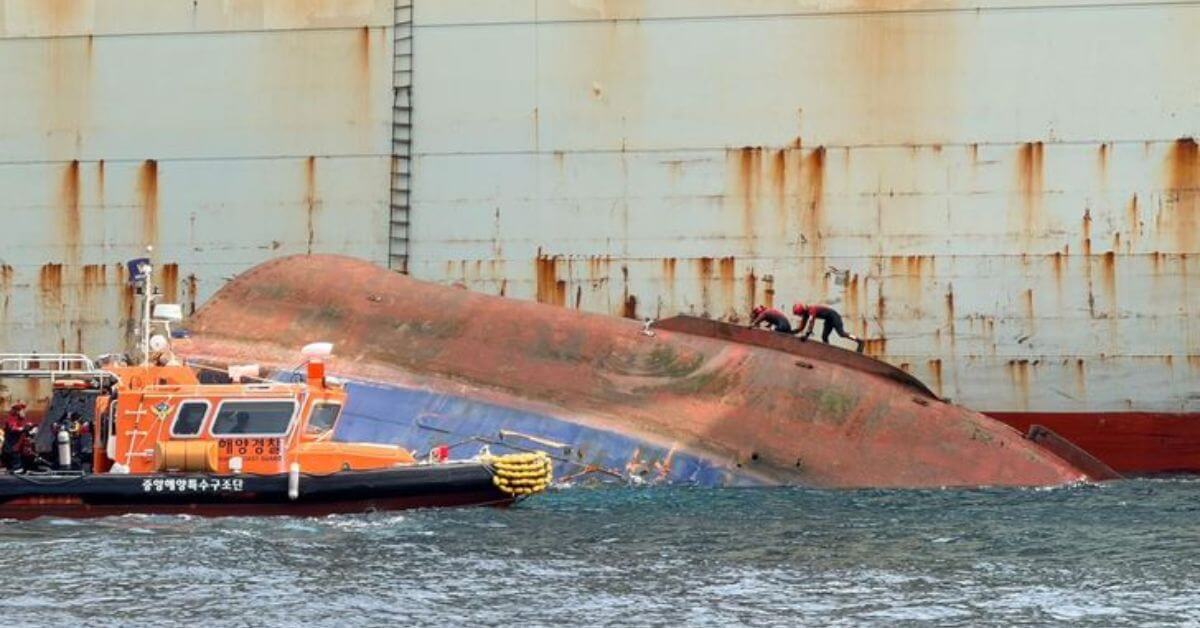
Six crew members are still missing after a tugboat capsized and sank off Busan on Sept. 2 while towing a large container ship.
The 286-tonne TNS Catcher capsized at about 1:29 p.m. in waters around 9 km east of Oryukdo Island. It sank completely at about 3:27 p.m., about two hours later.
The tug was later found on the seabed at a depth of about 87 metres. Eight people were on board the tug, six South Koreans and two Indonesians.
A 53-year-old Indonesian crew member was rescued by a nearby merchant ship at about 1:49 p.m., around 20 minutes after the accident. He was not in serious condition.
A 57-year-old South Korean crew member was found unconscious inside the capsized tug. He was taken to hospital on a Coast Guard rescue vessel but later died.
The other six crew members remain missing.
Search continues at sea
The operation involved 19 vessels, 11 Coast Guard ships, four Navy ships and four vessels from the Busan city government and fire authority. One Coast Guard aircraft and two Air Force aircraft also took part.
About 270 flares were used during the search. The Coast Guard used 30 and the Air Force used 240.
The Navy’s Gwangyang used a remotely operated vehicle to search around the sunken tug. Visibility underwater was only about 30 cm.
Bad sea conditions made the operation harder. Waves reached up to 1.5 metres and winds reached 6 metres per second. Strong currents and poor visibility also affected the search.
The water temperature near Oryukdo was 25.1°C on the afternoon of Sept. 2.
The Coast Guard said international aeronautical and maritime search and rescue guidelines put the maximum survival time for a person missing at sea at more than 40 hours when the water temperature is 20°C or higher.
Tug turned before capsizing
The TNS Catcher had left a government vessel pier at Busan Port at 10:15 a.m. to tow a merchant vessel that had been involved in an earlier accident.
Three tugs were involved in the towing operation. Two were positioned on either side of the container ship’s bow, while another pushed from the stern. The TNS Catcher was on the starboard side of the bow.
A Busan maritime police official said the tug is believed to have capsized while turning right, possibly involving the towline or hawser.
The official said the tug’s speed and timing did not appear to match during the turn. It is still not clear whether the tug became caught on the towline.
CCTV footage from the container ship showed the TNS Catcher turning right before rolling to the left.
The Coast Guard said the tug did not collide with the container ship.
The cause of the accident is not yet known.
Tug found on seabed
The TNS Catcher is believed to have moved about 4.5 km northeast from the accident site before sinking. It then moved about 0.8 km southwest.
At about 8 p.m. on Sept. 2, the Coast Guard found an object on the seabed about 6.5 km east of Songjeong Port. It was later confirmed to be the TNS Catcher, lying about 87 metres below the surface.
Due to the depth, the Coast Guard is considering diving operations. Navy ROVs are also being used in the underwater search.
Investigation underway
Investigators have obtained AIS data, voyage data recorder information and CCTV footage from the tug and container ship. They also plan to examine more CCTV footage, vessel tracking records and other ship documents.
President Lee Jae Myung ordered authorities to use all available resources for the search, rescue and recovery operation.
Busan city held an emergency meeting and activated its disaster response headquarters. Nam-gu and Haeundae-gu opened support centres at the scene, while Dong-gu, where the tug operator is based, set up its own response headquarters.
Teams are also providing counselling and support to the families. Emergency interpretation services have been arranged for affected foreign nationals.
References: koreatimes, yna
Read on the original site
Open the publisher's page for the full experience