New Hydrogen-Hybrid System Cuts Ship Fuel Use By 24%, Saving $500,000 Annually
Our take

The maritime sector’s ongoing pursuit of decarbonization continues to yield promising advancements, as evidenced by the recent successful trial of a hydrogen-hybrid system on a bulk carrier. A 24% reduction in fuel consumption and an estimated $500,000 annual savings represent a compelling early result for Newlight’s technology, demonstrating a tangible pathway toward reducing the environmental impact of global shipping. This development builds upon a growing trend of innovative solutions addressing the sector’s substantial carbon footprint, a footprint increasingly scrutinized alongside broader climate concerns. We’ve previously highlighted the potential of electrification with the [World’s First Battery-Powered Self-Unloading Bulk Carrier Starts Commercial Operations In Australia], showing how battery technology can augment traditional propulsion systems. Furthermore, the critical role of data in enhancing maritime safety and operational efficiency is underscored by initiatives like the [Maritime Safety Data Hub To Analyse Over 100,000 Safety Broadcasts To Predict & Prevent Emergencies At Sea], demonstrating a holistic approach to improving the industry's sustainability.
The integration of hydrogen as a fuel source, even in a hybrid configuration, signifies a crucial step beyond incremental improvements. Diesel engines, while continually refined for efficiency, remain inherently carbon-intensive. Hydrogen offers the potential for near-zero emissions when produced using renewable energy sources, aligning with the global imperative to transition away from fossil fuels. The long-distance nature of the Singapore-to-Ghana voyage (8500 nautical miles) adds significant weight to the trial’s success, suggesting the technology’s viability for extended operational deployments. While challenges remain—including hydrogen storage requirements, infrastructure development for refueling, and the overall cost of hydrogen production—this demonstration provides valuable empirical data to inform future scaling and optimization efforts. The reported savings are particularly noteworthy, indicating a compelling economic incentive alongside the environmental benefits. This economic viability will be crucial for widespread adoption, particularly within a sector often driven by cost considerations.
The broader implications extend beyond individual vessel performance. This advancement contributes to a burgeoning ecosystem of alternative propulsion technologies, fostering competition and accelerating innovation across the maritime landscape. The acquisition of modern French frigates by Sweden, as detailed in [Sweden Signs $5 Billion Deal To Acquire Four Modern French Frigates], highlights the broader defense and technological investments shaping the future of naval capabilities, further emphasizing the strategic importance of energy efficiency and advanced propulsion systems. The success of the hydrogen-hybrid system also underscores the increasing sophistication of integrated data ecosystems within the maritime industry. Real-time performance monitoring, calibrated data analysis, and adaptive control systems are essential for maximizing the benefits of these new technologies and ensuring operational safety and efficiency. The ability to integrate these systems seamlessly into existing vessel infrastructure will be a key factor in accelerating the transition to cleaner maritime operations.
Ultimately, the question remains: how rapidly can these early successes be translated into widespread adoption across the global shipping fleet? The inherent inertia of the industry, coupled with the significant capital investments required for retrofitting or building new vessels, presents a considerable hurdle. However, the compelling economic and environmental benefits demonstrated by Newlight’s hydrogen-hybrid system, alongside ongoing advancements in battery technology and data-driven optimization, suggest a trajectory toward a more sustainable and resilient maritime future. The longitudinal data collected from this and similar trials will be invaluable in validating the long-term performance and scalability of these technologies, and understanding the broader impact on global climate indicators will be paramount.
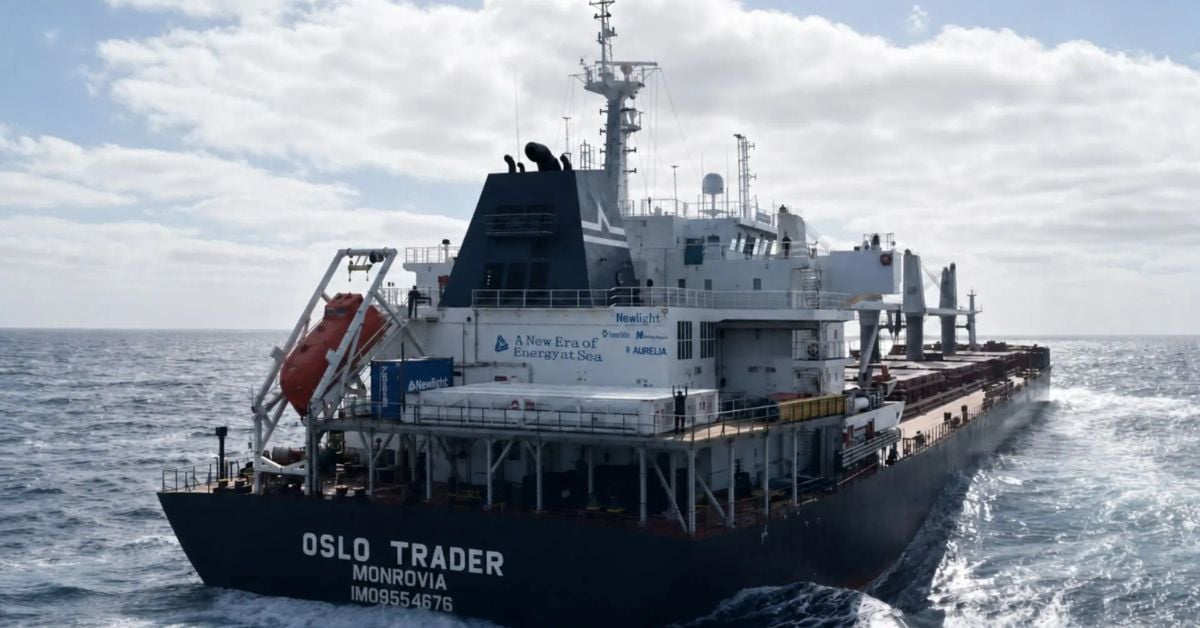
A hydrogen-hybrid system developed by a company called Newlight was fitted to the diesel engine of a bulk carrier that sailed from Singapore to Ghana, a distance covering 8500 nautical miles.
During this journey, the ship saw a reduction in its fuel consumption by 24%. Carbon dioxide emissions and carbon monoxide emissions also fell by 28% and 22%, respectively.
Massive ships can save 500,000 dollars annually in fuel costs by installing this system as an add-on with the engine. The company is planning to test the system for longer voyages next year.
Newlight got regulatory approval for the system from RINA and also bagged the classification society’s Hydrogen Innovation Award.
It also informed about received several agreements from shipping companies to install it on their vessels, and till now it has 12 such orders in its pipeline.
The system works by releasing hydrogen into the combustion process within the ship engine. It has a controller which in real-time manages the amount of hydrogen released as the conditions of the engine change depending on ship speed, sea conditions, load, etc.
Additionally, the system can go into operation in two weeks and does not need a drydock, meaning it is easy to install and also not expensive for shipowners who want to upgrade their fleet without spending vast sums of money on newbuilds that can run on alternative fuels.
The system extracts optimum energy during the combustion cycle and can operate using diesel too when hydrogen is not available.
Shipping operations depend on liquid fuel, which makes up most of the operating costs, so fuel reduction leads to savings, especially on longer voyages, which could be highly significant for shipping companies.
Newlight has suggested that its hydrogen-hybrid concept could lead to low costs and reduce the environmental footprint of a ship without replacing the ship’s propulsion system and has environmental advantages as well, since it lowers harmful emissions.
Read on the original site
Open the publisher's page for the full experience