ocean
ocean on World Data Ocean: a running collection of 46 stories we have gathered and hand-picked because they are worth your time. Every post here touches on ocean in some way — the news, the analysis, the deep dives, and the occasional surprise find. A Global Hub for Ocean Intelligence 4 World Data Ocean is a centralized digital platform where researchers, scientists, and ocean enthusiasts converge to explore, analyze, and… New stories are added to this page as we find them, so check back if you want to keep up with what is happening around ocean, or subscribe to the RSS feed to get them as soon as they are published. Browse the collection below, or head back to the homepage to see everything World Data Ocean is covering right now.
Why the ocean is actually our best long-term bet as a species
For long-term species survival, the ocean presents a compelling, empirically validated alternative to terrestrial or extraterrestrial habitats. Unlike land, which experiences frequent and disruptive shifts, the deep ocean exhibits remarkable stability, having maintained consistent conditions for hundreds of millions of years—as evidenced by ancient species like the coelacanth. This longitudinal resilience, coupled with its vast buffering capacity, suggests the ocean represents a proven ecological system.
Does anyone know a cheap way for students in middle school to test for dissolved oxygen levels in water?
Middle school students exploring nutrient pollution’s impact on ocean health can effectively model phytoplankton blooms and subsequent oxygen depletion. A key challenge, however, lies in accessible dissolved oxygen (DO) measurement. While sophisticated equipment exists, cost-prohibitive barriers often limit public school access. Researchers are actively exploring innovative solutions to monitor crucial climate indicators like DO, as highlighted in our article, "Sharks Equipped With Sensors Could Help Predict Hurricane Intensity." We invite educators to share their strategies for affordable, reliable DO testing in classroom settings.

Highlight of Pictures We Took After Finishing Our Fieldwork, Taken Around Eleuthera Island in the Bahamas
Following recent fieldwork around Eleuthera Island in the Bahamas, our team is pleased to share a selection of images captured with the durable Olympus Tough TG-6. These photographs offer a glimpse into the vibrant marine ecosystems we’ve been studying, showcasing the beauty and complexity of the Bahamian waters. The data gathered supports our ongoing efforts to build a comprehensive ocean intelligence platform. For those interested in identifying marine life, you may find our "Plankton Game - How many can you spot?" article a helpful resource.

What is this redondo beach, Washington state
Observations of unusual, gelatinous organisms concentrated along the Redondo Beach, Washington coastline have sparked considerable online discussion. While preliminary assessments suggest these are likely siphonophores – colonial hydrozoans related to jellyfish – definitive identification requires further empirical validation. Their appearance in this specific location warrants longitudinal study to understand potential environmental factors influencing their aggregation.

Plankton Game - How many can you spot?
Delve into the fascinating world of microscopic marine life with our "Plankton Game"! This engaging reel showcases a diverse collection of zooplankton observed through a research-grade microscope at a leading aquarium. Can you identify the various species within the video? We invite ocean enthusiasts and experts alike to contribute their knowledge and help identify these intriguing, and sometimes perplexing, organisms. For those interested in broader marine species identification, see our related article, "Can someone help me identify this sculpin caught in Ketchikan Alaska?

Sharks Equipped With Sensors Could Help Predict Hurricane Intensity
Leveraging innovative technology for ocean intelligence, World Data Ocean is excited to share findings on a novel approach to hurricane forecasting. Equipped with sensors, sharks are now contributing valuable data regarding conditions beneath the ocean surface—a critical factor in hurricane intensity. This longitudinal data collection promises to improve predictive models and enhance our understanding of complex oceanic dynamics. For further exploration of related maritime enforcement efforts, see our report on the "Shadow Fleet Tanker Captain Sentenced To 10 Months In Prison."

What Are Ocean Accounts And Why Do We Need Them? - Earth.Org
Ocean Accounts represent a critical, emerging framework for measuring and managing ocean health—akin to national economic accounts, but focused on marine ecosystems. These validated systems track key indicators of ocean condition, providing a longitudinal view of changes driven by human activity and climate impacts. Such integrated data ecosystems enable evidence-based decision-making for sustainable ocean stewardship. Understanding these trends is paramount; for example, recent observations of declining emperor penguin chick populations, as detailed in our article, highlight the urgency of proactive measures.
Linear trends in salinity for the World Ocean, 1955–1998 - Boyer - 2005 - Geophysical Research Letters - AGU Publications
Analysis of historical ocean salinity data reveals significant trends. Boyer’s 2005 *Geophysical Research Letters* study, published by AGU, documents linear salinity decreases across the World Ocean between 1955 and 1998 – a critical climate indicator. This longitudinal assessment provides validated, empirical evidence of ocean freshening, potentially linked to increased precipitation and melting ice.
11 innovations to better understand the ocean through data - The World Economic Forum
Harnessing data is paramount to effective ocean stewardship. The World Economic Forum highlights 11 critical innovations driving a deeper understanding of our oceans, from advanced sensor networks to integrated data platforms. These advancements enable real-time monitoring and calibrated analysis of climate indicators, fostering ocean intelligence crucial for informed decision-making. This integrated approach, validated through empirical research, offers unprecedented opportunities for global collaboration. For further exploration of ocean workforce trends, see our related article, "India’s Maritime Workforce Sees 340% Surge In Women’s Participation Since 2020."
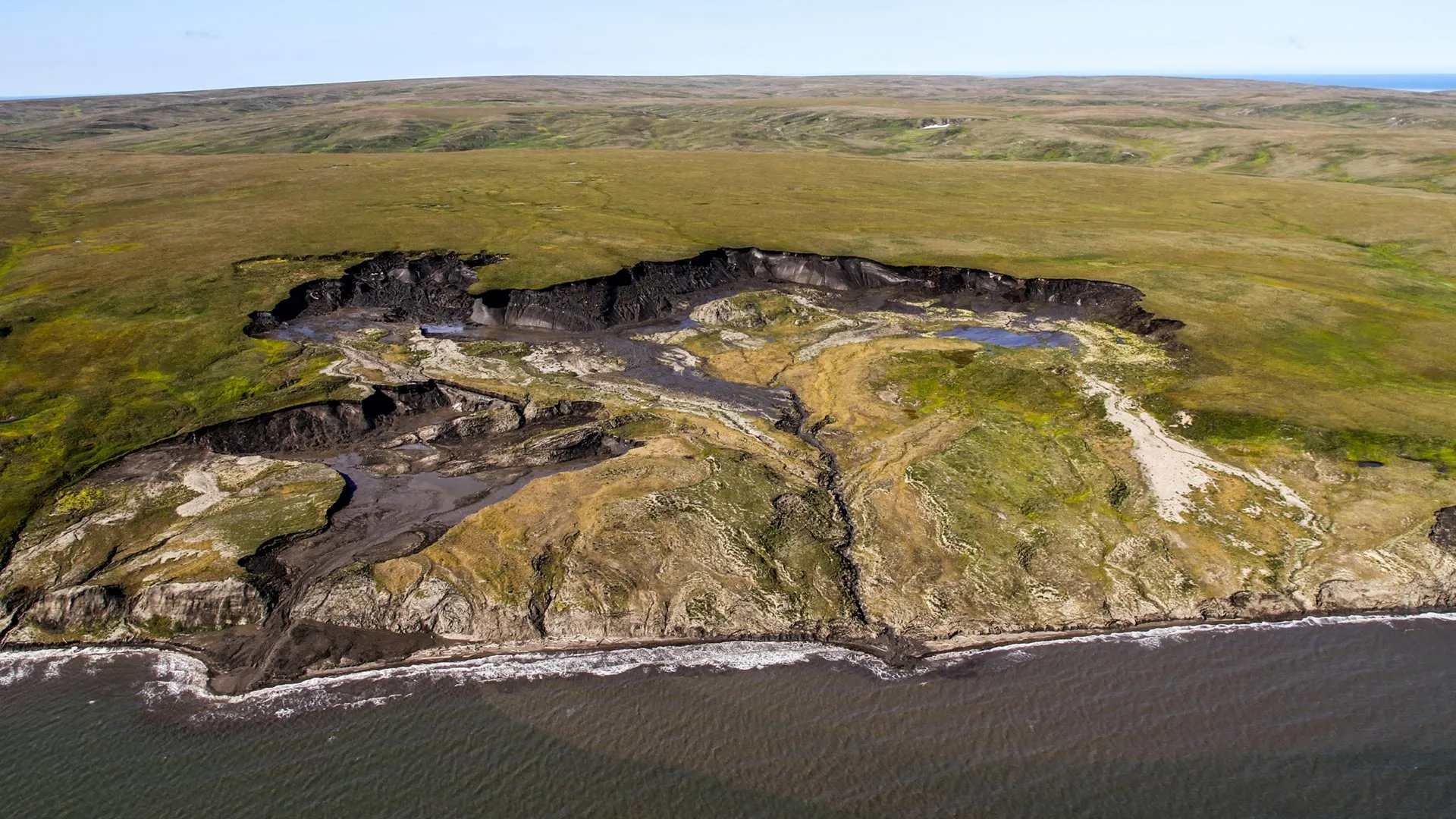
Ancient Arctic carbon is pouring into the sea, but the seabed captures most of it
Thawing Arctic permafrost is releasing ancient carbon into the ocean, prompting concerns about accelerated climate change. However, recent analysis of sediment cores near Herschel Island, Canada, reveals a reassuring mitigation: approximately 90% of this land-derived carbon is captured and buried within the seabed. Only a small fraction, roughly 10%, is converted into greenhouse gases. This discovery highlights a crucial, previously underestimated, natural process. For further exploration of innovative ocean technologies, see our coverage of the "Camera 1: 2026 Cook Islands ROV Exploration (EX2605)."
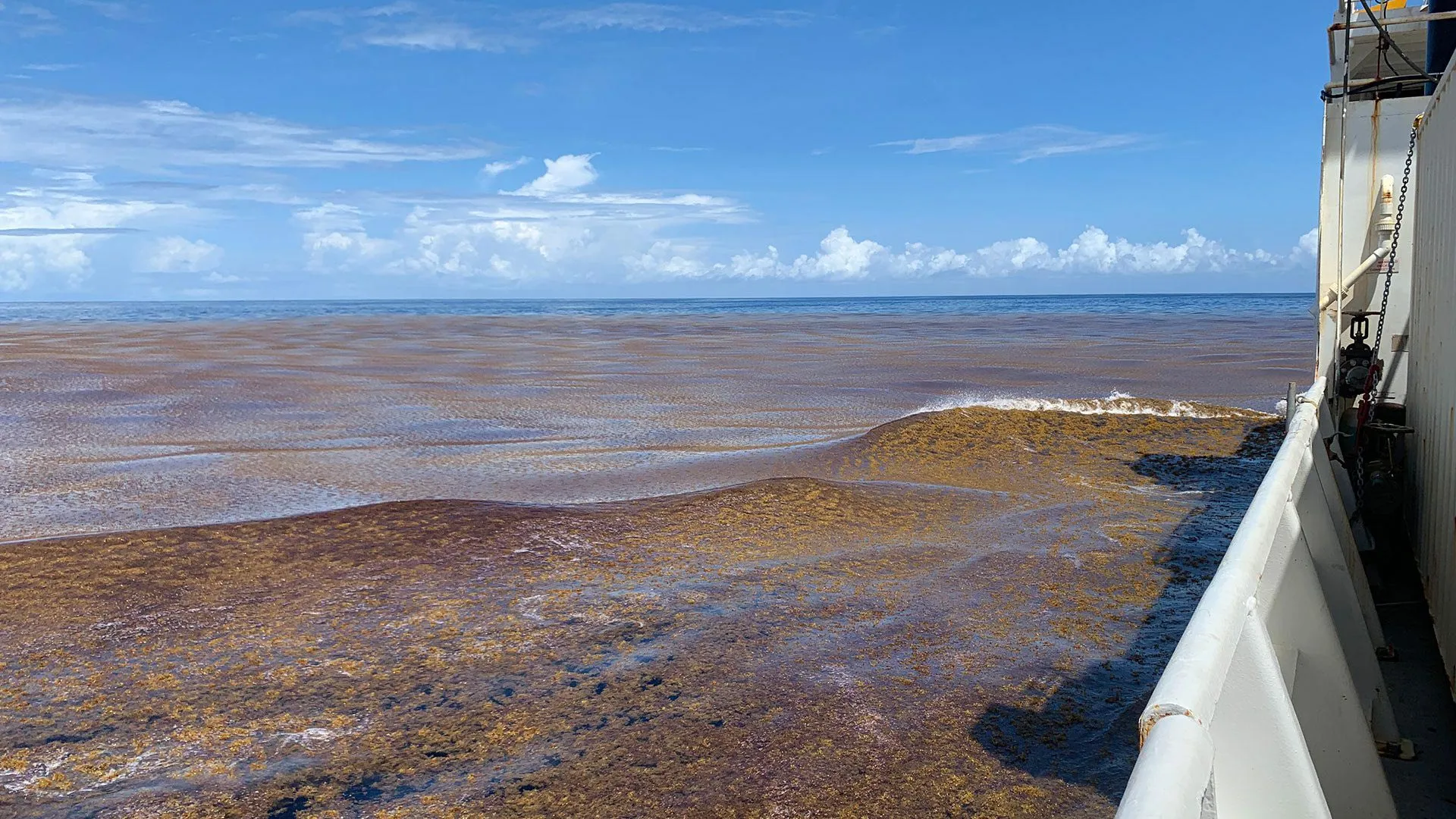
AI reveals a massive algae boom across the world’s oceans
Analysis of 1.2 million satellite images, powered by artificial intelligence, reveals a significant and globally expanding phenomenon: massive algae blooms across the world’s oceans. This longitudinal study demonstrates a rapid increase in floating seaweed mats, potentially reshaping marine habitats and impacting coastal communities. Consequences include ecological damage, foul-smelling decay, and substantial economic losses. Further exploration of AI’s role in maritime applications can be found in our recent article, "U.S. Advances Shipyard Modernisation Project With AI And Robotics."

Camera 1: 2026 Cook Islands ROV Exploration (EX2605)
## Camera 1: 2026 Cook Islands ROV Exploration (EX2605) – An Introduction Scheduled for 2026, EX2605 represents World Data Ocean’s next significant advancement in deep-sea exploration. This remotely operated vehicle (ROV) mission to the Cook Islands will deploy Camera 1 to gather high-resolution, longitudinal data of benthic habitats. Our integrated data ecosystem will leverage this empirical evidence to refine climate indicators and enhance ocean intelligence. Initial objectives include mapping previously unsurveyed regions and assessing biodiversity.
Looking for scientific feedback on a short interactive experience about whale migration
World Data Ocean invites scientific feedback on TOHORĀ, a new interactive experience exploring the complexities of whale migration. This project aims to foster greater ocean awareness by highlighting the challenges whales face during these journeys, prioritizing accurate representation over exhaustive simulation. Developers seek honest perspectives on clarity, realism, and potential improvements from oceanographers, marine scientists, and interested individuals. For deeper context on related marine challenges, explore our article, "The future of our oceans: negotiating marine fisheries, aquaculture, and living resources with unbiased science."
My mom doesn’t like my degree?
The pursuit of a fulfilling career often faces familial concerns, particularly when venturing into specialized fields like oceanography. A recent query highlights this challenge, with a student passionate about marine science encountering skepticism regarding career stability and potential earnings. Oceanography, a field integrating biology, geology, and physics to study our oceans, offers diverse opportunities, though salary expectations warrant careful consideration.
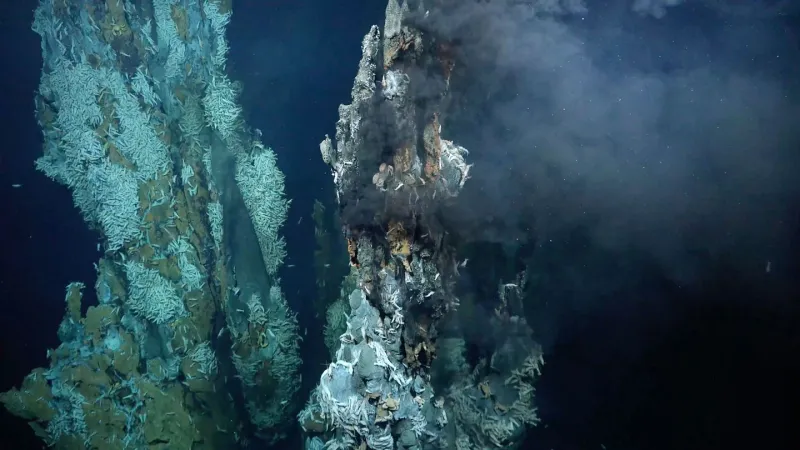
Deep-sea snails ride surface currents to reach distant hydrothermal vents
Newly validated research reveals a surprising dispersal mechanism for deep-sea life: surface currents transport deep-sea snails to distant hydrothermal vents. This empirical finding demonstrates a closer-than-previously-understood connection between isolated deep-sea ecosystems and the sunlit ocean. Longitudinal data suggests that vent communities are not as isolated as once believed, highlighting the interconnectedness of our planet’s oceans. For further exploration of related challenges, see our editorial, "The threat of invasive alien species and the challenge of climate change."
Copernicus Marine and Copernicus Climate Change: Daily global sea surface temperatures break records for the time of year | Copernicus - Copernicus Climate
Daily global sea surface temperatures have reached unprecedented levels, surpassing records for this time of year, according to data from Copernicus Marine and Copernicus Climate Change. This represents a significant climate indicator, validated by continuous, real-time monitoring across the globe. The integrated data ecosystem provides empirical evidence of warming trends, underscoring the urgency of ocean stewardship and the need for collaborative action.
Resources for honing Geospatial Analysis skills of Oceans
For environmental scientists and geospatial professionals seeking to specialize in ocean analysis, World Data Ocean offers a curated collection of resources to sharpen your skills. Leveraging established tools like Esri, Python, and R, these materials facilitate the development of targeted methodologies for ocean-focused projects. Drawing on experience from diverse backgrounds—as illustrated by the journey of a Colorado-based environmental scientist—we provide pathways to bridge terrestrial expertise with marine applications.

Meet the Solenostomus snuffleupagus, a tiny ghost pipefish named for its resemblance to the beloved Sesame Street character.
Introducing *Solenostomus snuffleupagus*, a newly validated species of ghost pipefish recently documented by /u/nationalgeographic. This diminutive creature, measuring just a few centimeters, earns its whimsical name from a striking resemblance to the iconic Sesame Street character. Empirical observations confirm its unique morphology and habitat within specific marine ecosystems. Further exploration of marine biodiversity, as demonstrated in articles like "Sharks in Raja Ampat," continues to reveal the remarkable complexity and interconnectedness of ocean life.

does someone knows from what animal this is - Maceió, AL, Brazil
A fascinating discovery has been reported from Maceió, Brazil—a unique marine organism found on Cruz das Almas beach. Initial observations indicate a light, fish-like odor, likely due to its recent exposure to the coastal environment. Experts are currently working to identify this specimen, emphasizing the importance of careful analysis to determine its species and ecological role.
![[ID] Sharks in Raja Ampat](https://preview.redd.it/5p6gp62jzvbh1.jpeg?width=640&crop=smart&auto=webp&s=e43cd306bf5b86d657fca7fe1dab3d0865d50099)
[ID] Sharks in Raja Ampat
A fascinating observation from Raja Ampat highlights the complex interactions within marine ecosystems. A snorkeler documented an encounter with four small sharks exhibiting behavior suggestive of following dolphins or sailfish. Initial identification leaned toward grey reef sharks, though the absence of a dorsal fin edge distinguishes them. Discussion centers on whether these are silvertip sharks. This sighting underscores the importance of continued ocean observation and data collection, similar to our recent exploration of unidentified marine life found in Maceió, Brazil.
Fresh Marine Physics Graduate – Any Advice?
Navigating the early stages of a Marine Physics career requires a deliberate approach. For recent graduates seeking guidance, prioritizing demonstrable skills is paramount. We recommend proficiency in data analysis software (MATLAB, Python), statistical modeling, and strong oceanographic field techniques. Consider certifications in relevant areas like GIS or remote sensing. Building a robust portfolio of empirical projects, even small-scale, will showcase your capabilities. As highlighted in "BrainCoral | Coral Reef Technologies Changing The World," innovative solutions often arise from focused observation and consistent data analysis.
How would you theoretically catch a giant squid in The North Atlantic Ocean
The pursuit of a giant squid in the North Atlantic presents a formidable, yet theoretically addressable, scientific challenge. Capturing one would require a multi-faceted approach leveraging advanced remotely operated vehicles (ROVs), calibrated acoustic monitoring to detect their movements, and specialized, low-impact trapping techniques designed to minimize harm. Success hinges on understanding their deep-sea habitat and behavior—a field detailed further in our article, "Close Up Tide Pools," which highlights the surprising complexity of marine ecosystems. Empirical data collection remains paramount in this endeavor.