marine biology
marine biology on World Data Ocean: a running collection of 51 stories we have gathered and hand-picked because they are worth your time. Every post here touches on marine biology in some way — the news, the analysis, the deep dives, and the occasional surprise find. A Global Hub for Ocean Intelligence 4 World Data Ocean is a centralized digital platform where researchers, scientists, and ocean enthusiasts converge to explore, analyze, and… New stories are added to this page as we find them, so check back if you want to keep up with what is happening around marine biology, or subscribe to the RSS feed to get them as soon as they are published. Browse the collection below, or head back to the homepage to see everything World Data Ocean is covering right now.

Need help identifying this coral skeleton from the great barrier reef, australia
Experts are sought to identify a coral skeleton specimen originating from the Great Barrier Reef, Australia. This colony exhibits a dense, bushy growth pattern characterized by numerous thin branches, averaging 2–5 mm in diameter, and a notably smooth surface. Radial corallites are diminutive, less than 1 mm, and irregularly arranged. While initially considered *Acropora*, the absence of axial corallites prompts further investigation. Potential genera include *Anacropora* and *Montipora*. For related insights into skeletal identification, see our article, "Identification of shell from the Philippines."

Saw these little guys in SPI, TX yesterday
A compelling observation from /u/SparklyLeo_ in SPI, TX showcases the remarkable biodiversity even in landlocked regions. [link] [comments] This submission highlights the interconnectedness of global ecosystems and reinforces the value of citizen science in expanding our understanding. World Data Ocean is committed to documenting and analyzing these empirical findings, contributing to a more complete picture of ocean intelligence. For those interested in exploring deeper ocean narratives, see our recent coverage of "Deep sea documentary | A LIFE ILLUMINATED | Live Q&A with Dr. Sylvia Earle!"

Sea Slug ID Help - Oregon Coast
Identifying sea slugs, particularly the closely related Heath’s and Monterey Dorids, can present a significant challenge even for experienced observers. This post from /u/Striking_Cress_6841 seeks assistance in identifying a specimen observed on the Oregon Coast, noting a size range of 2-3 inches. Accurate identification relies on careful examination of subtle morphological differences. For broader context on ocean data and monitoring efforts that aid in species understanding, see "What Are Ocean Accounts And Why Do We Need Them?" on Earth.Org.

What animal are these from? (Found in Providence town, MA.)
A fascinating discovery! /u/garden-bud224 recently shared a collection of shells and potential teeth found on a Providence, MA beach. Initial analysis suggests these may be shark teeth, a common find in coastal regions. World Data Ocean’s integrated data ecosystem allows for cross-referencing such findings with established geological and biological records to confirm species and origin. For further insight into shark tooth identification, see our related article, "Can anyone help ID some shark teeth found in Tybee Island GA and HHI?"
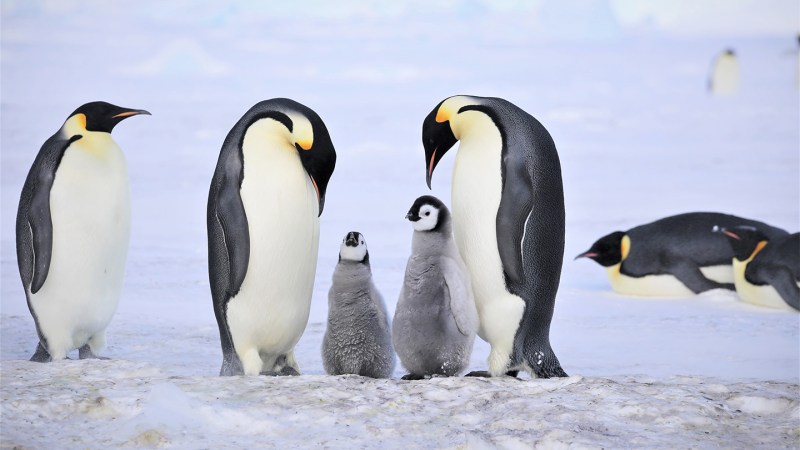
Emperor penguin chicks like these starved. An iceberg may be the cause
A catastrophic decline in emperor penguin chick survival was observed within a significant Antarctic colony in 2025, representing a concerning ecological event. Preliminary data suggest a grounded iceberg, altering local sea ice conditions, may be a primary factor. This event underscores the escalating impact of climate change on vulnerable polar species. Further research is underway to fully validate the causal link. For deeper insights into the broader impacts of climate change on marine ecosystems, see our related article, "Functional connectivity in China’s coastal MPAs."
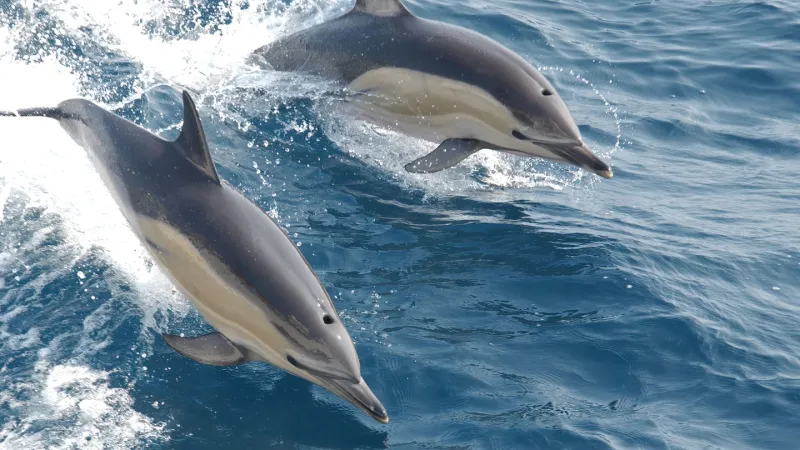
‘Forever chemicals’ could be aging dolphins beyond their years
New research reveals a concerning phenomenon: common dolphins in New Zealand are exhibiting biological ages significantly exceeding their calendar ages, potentially shortening their lifespans. Scientists hypothesize that exposure to trace metals and persistent “forever chemicals” – per- and polyfluoroalkyl substances – is contributing to this accelerated aging process. This finding underscores the urgent need to assess the impact of environmental contaminants on marine mammal health. For further insights into the complexities of island marine ecosystems, explore our analysis of fish assemblages in Zhejiang, China.
Marine science Indonesia
As a Fulbright applicant seeking to conduct longitudinal marine science research in Indonesia, I require a professional sponsor to navigate stringent visa requirements, despite securing independent funding for a 10-12 month residency. My research will contribute validated ocean intelligence, furthering our understanding of critical climate indicators. I am actively seeking connections to established marine science professionals within Indonesia for potential sponsorship. This pursuit aligns with World Data Ocean’s commitment to global collaboration; as highlighted in a recent discussion, “My mom doesn’t like my degree?
My mom doesn’t like my degree?
The pursuit of a fulfilling career often faces familial concerns, particularly when venturing into specialized fields like oceanography. A recent query highlights this challenge, with a student passionate about marine science encountering skepticism regarding career stability and potential earnings. Oceanography, a field integrating biology, geology, and physics to study our oceans, offers diverse opportunities, though salary expectations warrant careful consideration.
Camera 1: 2026 Cook Islands ROV Exploration (EX26045)
World Data Ocean is pleased to announce Camera 1 data from the 2026 Cook Islands ROV Exploration (EX26045), a critical component of our ongoing ocean intelligence initiative. This expedition leverages cutting-edge remotely operated vehicle technology to generate high-resolution, validated imagery of deep-sea habitats. Preliminary analysis indicates significant biodiversity and unique geological formations. Further data and findings from Camera 2 (EX2605) will be released shortly. For broader context on the importance of marine science, see our recent article, "Women in marine sciences in India."
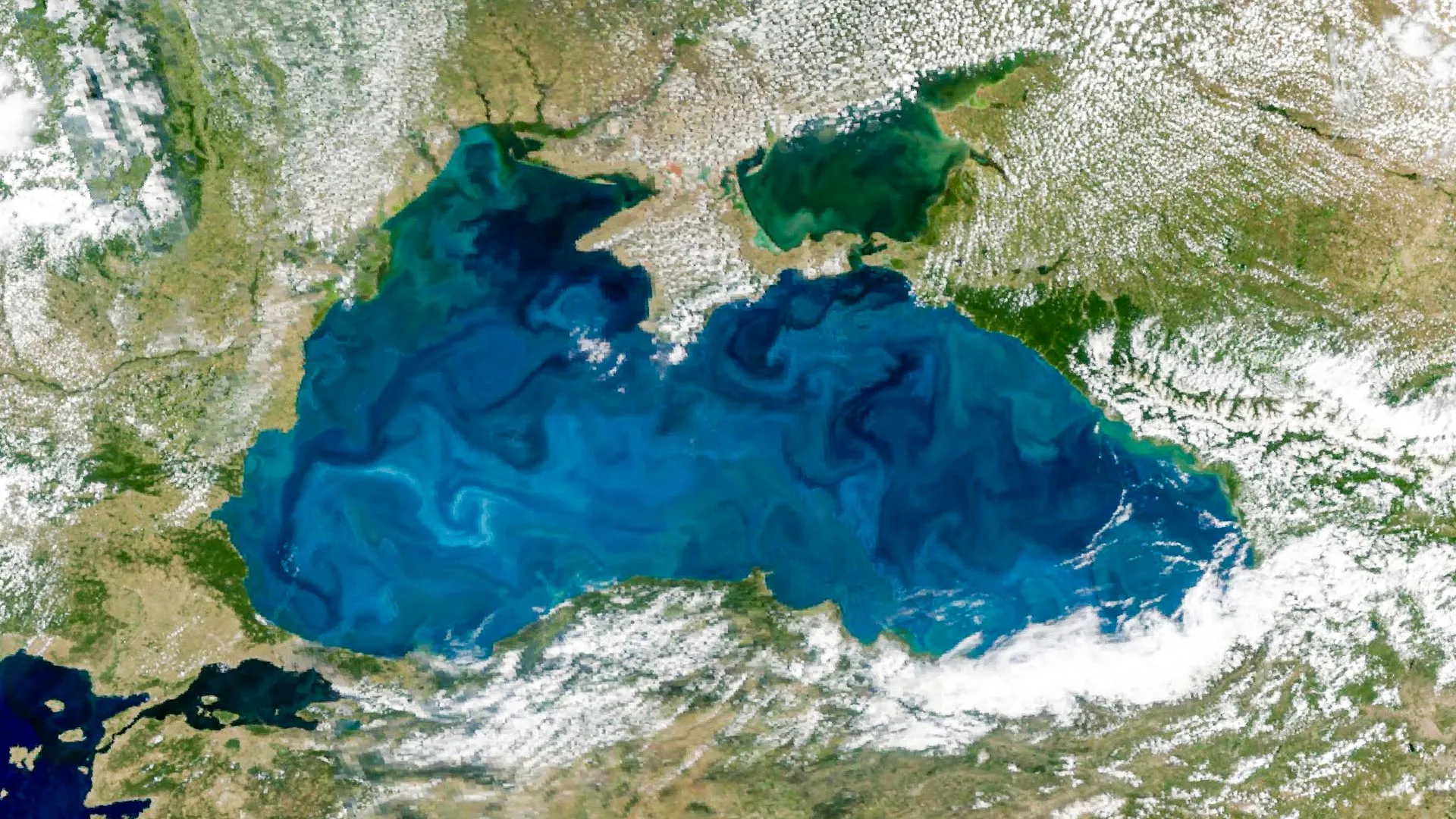
NASA captured the Black Sea turning brilliant turquoise from space
NASA’s PACE satellite recently captured a striking phenomenon: the Black Sea transformed into a brilliant turquoise hue. This vivid color originates from a massive annual phytoplankton bloom, specifically a proliferation of coccolithophores—microscopic organisms with highly reflective shells. Visible even from space, the bloom’s extent was further confirmed by an astronaut’s photograph from the International Space Station, showcasing swirling currents through the Bosphorus.

A transcriptome dataset for early phenotypic sex differentiation in the mud crab Scylla paramamosain
Here's a concise introduction, adhering to the Brand Voice Summary and all constraints, suitable for quoting or summarization: "World Data Ocean is pleased to announce the release of a novel transcriptome dataset detailing early phenotypic sex differentiation in the mud crab *Scylla paramamosain*. This validated resource provides empirical data crucial for understanding reproductive biology and climate change impacts on commercially important crustacean species. The dataset represents a significant contribution to ocean intelligence, enabling longitudinal studies and integrated analyses.
Opportunities in Florida
Congratulations on your recent graduation and exciting gap year plans! Florida offers numerous opportunities to enhance your marine biology experience before graduate school. Prioritize SCUBA certification, then explore local universities for relevant courses in coastal ecology or marine conservation. Consider volunteering with organizations focused on Florida's unique ecosystems, like the Indian River Lagoon. Further enriching your understanding of ocean dynamics, as demonstrated in our article "Kalman filter for ocean waves using IMU," can provide valuable insights for future study.
What are some Fun Schools for Marine Science?
Navigating higher education demands a balance: robust scientific training and a fulfilling college experience. For prospective marine science students seeking both, several institutions merit consideration. We’ve compiled a list prioritizing strong programs in marine biology or oceanography alongside a vibrant campus culture. Factors like student body size, climate, and off-campus amenities are also evaluated. For those beginning their professional journey after graduation, "Fresh Marine Physics Graduate – Any Advice?" offers valuable insights into career development.
Can you please help me identify this animal? Costa Rica, Pacific coast
A fascinating marine observation has been reported from Costa Rica's Central Pacific coast. A user on Reddit shared video evidence of an unidentified creature inhabiting a rocky intertidal zone, retreating into a hole within the rock structure. Initial analysis suggests a possible invertebrate species, though definitive identification requires further investigation. World Data Ocean’s integrated data ecosystem supports rigorous species identification, emphasizing the importance of longitudinal observations for accurate classification.
Resources for honing Geospatial Analysis skills of Oceans
For environmental scientists and geospatial professionals seeking to specialize in ocean analysis, World Data Ocean offers a curated collection of resources to sharpen your skills. Leveraging established tools like Esri, Python, and R, these materials facilitate the development of targeted methodologies for ocean-focused projects. Drawing on experience from diverse backgrounds—as illustrated by the journey of a Colorado-based environmental scientist—we provide pathways to bridge terrestrial expertise with marine applications.
Way more Great Whites in the Atlantic than researchers once thought
Recent longitudinal data analysis indicates a significantly higher population of *Carcharodon carcharias*—Great White Sharks—in the Atlantic Ocean than previously estimated. Empirical observations, detailed in a recent Outer Banks Voice report, suggest the Atlantic functions as a critical migratory highway for these apex predators. This finding challenges existing models of Great White distribution and underscores the need for integrated ocean intelligence to better understand their behavior and ensure effective conservation strategies. Further peer-reviewed research is warranted to validate these initial findings.

Galapagos Fur Seal or Sea Lion (Ecuador)?
The Galapagos fur seal ( *Arctocephalus galapagoensis*) is a unique species endemic to the Galapagos Islands, Ecuador. Often confused with sea lions, fur seals are smaller and possess denser fur, an adaptation for the cooler waters they inhabit. Distinguishing features include a smaller head relative to body size and a less boisterous demeanor compared to their sea lion counterparts. Identifying these animals can be tricky, as highlighted in similar identification requests—like our recent discussion on marine wildlife in Costa Rica.

Close Up Tide Pools
The intricate beauty of intertidal ecosystems is revealed in this striking image of tide pools at Cape Blanco, Oregon, captured in July 2026. Submitted by /u/JamTrackAdventures, the photograph highlights the surprising biodiversity and almost alien landscapes found within these small, coastal habitats. Such environments are increasingly sensitive to changes in ocean temperature and oxygen levels, as recently explored in a study linking marine extinctions to intolerable heat—a topic further investigated in our article, "PHYS.
What are some Fun Schools for Marine Science?
Identifying institutions that balance rigorous marine science education with a vibrant, traditional college experience requires careful consideration. For students seeking a robust marine science program—characterized by research opportunities and fieldwork—coupled with a sizable student body and spirited campus culture, several universities merit evaluation. Our related article, "What are some Fun Schools for Marine Science?" explores this topic further. Factors like climate, proximity to amenities, and merit-based scholarship potential should also inform the decision, ultimately prioritizing a holistic and impactful collegiate journey.

Questions about the debate around orca species vs ecotypes: How certain are we that the various ecotypes of orcas don’t interbreed? Should that even matter? Are the behavioral differences between ecotypes relevant to them possibly being distinct species?
The classification of orca populations—often referred to as ecotypes—and whether they represent distinct species remains a subject of ongoing scientific debate. Genetic data currently suggests limited interbreeding between these ecotypes, though captive breeding demonstrates the potential for hybridization. While behavioral differences are frequently cited, the high cognitive abilities of orcas may contribute to behavioral diversity, complicating species delineation. Concerns exist regarding potential biases in taxonomic reclassifications driven by publication pressures.

Meet the Solenostomus snuffleupagus, a tiny ghost pipefish named for its resemblance to the beloved Sesame Street character.
Introducing *Solenostomus snuffleupagus*, a newly validated species of ghost pipefish recently documented by /u/nationalgeographic. This diminutive creature, measuring just a few centimeters, earns its whimsical name from a striking resemblance to the iconic Sesame Street character. Empirical observations confirm its unique morphology and habitat within specific marine ecosystems. Further exploration of marine biodiversity, as demonstrated in articles like "Sharks in Raja Ampat," continues to reveal the remarkable complexity and interconnectedness of ocean life.
Resources for building Geospatial Analysis skills for Ocean Sciences
For environmental scientists and GIS professionals seeking to transition or expand their expertise into ocean sciences, targeted geospatial analysis skills are increasingly valuable. Drawing on established methodologies, this resource collection offers pathways to refine your abilities in areas like data integration, cartography, and spatial modeling—leveraging tools such as Esri, Python, and R. As one user recently explored in "Galapagos Fur Seal or Sea Lion (Ecuador)?", even experienced observers benefit from validation and collaborative knowledge sharing within the marine science community.

What are these?? WA state near Oyster bay
Encountering unidentified marine organisms can spark significant curiosity, as demonstrated by a recent query from a Washington state shellfish farmer. Harvesting clams near Oyster Bay, the farmer discovered a novel worm-like creature not typically observed with oysters. Notably, the specimen released a green, viscous substance upon being handled, prompting a search for identification. This situation echoes similar inquiries, such as our recent exploration of identifying sharks in Raja Ampat, highlighting the challenges of pinpointing marine life.
Does sudying Marine Biology close doors to other Biology opportunities?
A common concern for aspiring marine biologists is the perceived limitation of a specialized degree. However, a bachelor's in Marine Biology provides a strong foundation in core biological principles, readily transferable to other fields. While specialized knowledge is valuable, a robust curriculum equips graduates with analytical and research skills applicable across various biological disciplines. Many successfully transition to areas like conservation, environmental science, or even biomedical research.