NASA captured the Black Sea turning brilliant turquoise from space
Our take
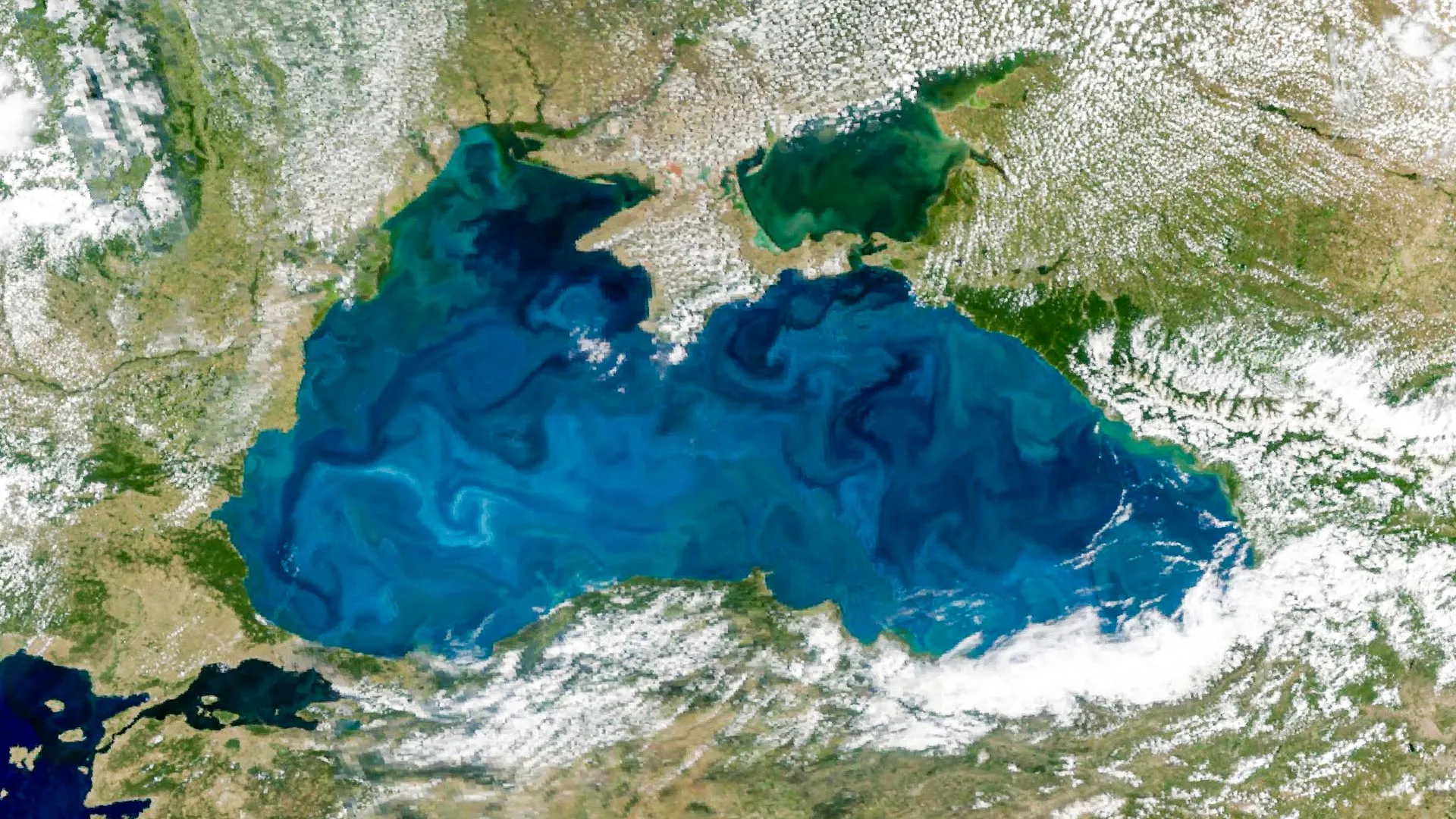
The recent imagery of the Black Sea shimmering turquoise, captured by NASA’s PACE satellite and confirmed by observations from the International Space Station, offers a compelling visual demonstration of the interconnectedness of Earth systems and the power of remote sensing. This vibrant bloom, driven by massive populations of coccolithophores – microscopic organisms with calcium carbonate shells – is a striking example of a natural phenomenon observable from space. While aesthetically captivating, this event underscores the critical role phytoplankton play in global carbon cycling and ocean health, a topic increasingly relevant given geopolitical tensions in the region. Recent developments, such as [Ukraine Deploys Armed Robot From Drone Boat Into Russian-Occupied Territory In First Known Robotic Amphibious Assault], highlight the complex security landscape impacting the Black Sea, and incidents like [IMO Condemns Attacks On Merchant Vessels In The Sea Of Azov And The Black Sea] underscore the importance of understanding the environment within which these events unfold. For those interested in contributing to this understanding, exploring educational avenues like [What are some Fun Schools for Marine Science?] can be a valuable first step.
The scale of the coccolithophore bloom, visible across hundreds of kilometers, demonstrates the sensitivity of the Black Sea ecosystem to environmental factors. These organisms, like all phytoplankton, are primary producers, forming the base of the marine food web and absorbing significant quantities of carbon dioxide from the atmosphere. Their reflective shells contribute to the turquoise hue, effectively amplifying a subtle biological process into a readily observable phenomenon. The swirling currents captured by the astronaut’s photograph further illustrate the dynamic nature of the Black Sea, shaped by complex interactions of salinity, temperature, and wind patterns. Analyzing longitudinal data sets like these, collected over time by PACE and other Earth observation satellites, allows scientists to calibrate climate indicators and better understand the long-term trends affecting marine ecosystems. This is crucial for developing validated models to predict future bloom events and their potential impact on regional climate and fisheries.
Beyond the immediate aesthetic impact, the Black Sea’s turquoise bloom provides invaluable data for ocean intelligence initiatives. The integrated data ecosystem we're building at World Data Ocean aims precisely at this: harnessing remote sensing data alongside in-situ measurements to create a holistic picture of ocean health. The ability to monitor phytoplankton blooms from space offers a cost-effective and efficient means of assessing ocean productivity, tracking changes in water quality, and identifying potential ecological stressors. Real-time monitoring, enabled by platforms like PACE, allows for rapid response to events like harmful algal blooms, which can pose threats to both human health and marine life. The empirical evidence provided by these observations complements traditional research methods, offering a broader perspective on complex ocean processes.
Ultimately, the vivid imagery of the Black Sea bloom serves as a potent reminder of the interconnectedness of our planet and the importance of continued scientific exploration. As geopolitical instability persists in the region and climate change continues to exert its influence, the capacity to monitor and understand these dynamic ecosystems becomes ever more critical. What further advances in integrated data analysis and satellite technology will be needed to accurately predict the frequency and intensity of future phytoplankton blooms in regions like the Black Sea, and how can this knowledge be translated into effective ocean stewardship strategies?
Read on the original site
Open the publisher's page for the full experience