ecosystem
ecosystem on World Data Ocean: a running collection of 18 stories we have gathered and hand-picked because they are worth your time. Every post here touches on ecosystem in some way — the news, the analysis, the deep dives, and the occasional surprise find. A Global Hub for Ocean Intelligence 4 World Data Ocean is a centralized digital platform where researchers, scientists, and ocean enthusiasts converge to explore, analyze, and… New stories are added to this page as we find them, so check back if you want to keep up with what is happening around ecosystem, or subscribe to the RSS feed to get them as soon as they are published. Browse the collection below, or head back to the homepage to see everything World Data Ocean is covering right now.
Can all fish swim in all depths?
The depths of the ocean present significant challenges to marine life, prompting a common question: can fish from shallower waters survive at extreme depths? The answer is generally no. While many fish species exhibit remarkable adaptability, physiological limitations dictate depth ranges. Clownfish and blue tangs, like those featured in *Finding Nemo*, are adapted to shallower, sunlit zones and would not tolerate the immense pressure and drastically different conditions found in the anglerfish’s habitat.

Found this while snorkeling in Pensacola, Florida - any suggestions as to what critter it came from?
A curious discovery from Pensacola, Florida! /u/toadfishtamer encountered an unidentified critter while snorkeling and seeks identification. Our team of marine biologists is ready to assist in determining the species origin. Submit detailed images and location data for optimal analysis. Understanding the biodiversity of coastal ecosystems is crucial for effective ocean stewardship. For context on marine animal characteristics, see our recent article, "Are a sea lion’s eyes meant to be so red?" Explore our resources to deepen your understanding of ocean life.

help identifying cartilage found on block island
A recent submission from /u/Threadbare-Hare-0325 presents a fascinating marine anomaly: a discovery of what appears to be entirely cartilaginous material found within Great Salt Pond on Block Island, Rhode Island. This finding warrants careful investigation, as the composition suggests a potential origin from deep-sea species, given the lack of bony structures. Our team is analyzing the provided details to determine possible identifications. For further context on marine behavior, readers might find our article, "Can anyone explain why this fish was so friendly? Garbicz, Poland," insightful.

Can someone ID this marine animal? Dana Point, CA
A user seeks identification of marine animals observed 50 miles off the coast of Dana Point, California, initially identified by a captain as porpoises. Photo evidence is available in the comments. This query joins a growing interest in marine species identification within our community, as evidenced by recent submissions like “Is this critter a mantis shrimp? In Fiji.” Our platform provides a space for validated observations and fosters collaborative ocean intelligence. Share your insights and help us expand our understanding of marine biodiversity.

What kinds of tropical sea stars are these? Caribbean/Indo-Pacific.
Identifying tropical sea stars beyond the readily recognized "Chocolate Chip" species ( *Protoreaster nodosus*) can be challenging, particularly when dealing with broadly categorized "Cushion" stars. These cushion-shaped stars are indeed more commonly found in the Caribbean, suggesting that’s likely your origin. While Indo-Pacific waters host diverse sea star fauna, definitive identification often requires empirical data and peer-reviewed validation.
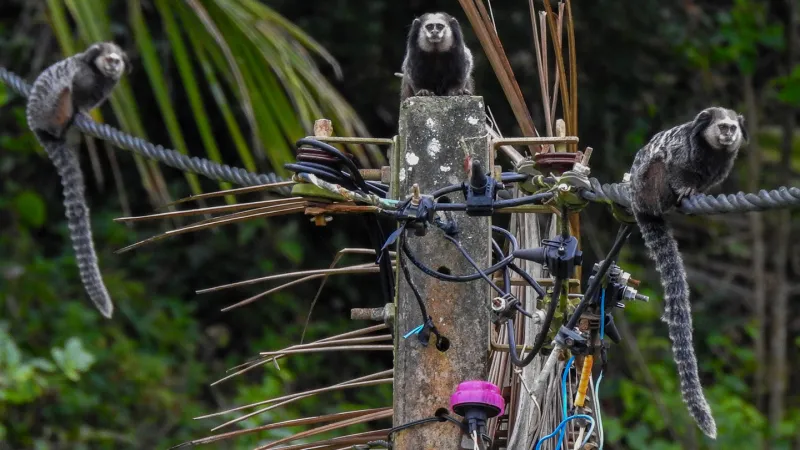
How a brutal drought may have helped unleash yellow fever in Brazil
Recent research suggests a severe drought in Brazil may have played a critical role in the emergence of yellow fever cases—a phenomenon not observed in decades. As animals desperately sought dwindling water sources, they inadvertently facilitated the spread of the virus from forested areas into urban environments. This unprecedented event underscores the complex interplay between climate change, ecological disruption, and public health. For further exploration of remarkable deep-sea discoveries, see our recent article, "Brand New Magnipinna Squid Video!"

Beyond corals: unveiling the ecological roles of macroalgae in the Red Sea - a review
Macroalgae, often overshadowed by coral reefs, are fundamental drivers of marine ecosystem health and productivity. This review synthesizes current understanding of these vital organisms within the Red Sea, a unique and challenging environment characterized by extreme conditions. Macroalgae contribute significantly to primary production, habitat formation, and nutrient cycling, demonstrating their critical role in biodiversity. Addressing research gaps—including long-term monitoring and physiological responses—is essential for effective ecosystem management.

Brand New Magnipinna Squid Video!
A remarkable sighting has been documented: another Magnapinna squid, often referred to as a "longboi," was recently observed by the Nautilus Live! crew. This exceptional dive showcased a vibrant ecosystem, including extensive coral formations, a chimera, and diverse isopods. Viewers can explore stills from the encounter, and for further visual documentation of marine life, consider reviewing our recent article, "Highlight of Pictures We Took After Finishing Our Fieldwork, Taken Around Eleuthera Island in the Bahamas."

Can someone help me identify this species? Devonport, Tasmania
Identifying marine life can be challenging, even for experienced observers. Our community is here to assist! A user in Devonport, Tasmania, recently sought identification for an organism found in the intertidal zone of Don Reserve – a possible sponge or algae. Sharing images is key to accurate assessment. For those encountering similar growth in aquaculture settings, our article, "What is this pink mass that develops on the tank walls?", may offer relevant insights.

(Identificationof shell from the Philippines) Can I please ask, what kind of shell is this?
Identifying marine shells can be surprisingly complex, even for experienced observers. Your shell, originating from the Philippines but of unknown provenance, presents an intriguing puzzle. Initial impressions of a conch are understandable, but further investigation suggests it may be a volute. Precise identification requires detailed examination of its morphology, including spire characteristics and aperture shape. For those interested in exploring similar identification challenges, our "Can someone help me identify this sculpin caught in Ketchikan Alaska?" article showcases another fascinating case study.

What is this redondo beach, Washington state
Observations of unusual, gelatinous organisms concentrated along the Redondo Beach, Washington coastline have sparked considerable online discussion. While preliminary assessments suggest these are likely siphonophores – colonial hydrozoans related to jellyfish – definitive identification requires further empirical validation. Their appearance in this specific location warrants longitudinal study to understand potential environmental factors influencing their aggregation.
What is the Gulf of Mexico like today given the oil spill that occurred 16 years ago? How much has it recovered, what has changed, how does the water quality today compare to before the spill?
Sixteen years following the Deepwater Horizon oil spill, the Gulf of Mexico continues to undergo measurable ecological shifts. While significant recovery has occurred, particularly in surface waters, long-term impacts persist, influencing benthic communities and impacting certain species. Current water quality assessments along Alabama’s coast and throughout the Gulf indicate improvements relative to the immediate post-spill period, though certain chemical indicators remain elevated.

What Are Ocean Accounts And Why Do We Need Them? - Earth.Org
Ocean Accounts represent a critical, emerging framework for measuring and managing ocean health—akin to national economic accounts, but focused on marine ecosystems. These validated systems track key indicators of ocean condition, providing a longitudinal view of changes driven by human activity and climate impacts. Such integrated data ecosystems enable evidence-based decision-making for sustainable ocean stewardship. Understanding these trends is paramount; for example, recent observations of declining emperor penguin chick populations, as detailed in our article, highlight the urgency of proactive measures.
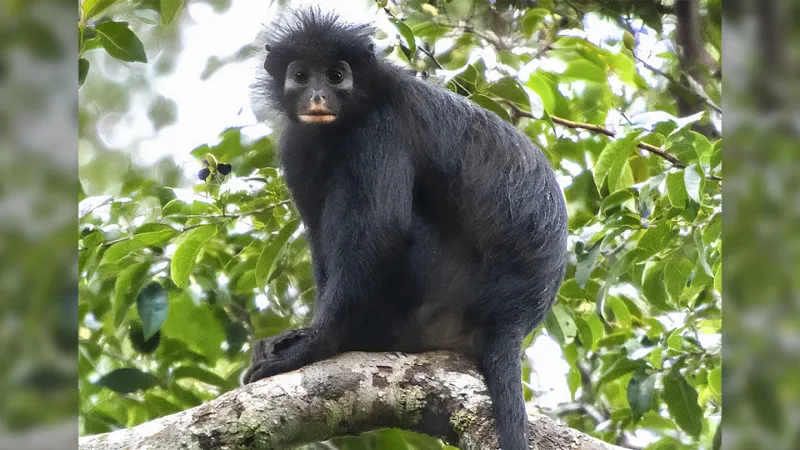
A new monkey species has been found deep in Congo’s forests
Deep within the Congo's dense forests, a new primate species has been definitively identified through a combination of unique vocalizations, photographic evidence, and DNA analysis. This discovery, representing a significant contribution to biodiversity understanding, highlights the ongoing potential for uncovering previously unknown life forms. Initial assessments suggest this species may already face extinction risks, underscoring the urgency of conservation efforts. Further research into habitat restoration, as explored in our article "In search of resilient sponges," is crucial for protecting vulnerable ecosystems.
Looking for scientific feedback on a short interactive experience about whale migration
World Data Ocean invites scientific feedback on TOHORĀ, a new interactive experience exploring the complexities of whale migration. This project aims to foster greater ocean awareness by highlighting the challenges whales face during these journeys, prioritizing accurate representation over exhaustive simulation. Developers seek honest perspectives on clarity, realism, and potential improvements from oceanographers, marine scientists, and interested individuals. For deeper context on related marine challenges, explore our article, "The future of our oceans: negotiating marine fisheries, aquaculture, and living resources with unbiased science."
Can you please help me identify this animal? Costa Rica, Pacific coast
A fascinating marine observation has been reported from Costa Rica's Central Pacific coast. A user on Reddit shared video evidence of an unidentified creature inhabiting a rocky intertidal zone, retreating into a hole within the rock structure. Initial analysis suggests a possible invertebrate species, though definitive identification requires further investigation. World Data Ocean’s integrated data ecosystem supports rigorous species identification, emphasizing the importance of longitudinal observations for accurate classification.

Close Up Tide Pools
The intricate beauty of intertidal ecosystems is revealed in this striking image of tide pools at Cape Blanco, Oregon, captured in July 2026. Submitted by /u/JamTrackAdventures, the photograph highlights the surprising biodiversity and almost alien landscapes found within these small, coastal habitats. Such environments are increasingly sensitive to changes in ocean temperature and oxygen levels, as recently explored in a study linking marine extinctions to intolerable heat—a topic further investigated in our article, "PHYS.
How would you theoretically catch a giant squid in The North Atlantic Ocean
The pursuit of a giant squid in the North Atlantic presents a formidable, yet theoretically addressable, scientific challenge. Capturing one would require a multi-faceted approach leveraging advanced remotely operated vehicles (ROVs), calibrated acoustic monitoring to detect their movements, and specialized, low-impact trapping techniques designed to minimize harm. Success hinges on understanding their deep-sea habitat and behavior—a field detailed further in our article, "Close Up Tide Pools," which highlights the surprising complexity of marine ecosystems. Empirical data collection remains paramount in this endeavor.