climate monitoring
climate monitoring on World Data Ocean: a running collection of 38 stories we have gathered and hand-picked because they are worth your time. Every post here touches on climate monitoring in some way — the news, the analysis, the deep dives, and the occasional surprise find. A Global Hub for Ocean Intelligence 4 World Data Ocean is a centralized digital platform where researchers, scientists, and ocean enthusiasts converge to explore, analyze, and… New stories are added to this page as we find them, so check back if you want to keep up with what is happening around climate monitoring, or subscribe to the RSS feed to get them as soon as they are published. Browse the collection below, or head back to the homepage to see everything World Data Ocean is covering right now.

Response of HAB-forming microalgae competition to ocean acidification, warming, and changing light fields
In the East China Sea, harmful algal blooms (HABs) have become increasingly frequent due to climate change, particularly ocean warming and acidification, combined with light attenuation from eutrophication. This study investigates the competitive dynamics between two dominant diatoms, Skeletonema costatum and Chaetoceros curvisetus, under varying conditions of CO2, temperature, and light. Our findings reveal that future scenarios favor C. curvisetus, potentially increasing the prevalence of HAB events.
Hurricane impacts on oyster reef habitat in a large, wind-driven estuary
Hurricanes significantly impact oyster reef habitats, particularly in large, wind-driven estuaries like Pamlico Sound, North Carolina. The unique conditions during Hurricanes Florence and Dorian allowed researchers to assess how storm characteristics, reef depth, and structure affect oyster populations. Findings revealed that deeper reefs faced severe degradation and mortality, while shallower, sheltered reefs showed resilience. Effective management and restoration efforts must consider these factors to enhance reef resilience against increasing storm frequency and intensity.
Navigating the frontier of data openness: the obligation to cooperate in marine climate data governance under the AI Era
As artificial intelligence (AI) models become integral to marine climate monitoring and decision support, the reliance on extensive training data highlights disparities in marine climate data governance. This article reevaluates the obligations of cooperation and information exchange under the United Nations Convention on the Law of the Sea (UNCLOS), particularly for Small Island Developing States (SIDS) that contribute vital local data. It explores the implications of conditional data openness within AI-enabled marine governance, linking it to public risk management.
Advancing equity through the “capability to aspire” in ocean and coastal governance: centering indigenous and local values to shape social–ecological futures — a review
This review explores advancing equity in ocean and coastal governance by centering Indigenous Peoples’ and Local Communities’ (IPLCs) values amid socioecological change. By synthesizing 27 empirical studies, it highlights how IPLCs mobilize their knowledge and values to influence marine governance. Key insights reveal mechanisms for strengthening authority and stewardship, the challenges posed by competing ocean uses and climate change, and emerging pathways for equitable governance. This work underscores the importance of the capability to aspire for governance transitions, a critical dimension of ocean equity.
Trade-offs of nest relocation in hawksbill turtles: effects on hatching success and hatchling performance
Nest relocation is a common strategy employed to protect hawksbill turtle clutches from threats such as inundation and predation. However, the impact on hatchling quality, particularly in extreme thermal conditions like those in the Arabian Gulf, remains ambiguous. This study compares three incubation strategies— in situ, ex situ, and split-clutch— to assess their effects on hatching success and hatchling performance. Results indicate that while ex situ relocation enhances hatching rates, it may compromise hatchling physical performance.
Source-sink dynamics of coastal blue carbon: a review of mechanisms and drivers
Coastal blue carbon ecosystems, including mangroves, salt marshes, seagrass meadows, and macroalgae, play a vital role in mitigating climate change by acting as significant natural carbon sinks. Despite their importance, inconsistencies in methodologies and geographic biases impede their effective integration into blue carbon management strategies. This review synthesizes current knowledge on the source-sink dynamics, carbon storage capacities, and biogeochemical processes of these ecosystems, while also addressing the impact of anthropogenic disturbances.
Establishment of the East Sea (Japan Sea) Time-series station: an integrated physical–biogeochemical observatory for a climate-sensitive marginal sea
The establishment of the East Sea Time-series (EaST) station in the Ulleung Basin marks a significant advancement in monitoring climate-sensitive marginal seas. Scheduled to begin routine seasonal operations in February 2026, EaST will provide crucial insights into ocean–climate interactions through systematic measurements of hydrographic, chemical, and biological parameters. This integrated observatory will follow international standards, ensuring high-quality data dissemination via the Korea Oceanographic Data Center (KODC). By creating a long-term physical–biogeochemical baseline, EaST will enhance our understanding of climate-driven changes in the East Sea
Integrating climate storylines and time of emergence on vulnerability assessments: the case of crested penguins
This study explores the vulnerability of crested penguins to ocean warming by integrating innovative climate assessment tools—storylines and time of emergence. As anthropogenic climate forcing alters ocean circulation in the Southern Ocean, understanding the impacts on these threatened species becomes increasingly complex due to uncertainties in climate projections.
A holistic perspective on planktonic communities across the Northwestern Mediterranean Sea
The Northwestern Mediterranean Sea is experiencing significant environmental changes due to climate variability and human activities. To assess the long-term impacts on marine ecosystems, the Mediterranean Ocean Observing System for the Environment (MOOSE) program employs multidisciplinary observations, integrating physical, chemical, and biological data. This study offers a comprehensive evaluation of planktonic communities, utilizing environmental genomics and high-resolution imaging across various plankton size fractions and depths.

China’s Network Of Underwater Sensors In Indian & Pacific Oceans Could Neutralise U.S. Submarine Stealth
China's strategic expansion in the maritime domain is underscored by its extensive network of underwater sensors in the Indian and Pacific Oceans. This initiative aims to enhance the surveillance capabilities of its modern submarine fleet, which is among the largest globally. By deploying these advanced technologies, China seeks to neutralize the stealth advantages of U.S. submarines, thereby reshaping the balance of power in crucial maritime regions. This development highlights the growing importance of underwater intelligence in contemporary naval warfare and international security dynamics.
Physics-enhanced deep learning for sea surface temperature forecasting via multi-scale feature integration
Accurate prediction of sea surface temperature (SST) is vital for marine monitoring and climate forecasting. This study introduces the multi-source coupled prediction neural network (MSCPNN), which enhances deep learning methods by integrating physical mechanisms alongside data-driven approaches. By incorporating temperature, salinity, and current dynamics within a multi-scale feature learning framework, MSCPNN significantly outperforms baseline models, achieving a 17% reduction in RMSE and improved correlation coefficients.
The Italian effort toward a coordinated observation of Essential Variables (EOV, ECV, EBV) in European Marine Environments. Long-term observation in the central Mediterranean seas and Italian coasts
Italy's coordinated effort to observe Essential Ocean, Climate, and Biodiversity Variables (EOVs, ECVs, EBVs) in the Mediterranean is pivotal for enhancing environmental assessments and policy development. This study analyzes the capabilities of Italy's marine monitoring system, involving fixed stations, buoys, and autonomous platforms, within the framework of the ITINERIS project. Findings reveal that 50% of the recognized 107 Essential Variables are actively monitored, with over 90% meeting international standards.
How are real-time ocean monitoring systems used in oceanography research?
Real-time ocean monitoring systems play a crucial role in oceanography research by providing continuous data on various ocean conditions. These systems, which include advanced buoys and sensors, collect vital information such as temperature, wave patterns, and environmental factors. This real-time data is invaluable for understanding ocean dynamics, conducting climate studies, and monitoring marine environments. By facilitating immediate access to empirical information, these technologies enhance our ability to respond to changes and challenges in ocean health.
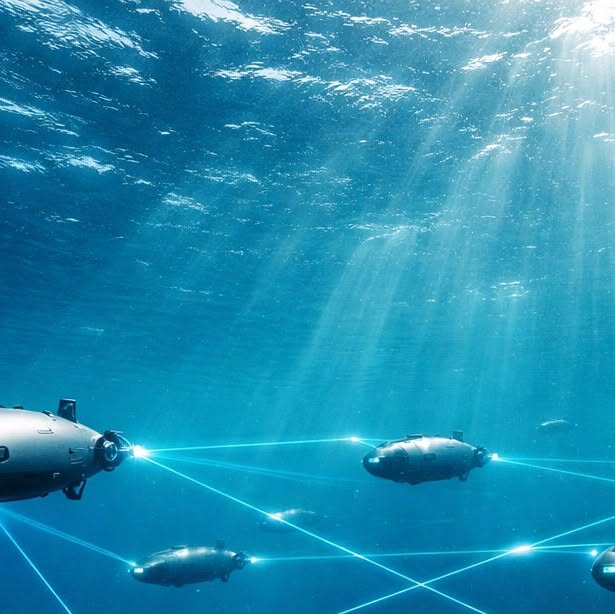
From solo ships to robotic swarms: the way we explore the ocean is fundamentally changing. Decades of ocean science reli...
The exploration of our oceans is undergoing a transformative shift, moving from traditional research vessels to sophisticated autonomous robotic fleets. This evolution, driven by Ocean Infinity Operations, enables coordinated, real-time data integration, vastly improving our ability to monitor environmental indicators with validated accuracy. Rather than relying on isolated snapshots, we now access a dynamic living data ecosystem that empowers researchers and scientists to make informed decisions about our planet’s future.