climate monitoring
climate monitoring on World Data Ocean: a running collection of 38 stories we have gathered and hand-picked because they are worth your time. Every post here touches on climate monitoring in some way — the news, the analysis, the deep dives, and the occasional surprise find. A Global Hub for Ocean Intelligence 4 World Data Ocean is a centralized digital platform where researchers, scientists, and ocean enthusiasts converge to explore, analyze, and… New stories are added to this page as we find them, so check back if you want to keep up with what is happening around climate monitoring, or subscribe to the RSS feed to get them as soon as they are published. Browse the collection below, or head back to the homepage to see everything World Data Ocean is covering right now.

Paraglacial lagoons of Svalbard: emerging ecosystems at the Arctic Land-Sea interface
Rapid Arctic glacier retreat is fundamentally reshaping coastal landscapes, creating novel aquatic habitats, particularly paraglacial lagoons. In Svalbard, these systems are expanding, yet remain understudied despite their growing ecological and biogeochemical significance. This synthesis integrates geomorphological, hydrological, ecological, and biogeochemical perspectives, revealing a developmental continuum from glacier-influenced basins to more stable lagoons exhibiting dynamic conditions and diverse communities.
Plankton imager 10 monitoring in the southern North Sea: an open workflow for classification, morphometry and DwC-A publication
Plankton, foundational to marine food webs, are increasingly vulnerable to climate change impacts. High-frequency plankton imaging offers crucial insights into community composition and size, yet standardized workflows for processing and publishing these data remain scarce. This study details the deployment of the Plankton Imager 10 (Pi-10) in the southern North Sea and introduces an open, modular pipeline for data processing, classification, and Darwin-Core Archive (DwC-A) publication.
The duty to know: monitoring, reporting and verification as an obligation of due diligence in the legal protection of blue carbon ecosystems
Blue carbon ecosystems—mangroves, tidal marshes, and seagrass meadows—are increasingly central to national climate strategies, yet their legal protection under international law requires further clarification. Emerging jurisprudence highlights a critical “epistemic conditionality”: States are obligated to *know* the condition of these ecosystems, and protection hinges on their ability to provide legally verifiable proof. This article analyzes this obligation, demonstrating that monitoring, reporting, and verification (MRV) extends beyond climate policy, fulfilling binding duties under the United Nations Convention on the Law of the Sea.

4,100-km Fibre Cable Across Drake Passage Could End Antarctica’s Hard-Drive Data Runs
A groundbreaking feasibility study by Chile's Subtel indicates a technically viable solution to Antarctica’s data transfer challenges: a 4,100-km fiber optic cable across the Drake Passage. Currently, Antarctic research relies on physically transporting data via hard drives, a slow and resource-intensive process. This proposed connection promises real-time data transmission, accelerating scientific discovery and bolstering climate research. For context on the importance of continuous monitoring, see our article, "Wuthuga (dugong) population status in Gathaagudu (Shark Bay) sea country," highlighting the challenges of tracking wildlife populations.

Global Sea Surface Temperature Hits Record High Of 21.1°C In August 2026
In August 2026, the global average sea surface temperature (SST) reached a record high of 21.1°C, surpassing the previous benchmark established in March 2024. This validated measurement underscores the escalating impact of climate change on ocean systems worldwide. Data from our integrated data ecosystem confirms this significant anomaly, highlighting the need for continued longitudinal monitoring and empirical analysis.
Wuthuga (dugong) population status in Gathaagudu (Shark Bay) sea country
Monitoring wildlife populations is crucial for effective conservation, particularly as climatic pressures intensify. This study assesses the status of Wuthuga (dugongs, *Dugong dugon*) within Gathaagudu (Shark Bay), Western Australia, a globally significant population. Utilizing both aerial surveys and image analysis in 2023, researchers compared contemporary abundance estimates to a long-term dataset (1989-2018), revealing a stable population despite fluctuations. Notably, the observed calf proportion offers an encouraging indicator of ongoing reproductive success.

Panama Canal Marks 112 Years As Global Trade Lifeline Amid New Risks
For 112 years, the Panama Canal has served as a critical artery of global trade, facilitating the movement of essential goods worldwide. Recent data from the Panama Canal Authority (ACP) indicates 10,623 deep-draft vessel transits in the first ten months of fiscal year 2026, underscoring its continued importance. However, geopolitical tensions and climate-related risks are increasingly impacting maritime routes. Related coverage of regional instability, such as the recent concerns surrounding Ecuadorian sailors and maritime security, highlights the complexities facing global shipping lanes.
Climate warming drives multidimensional reorganization of global zooplankton community structure and function: an updated review
Climate warming is fundamentally reshaping global zooplankton communities, impacting their structure and function through a complex interplay of environmental stressors—ocean warming, acidification, and intensified stratification, among others. This updated review synthesizes empirical evidence, highlighting how these drivers influence species distributions, body sizes, and ecosystem processes like carbon cycling and nutrient regeneration. Taxonomic and regional variability significantly affect these responses, demanding integrated approaches combining long-term observations and advanced modeling.
From climate data to regulatory decisions: integrating climate AI into marine EIAs
Climate change profoundly impacts ocean sustainability, necessitating robust environmental impact assessments (EIAs). Regulatory frameworks, like the UNCLOS and BBNJ Agreement, increasingly demand structured EIAs. Rapid advancements in climate AI—including forecasting and scenario modeling—offer unprecedented opportunities to integrate real-time, high-resolution climate data into these assessments. Integrating climate AI throughout the EIA workflow, grounded in evidence standards and transparent documentation, can enhance decision-making and bolster long-term ocean health.
Looking for MSc Thesis Ideas in Hydrography, Geodesy & Geoinformatics
Seeking impactful MSc thesis topics in hydrography, geodesy, and geoinformatics? This student, specializing in hydrography within a German Master's program, invites professionals and researchers to share insights. Interests span hydrographic surveying, bathymetric data processing, GIS, satellite-derived bathymetry, and digital twins for marine environments, with a focus on practical applications and industry collaboration. Consider emerging technologies and datasets poised to drive significant ocean intelligence—as highlighted in our recent article, "The future of our oceans: negotiating marine fisheries, aquaculture, and living resources with unbiased science."

1500 Ships Trapped In Hormuz Could Unleash Biggest Bioinvasion Event Once Trade Resumes
A recent, peer-reviewed study highlights a significant ecological risk stemming from the current maritime standstill in the Strait of Hormuz. Approximately 1500 vessels are currently inactive, creating conditions ripe for a substantial marine bioinvasion event upon the resumption of trade. This "super-spreader" scenario arises from the introduction of non-native species transported in ballast water. For deeper context on the geopolitical factors influencing these events, see our report, "U.S. Will Use Iranian Funds To Pay For Ship Damages In Strait Of Hormuz, Trump Announces.
Assessing Mediterranean Sea temperature and salinity trends using Argo float data and reanalysis products between 2012 and 2025
A recent study rigorously assesses Mediterranean Sea temperature and salinity trends from 2012 to 2025, leveraging data from Argo floats and reanalysis products across three key basins. Findings reveal consistent warming, particularly in the Western Mediterranean and Ionian Sea, alongside salinity fluctuations influenced by North Atlantic freshening. Notably, subsurface salinification is also observed. While discrepancies exist due to data density, both datasets confirm ongoing warming and salinification, underscoring the impact of climate change.
From spatial expansion to institutional coherence: governance pathways of marine protected areas in island blue economies
Island nations face the dual challenge of advancing marine conservation and developing blue economies amidst intensifying climate pressures. This study comparatively examines marine protected area (MPA) governance in Fiji, Palau, and Taiwan, revealing that institutional coherence—horizontal and vertical coordination—is paramount to effectiveness, exceeding the importance of mere spatial extent. Three governance models emerged, highlighting the need for integrated approaches. Findings emphasize sequencing expansion with robust enforcement and adaptive policy cycles, offering transferable insights for climate-resilient ocean development.

Copernicus Marine and Copernicus Climate Change: Daily global sea surface temperatures break records for the time of year | Copernicus - Copernicus Climate
Daily global sea surface temperatures have reached unprecedented levels, surpassing records for this time of year, according to data from Copernicus Marine and Copernicus Climate Change. This represents a significant climate indicator, validated by continuous, real-time monitoring across the globe. The integrated data ecosystem provides empirical evidence of warming trends, underscoring the urgency of ocean stewardship and the need for collaborative action.
Seagrass composition shifts and declines associated with reduced light, high phosphate, and elevated water temperatures in Turneffe Atoll Marine Reserve, Belize
Seagrass ecosystems, vital foundation species for coastal resilience, face escalating threats from climate change and human activity. A longitudinal study within the Turneffe Atoll Marine Reserve, Belize, utilizing the SeagrassNet protocol, reveals a concerning trend: declining *Thalassia testudinum* abundance and a shift towards *Syringodium filiforme*, with complete habitat loss observed in shallow transects by 2025. These changes correlate directly with reduced light, elevated phosphate, and increased water temperatures.
Environmental DNA as a tool for ecosystem monitoring and conservation biology
Biodiversity loss presents a critical global challenge, demanding innovative monitoring solutions. Environmental DNA (eDNA) offers a transformative, non-invasive approach to ecological assessment. By analyzing DNA shed by organisms in soil and water, eDNA enables detection of rare species and provides ecosystem-level insights, revolutionizing conservation research. While advancements continue, rigorous calibration and validation remain essential.
Climate-driven phenological shifts and biogeographical constraints of the hydrozoan Velella velella in Mediterranean coastal waters
Recent research highlights the critical role of citizen science in understanding ocean responses to climate change. A comprehensive, long-term study of *Velella velella*, a free-floating hydrozoan, in the Mediterranean Sea reveals a 32-day advance in bloom timing since 2009, linked to warming winter sea surface temperatures. Analyzing over 12,000 records—primarily gathered through citizen observations—researchers documented a west-to-east distribution pattern and established *V. velella* as a valuable indicator of surface-ocean variability.
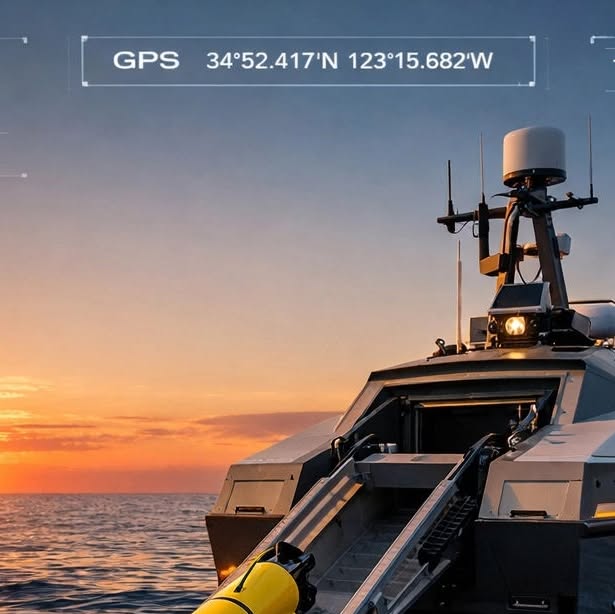
Imagine a world where we can monitor the deepest corners of the ocean without ever leaving the shore. Well, we're not ju...
Imagine a world where we can monitor the deepest corners of the ocean without ever leaving the shore. That world is now a reality: we achieved the first autonomous launch of an underwater glider from an uncrewed surface vessel, creating a validated, real‑time data stream on temperature, salinity and chemistry. This integrated data ecosystem enables longitudinal studies that were once too costly or hazardous, scaling ocean intelligence from surface to seafloor.
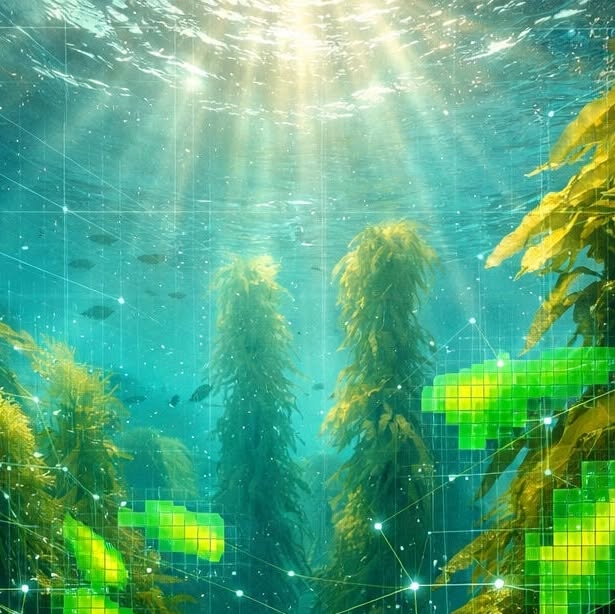
Ever wonder how we keep track of the ocean’s "rainforests"? Kelp forests are the unsung heroes of our coastlines, provid...
Ever wonder how we map the ocean’s “rainforests”? Kelp forests are the unsung heroes of our coastlines, sequestering carbon, stabilizing shorelines, and sustaining biodiversity. Yet, scaling their monitoring has long stymied scientists and policy makers. At World Data Ocean, we apply AI and deep learning to convert raw imagery into validated, real‑time ocean intelligence. Our high‑resolution dashboards reveal kelp dynamics in ten times greater detail, empowering researchers to make measurable, evidence‑based decisions that strengthen coastal resilience.
Macrobenthos and their relationship with environmental drivers in Rushikulya, an Olive Ridley turtle rookery-associated tropical estuary
The Rushikulya estuary, located on the eastern coast of India, is a vital habitat for the Olive Ridley turtle (Lepidochelys olivacea) and supports a rich macrobenthic community. This study investigates the relationship between macrobenthos and environmental drivers over four seasons, identifying 43 taxa, predominantly polychaetes. Significant correlations were found between macrofauna distribution and factors like salinity and nitrite levels. The findings highlight the importance of macrobenthos as bioindicators, providing essential insights for ecological monitoring and sustainable policy development.

Maritime Just Transition Task Force: 8 Things Every Seafarer Needs to Know
The Maritime Just Transition Task Force represents a pivotal shift in the maritime industry, impacting every seafarer's career. Understanding its implications is essential for navigating changes in training, safety, and STCW regulations. This article outlines eight critical facts that every seafarer needs to know to stay informed and prepared. For those interested in broader maritime challenges, our recent article on the "Transcriptomic response of Acropora cervicornis following transplantation to a marginal, nearshore environment" provides valuable insights into the intersection of marine ecology and industry practices.
Autonomous underwater stereo vision system for non-invasive fish length estimation in marine environments
As marine ecosystems face rapid changes due to climate and human pressures, effective monitoring tools are essential. This study presents an innovative, non-invasive pipeline for automatic fish length estimation utilizing an underwater Stereo-Vision System (SVS). By synchronizing image pairs for 3D reconstruction, the method combines 2D segmentation masks with robust multi-object tracking, achieving precise measurements even in challenging underwater environments. With a Mean Absolute Error (MAE) of 1.

Ilya Espino de Marotta Becomes First Woman To Lead Strategically Vital Panama Canal
Ilya Espino de Marotta has made history as the first woman to lead the Panama Canal Authority, a strategically vital entity for global trade. Her selection underscores her extensive experience in technical, operational, and leadership roles, positioning her to navigate the complexities of this critical waterway. Espino de Marotta's appointment marks a significant milestone in maritime leadership and emphasizes the importance of diverse perspectives in managing crucial infrastructure.
High-accuracy fish species identification using transfer learning on vision foundation models
Citizen science initiatives are vital for large-scale monitoring of marine biodiversity, particularly in the Mediterranean Sea, a region facing significant ecological challenges. To improve the reliability of species observations from non-expert contributors, this study introduces MEDFISH101, a dataset of approximately 70,000 validated images of 101 fish species. Utilizing advanced transfer learning techniques, we developed a deep learning model, DINOv2-G, achieving a Top-1 accuracy of 94.12% in species identification.