World’s Largest Boat Hoist With 1,700-Tonne Capacity Under Construction In Italy
Our take

The construction of a 1,700-tonne boat hoist by ASCOM represents a significant advancement in maritime infrastructure, particularly concerning the maintenance and repair of increasingly large vessels. This capability directly addresses the growing size and complexity of modern ships, including research vessels, specialized cargo carriers, and even smaller cruise ships. Recent incidents highlight the inherent risks associated with maritime operations; for instance, China Opens Probe Into Deadly Cargo Ship Fire That Killed 25 At Qingdao Shipyard underscores the potential for catastrophic events, often requiring extensive and specialized repair work. The ability to efficiently lift and maneuver vessels of this magnitude is therefore crucial for ensuring safety and minimizing downtime, contributing to a more resilient global maritime ecosystem. Furthermore, the recent 21 Rescued After Two Merchant Ships Collide Off India’s Gujarat Coast demonstrates the frequency of incidents requiring rapid response and repair, making such robust lifting infrastructure all the more vital.
The scale of this hoist – 1,700 tonnes – necessitates a sophisticated engineering approach, incorporating advanced materials and precision calibration to ensure operational safety and longevity. The integrated data ecosystem required to manage such a complex piece of equipment will likely rely on real-time sensor data and predictive maintenance algorithms, mirroring the broader trend of integrating technology into maritime infrastructure. This development isn't merely about lifting capacity; it's about enabling more effective and efficient ship maintenance, potentially reducing the need for costly and environmentally impactful drydocking procedures. The ability to perform significant repairs alongside a ship, rather than requiring it to be completely removed from the water, represents a considerable advancement in operational efficiency. Consider the recent case of the Fire-Damaged 72,255-GT Car Carrier Sees Temperature Rise In Panama Waters, where the vessel’s extended blackout condition highlights the challenges of dealing with disabled ships at sea. A hoist of this capacity could facilitate quicker and more comprehensive on-water repairs.
The implications extend beyond simply repairing existing vessels. This technology will likely accelerate the development of larger, more specialized ships capable of operating in challenging environments, including deep-sea research and resource exploration. The ocean’s role in climate research and resource management continues to expand, driving demand for larger, more capable vessels. A hoist like this is a critical enabling factor, allowing for the efficient maintenance and upgrade of these vital platforms. The validation of these systems through rigorous testing and peer-reviewed engineering practices will be essential to ensure their reliability and safety in demanding operational conditions. The longitudinal data collected during operation will provide invaluable empirical evidence to further refine design and operational protocols.
Ultimately, the ASCOM boat hoist represents a forward-thinking investment in the future of maritime operations. As the global fleet continues to evolve and the demands placed upon it intensify, the need for robust and adaptable infrastructure will only grow. The question now becomes: how quickly will similar, high-capacity hoisting systems become commonplace in major ports worldwide, and what innovative applications will emerge as a result of this increased lifting capability?
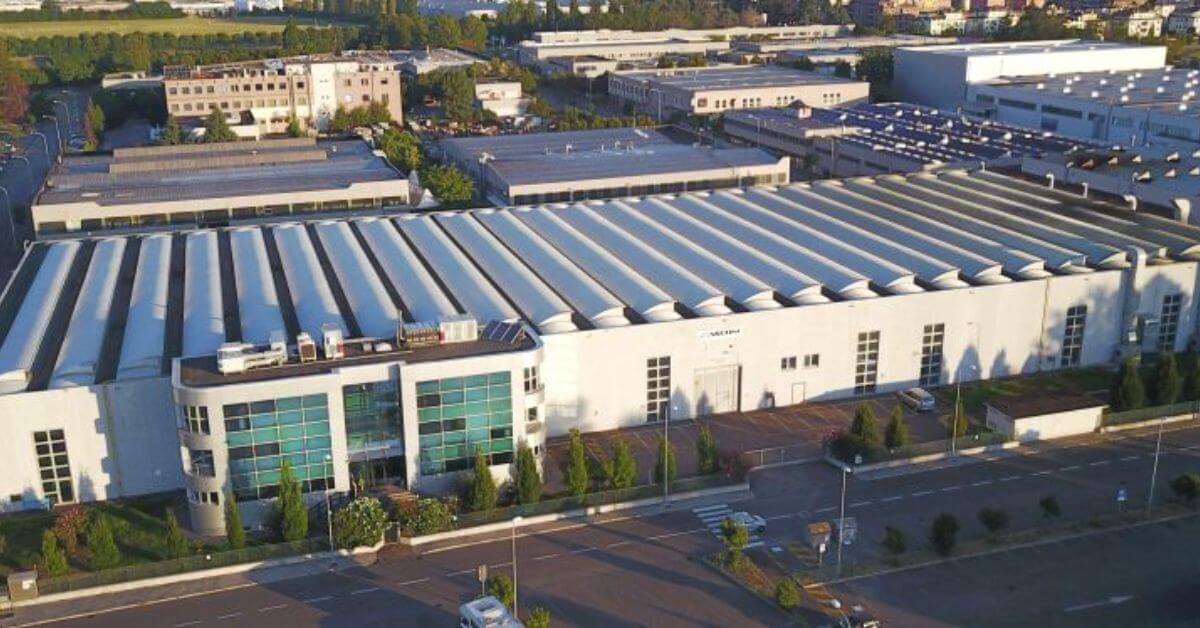
Italian lifting equipment manufacturer ASCOM S.p.A. has started building a boat hoist that will be able to lift vessels weighing up to 1,700 tonnes.
The company says the BHT 1700 S.Ton will be the world’s largest boat hoist when completed. It will have 200 tonnes more lifting capacity than Cimolai Technology’s 1,500-tonne MBH 1500, which is located in Mauritius.
The new machine combines ASCOM’s hydraulic lifting system with a multi-axle mobile chassis. The design is intended to keep heavy loads stable and allow the hoist to move precisely in ports and shipyards.
ASCOM Managing Director Andrea Cuoghi said the project demonstrates the engineering capabilities of the company’s team and takes its hydraulic and structural design beyond its previous benchmarks.
The 1,700-tonne capacity is 200 tonnes higher than that of the MBH 1500. This will make the BHT 1700 S.Ton the largest boat hoist by lifting capacity if ASCOM completes the project as planned.
The size of the machine also means that stability and movement are important parts of its design. ASCOM is combining its hydraulic lifting system with several axles on a mobile chassis to move the hoist and its load around port and shipyard areas.
Unlike a fixed lifting system, the BHT 1700 S.Ton is being built as a mobile boat hoist. The company says its chassis is designed for precise manoeuvring, allowing the machine to be moved within the areas where it is being used.
ASCOM has not given a delivery date for the machine. It has also not said where the hoist will eventually be used, saying those details are confidential.
The company plans to show exclusive renderings of the BHT 1700 S.Ton at the Monaco Yacht Show 2026. The event will run from September 23 to 26, with ASCOM exhibiting at booth #DS69 in the Darse Sud section.
The renderings will offer the first detailed look at the new hoist before ASCOM provides further information about the machine.
ASCOM is based in Formigine, in Italy’s Modena province. The company makes travel lifts, boat hoists and port cranes for the marine and industrial sectors.
References: superyachttimes, Marina World
Read on the original site
Open the publisher's page for the full experience