China Opens Probe Into Deadly Cargo Ship Fire That Killed 25 At Qingdao Shipyard
Our take

The recent tragedy at Qingdao shipyard, where a fire aboard the *Ocean Melody* claimed the lives of 25 workers, underscores a persistent and concerning vulnerability within the maritime industry. This incident, now under investigation by the Ministry of Emergency Management and the Ministry of Industry and Information Technology, follows a series of concerning events across the region. Just months prior, an Indonesian Ferry Carrying 243 Sinks In Java Sea Leaving One Dead And 140 Missing highlighted the precariousness of maritime safety, and only weeks before that, a Fire-Damaged 72,255-GT Car Carrier Sees Temperature Rise In Panama Waters presented a different but equally alarming scenario: a drifting, disabled vessel posing an environmental risk. These events collectively point to systemic challenges requiring rigorous examination and improved preventative measures. The scale of the Qingdao loss, with a quarter-century of skilled labor extinguished in a single incident, demands a particularly thorough and transparent investigation.
The investigation’s focus should extend beyond identifying the immediate cause of the fire, though determining the ignition source and assessing adherence to safety protocols are paramount. Crucially, it must examine the broader context of shipyard operations and maintenance procedures. Are adequate ventilation systems in place, particularly during repair work? Are fire suppression systems calibrated and regularly inspected? Were workers provided with sufficient training and appropriate personal protective equipment? The *Ocean Melody* incident, like so many others, highlights the human cost of inadequate safety measures. The inherent complexity of ship repair—the presence of flammable materials, confined spaces, and intricate machinery—demands a culture of proactive risk mitigation, one that prioritizes worker safety above all else. The fact that the *Ocean Melody*, a 190-metre (623-foot) vessel, was undergoing repairs at the time of the incident also introduces the additional complexity of managing a large-scale operation with numerous contractors and subcontractors, potentially complicating oversight and accountability.
The global maritime ecosystem relies on a network of shipyards for essential maintenance and upgrades. These facilities, often operating with tight deadlines and cost pressures, are vulnerable to cutting corners on safety. While regulations and international conventions exist to govern maritime safety, their effective implementation and enforcement vary significantly across jurisdictions. Data-driven approaches, leveraging real-time sensor data and predictive analytics, could play a crucial role in enhancing shipyard safety. Integrated data ecosystems, validated by empirical evidence and peer-reviewed research, could provide early warnings of potential hazards, enabling proactive interventions to prevent accidents. This is where World Data Ocean's commitment to ocean intelligence can extend beyond the open ocean, offering tools and insights applicable to the often-overlooked safety challenges within port infrastructure. Longitudinal data analysis of similar incidents, calibrated against shipyard operational data, can identify patterns and trends that inform preventative strategies.
Looking ahead, the Qingdao tragedy should serve as a catalyst for a renewed focus on maritime safety across the industry. The investigation’s findings, once released, should be widely disseminated and incorporated into training programs and safety protocols globally. The increasing reliance on automation and remote monitoring technologies presents both opportunities and challenges. While these innovations can enhance safety, they must be implemented thoughtfully, ensuring that human oversight and expertise remain integral to the process. A critical question to watch is whether this incident will spur greater international collaboration on shipyard safety standards and enforcement mechanisms, moving beyond existing conventions towards a more harmonized and robust system that prioritizes the lives of those who keep the world’s ships afloat.
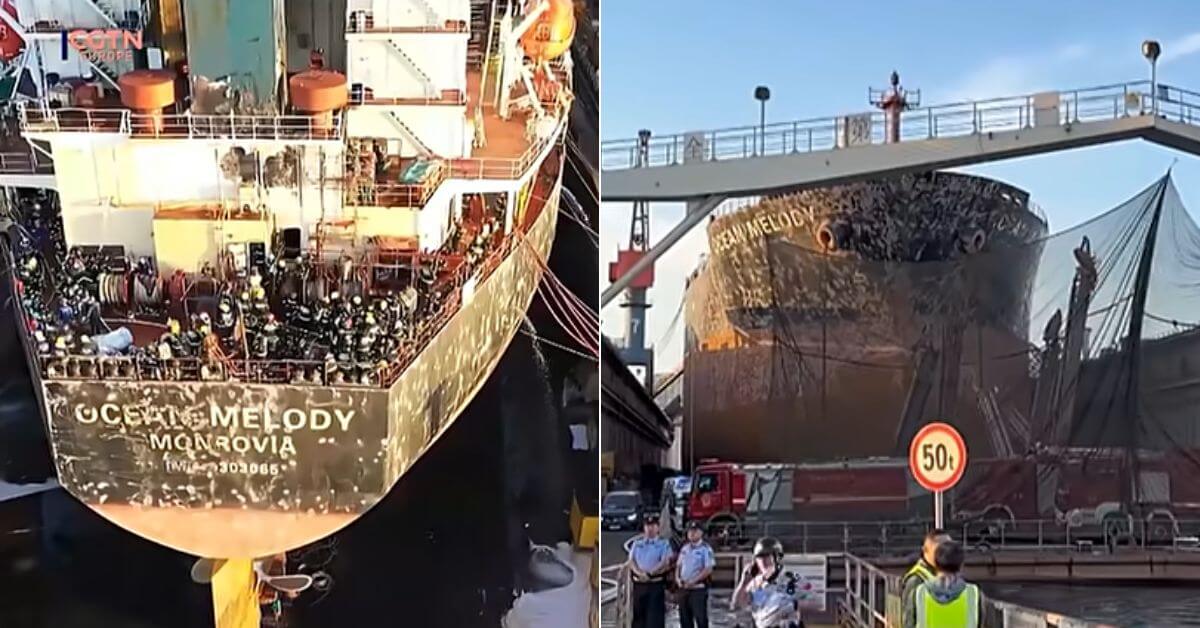
China’s State Council has set up a team to investigate a cargo ship fire in Qingdao that killed 25 people and injured five others, the Ministry of Emergency Management said on Monday.
The fire broke out last Thursday, Sept. 10, while a foreign cargo ship was being repaired at China State Shipbuilding Corporation Qingdao Beihai Shipbuilding Co., Ltd. in Qingdao, Shandong Province, in eastern China.
The investigation team is led by the Ministry of Emergency Management. Officials from the Ministry of Industry and Information Technology, the Ministry of Foreign Affairs, and the Ministry of Public Security are also part of the team.
The team held its first meeting on Monday afternoon. It called for the cause of the fire to be found as soon as possible and for the responsibilities of everyone involved to be clearly established.
Those found responsible should be held accountable under the law, the team said.
Video Credits: CGTN Europe/YouTube
The meeting also called on local governments, relevant departments and centrally administered state-owned enterprises to learn from the accident.
Authorities were asked to check for fire hazards and fix any problems they find. They were also told to strengthen safety measures in several sectors, including hazardous chemicals, mining, transportation and construction.
The measures are aimed at preventing major and serious accidents, according to the meeting.
Video Credits: CNA/YouTube
After the fire, the Ministry of Emergency Management sent a team to the site to help guide rescue work. Authorities in Shandong also sent resources to support the response at the scene.
The State Council investigation will now look into what caused the fire and who was responsible.
The authorities have not yet released the cause of the fire or identified those responsible.
References: Xinhua, China org
Read on the original site
Open the publisher's page for the full experience