Video: Russian Military-Linked Cargo Ship Reportedly Struck 12 Times By Drones Near Crete
Our take
The reported drone strikes on the Lady Mariia, a Russian military-linked cargo ship, near Crete represent a significant escalation in the ongoing maritime tensions surrounding the conflict in Ukraine and its broader geopolitical implications. The incident, involving a vessel previously known as Stella-Maria and reportedly struck twelve times, underscores the increasing vulnerability of maritime transport routes and the expanding reach of asymmetric warfare. This event builds upon recent incidents highlighting the complexities of maritime security, such as the detention of a sanctioned tanker in Yemen following an armed guards incident Yemen Detains Sanctioned Tanker After Armed Guards Fire On Coast Guard Patrol Following Houthi Port Call, demonstrating a pattern of heightened risk and enforcement challenges in key maritime chokepoints. The fact that the ship originated from Oran, Algeria, further complicates the picture, raising questions about potential supply chain vulnerabilities and the scope of sanctions enforcement.
The strategic importance of this incident cannot be overstated. The Lady Mariia's connection to the Russian military suggests it was likely involved in transporting equipment or personnel, potentially circumventing established sanctions regimes. The use of drones as an attack vector highlights the accessibility and increasing sophistication of such weaponry, blurring the lines between state and non-state actors and challenging traditional naval defenses. Russia’s recent efforts to establish new Arctic shipping routes, exemplified by the shipment of crude oil from the Vostok Oil project Russia Ships First Crude From Its Giant Vostok Oil Project Through Arctic, further underscores the nation's determination to secure alternative supply lines and demonstrate resilience against international pressure. These developments necessitate a reassessment of maritime security protocols and the integration of advanced surveillance technologies, including those leveraging ocean intelligence, to monitor and mitigate emerging threats. The ongoing search for crew members after a collision off Istanbul involving the Tugberk Imamoglu and the Alsu Turkish Navy Locates Sunken Cargo Ship After Collision Off Istanbul, Search For 10 Crew Continues serves as a stark reminder of the inherent dangers and fragility of maritime operations, even outside of active conflict zones.
The attack’s location near Crete, a strategically vital island in the Mediterranean, also holds significant geopolitical weight. It demonstrates a willingness to strike closer to European territory, potentially signaling an escalation of the conflict beyond the Black Sea. The precision of the strikes, reportedly twelve in number, suggests a level of reconnaissance and targeting capability that warrants further investigation. Analyzing the attack’s methods and the source of the drones will be critical in determining the actors involved and their motivations. It is probable that this event will trigger increased scrutiny of maritime traffic in the region and potentially lead to enhanced naval patrols and surveillance efforts. The incident also highlights the vulnerability of critical infrastructure located near maritime routes, prompting a need for enhanced security measures at ports and coastal facilities. The long-term implications involve a recalibration of risk assessments for commercial shipping companies operating in the Mediterranean and potentially beyond.
Looking ahead, the question becomes not *if* similar attacks will occur, but *where* and *when*. The proliferation of drone technology and the increasing accessibility of maritime routes for both legitimate and illicit activities create a fertile ground for future incidents. The integration of real-time data streams and calibrated sensor networks will be paramount in providing early warning and enabling proactive responses. Further validation of empirical data concerning drone capabilities and maritime traffic patterns is crucial for developing effective countermeasures. The international community must prioritize collaborative efforts to enhance maritime domain awareness, share intelligence, and establish clear norms of behavior to deter future aggression and ensure the safety and security of global trade routes. Ultimately, this incident serves as a critical reminder of the interconnectedness of global security and the urgent need for a comprehensive and adaptive approach to maritime risk management.
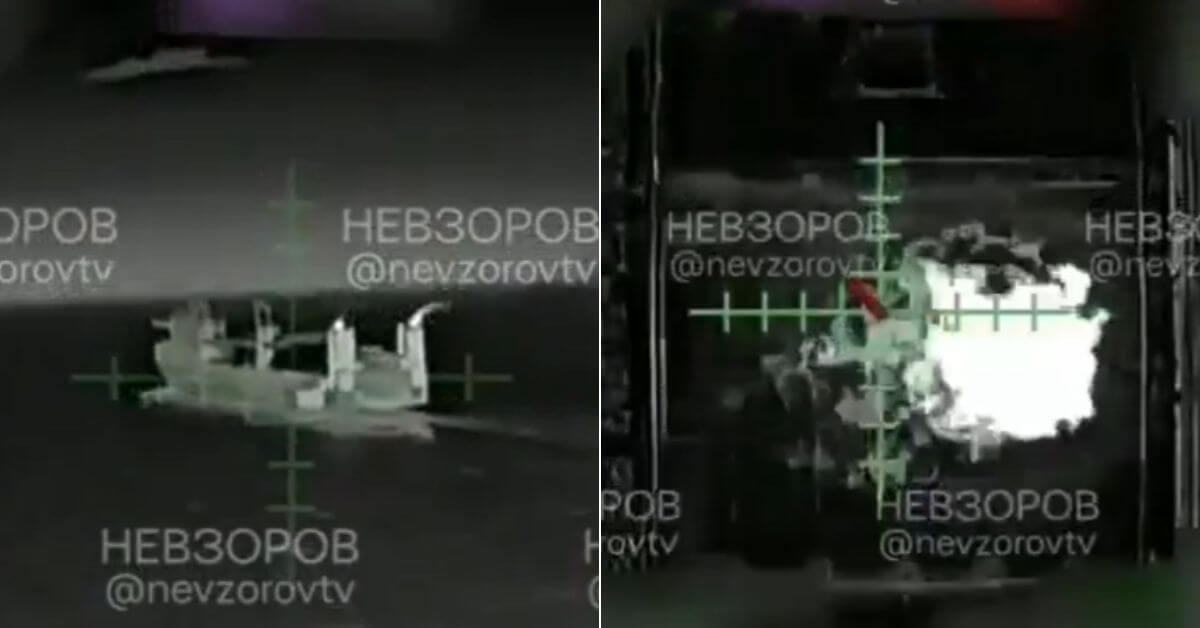
A Russian cargo ship under U.S. and Ukrainian sanctions was attacked by drones near Crete in the Mediterranean Sea on September 6 while heading towards Syria.
The ship, Lady Mariia, had left the Algerian port of Oran before the attack. It was earlier known as Stella-Maria.
Footage shared by the NEVZOROV Telegram channel appeared to show drones hitting the ship and a fire breaking out on board.
Russian opposition journalist Alexander Nevzorov, who shared the footage, said the ship was hit 12 times. He also said the drones came from
Libya and claimed the ship was carrying Iranian weapons and armoured vehicles from Algeria to Russia.
However, these claims have not been verified.
Andriy Klymenko, head of the Institute for Black Sea Strategic Studies, also said that the ship was attacked by “unknown drones” near Crete while heading towards Syria.
Ship Linked to Russian Military Transport
Lady Mariia is a Russian-flagged ro/ro cargo vessel with a deadweight of about 7,180 tonnes.
The ship is registered to the Russian company MG-Flot LLC, formerly known as TransMorFlot LLC.
Ukraine’s Defence Intelligence has said that Lady Mariia has been used to transport military cargo and weapons for Russia.
According to the agency, the vessel has operated between Novorossiysk and the Syrian port of Tartus. It has also been linked to the transportation of weapons from Syria to Russia.
Ukraine imposed sanctions on Lady Mariia on May 23, 2026, for 10 years.
The United States has also sanctioned the vessel under its former name, STELLA-MARIA. The ship has been linked to MG-Flot under the sanctions regime established by Executive Order 14024.
Ukrainian special forces carried out another long-range maritime strike in the Mediterranean Sea, heavily damaging the Russian Ro-Ro cargo ship LADY MARIIA off the coast of Libya.
The vessel was reportedly involved in the transport of sanctioned Iranian weapons to Russia. pic.twitter.com/hkOELaxgLl
— OSINTtechnical (@Osinttechnical) September 6, 2026
Other ships operated by MG-Flot are also under sanctions. Some have been used to transport ammunition from North Korea, according to the available information.
However, it is not known what Lady Mariia was carrying during its latest voyage.
According to MarineTraffic data, Lady Mariia left Oran in Algeria before entering the Mediterranean Sea.
Ukraine Link Not Confirmed
It is not yet known who carried out the attack. There is also no proof that Ukraine was involved.
However, Ukrainian maritime activity has been reported in the Mediterranean before.
In May 2026, Greek fishermen found a Ukrainian Magura naval drone near the southern part of Lefkada, an island in the Ionian Sea in western Greece.
In December 2025, the Security Service of Ukraine struck a tanker belonging to Russia’s shadow fleet in neutral waters of the Mediterranean Sea. It was the first reported Ukrainian strike against a shadow fleet tanker in the region.
An Israeli strike was also considered possible because the ship has been linked to weapons transport involving Syria. However, there is no evidence that Israel carried out the attack.
The full extent of the damage and the ship’s condition are also not known.
References: militarnyi, ibtimes
Read on the original site
Open the publisher's page for the full experience