U.S President Donald Trump Suggests Renaming Strait Of Hormuz ‘Trump Strait’
Our take
The recent suggestion by former U.S. President Donald Trump to rename the Strait of Hormuz “Trump Strait” underscores a concerning trend of politicizing strategically vital maritime chokepoints. This proposal, made on Truth Social, trivializes the complex geopolitical realities surrounding this critical waterway and disregards established international maritime law and convention. The Strait, through which approximately 21% of global oil transits, is a crucial artery for global trade and energy security. To rename it based on a single nation's claim of control is not only historically inaccurate but also deeply destabilizing. Consider the recent developments highlighted in [Maritime Safety Data Hub To Analyse Over 100,000 Safety Broadcasts To Predict & Prevent Emergencies At Sea], which emphasize the need for robust data analysis to mitigate risks in busy waterways; such a politically charged act only introduces unnecessary volatility. Furthermore, given recent escalations like the U.S. strikes on Iranian tankers detailed in [U.S. Strikes 2 Iranian Government Tankers Under New ‘Tanker-for-Tanker’ Policy In Strait Of Hormuz], a unilateral renaming risks further inflaming tensions and potentially triggering broader conflict in the region.
The proposal’s core issue lies in its disregard for established international norms and the principle of freedom of navigation. The Strait of Hormuz is a recognized international waterway, governed by established rules and conventions designed to ensure safe and unimpeded passage for all nations. Asserting ownership and attempting to rename a waterway of such significance sets a dangerous precedent, potentially encouraging other nations to make similar claims, disrupting global trade and undermining international law. The ongoing discussions at events like [India Launches First National Pavilion in Hamburg In SMM 2026 to Strengthen European Shipping Ties] highlight the importance of collaborative, diplomatic solutions to maritime challenges, and this suggestion directly contradicts that spirit. It’s a symbolic act that carries significant weight, signaling a disregard for the interconnected nature of global maritime trade and the shared responsibility for its security. A focus on data-driven solutions and collaborative risk mitigation, rather than unilateral assertions of dominance, is paramount.
Beyond the immediate geopolitical implications, the proposal reveals a fundamental misunderstanding of the role of oceans and strategic waterways in the global system. Oceans are not national possessions; they are shared resources that demand responsible stewardship and collaborative management. The concept of “owning” a strait, particularly one so vital to global energy supply, is anachronistic and ignores the realities of interconnectedness. It diminishes the importance of multilateral agreements and the need for cooperative security frameworks, particularly in regions with complex geopolitical dynamics. The global data ecosystem, which World Data Ocean is actively building, relies on the integrity of shared information and the absence of politically motivated distortions. Such actions erode trust and hinder the development of effective, data-driven solutions to maritime challenges.
Ultimately, the suggestion to rename the Strait of Hormuz is a distraction from the real issues facing maritime security – escalating geopolitical tensions, the increasing threat of piracy, and the growing need for improved data-driven risk assessment and mitigation strategies. The focus should be on fostering stability through diplomacy, strengthening international maritime law, and enhancing the capacity of all nations to navigate these complex waters safely and securely. A more pertinent question to consider is whether the increasing frequency of such provocative statements signals a broader shift towards prioritizing nationalistic posturing over collaborative problem-solving in the critical domain of global maritime governance, and what long-term implications this might have for ocean stability and international trade.
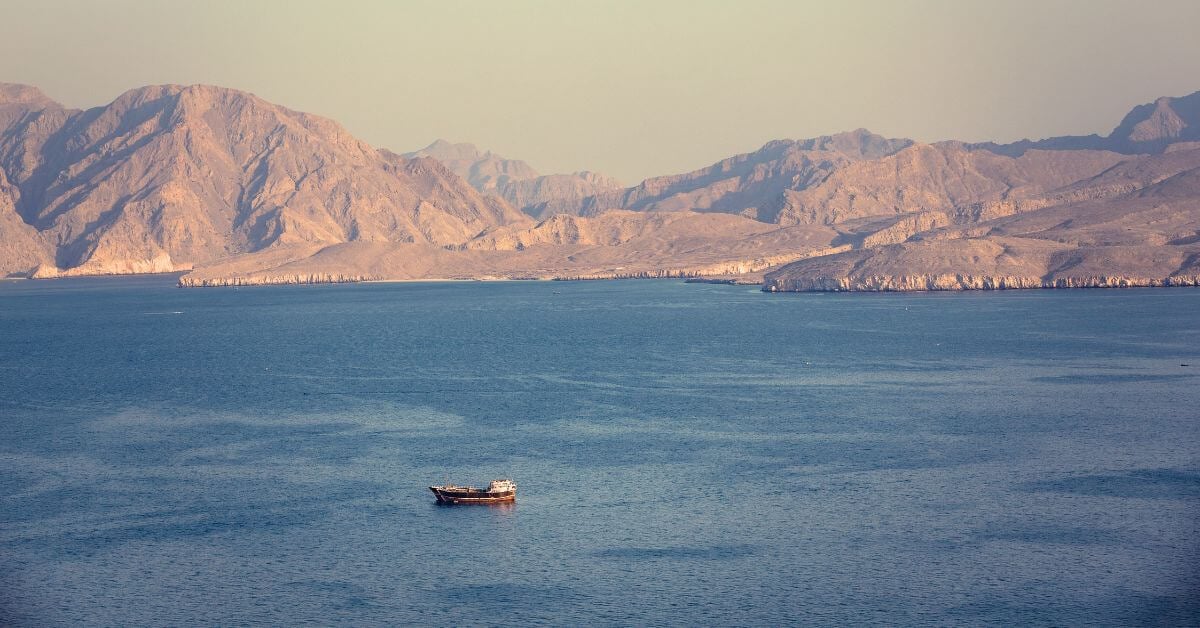
U.S. President Donald Trump on Wednesday suggested renaming the Strait of Hormuz “Trump Strait” as fighting with Iran continued to disrupt shipping through the key waterway.
Trump said the United States had control of the strait and asked on Truth Social whether it should be renamed.
“Now that we have it under U.S.A. control, should we change the name Hormuz Strait to TRUMP STRAIT???” Trump wrote. He added that, like America itself, it would be “hotter” than ever before.
The White House later posted a map of the Gulf showing the waterway as “Trump Strait”. The post added: “It’s got a nice ring to it.” But Trump later appeared to play down the idea.
Asked by an AFP reporter in the Oval Office if he was serious about changing the name, Trump replied: “No, no … it was just thrown out there,” before chuckling.
It was not immediately clear how the United States could change the name of the international waterway, which is not near the United States.
Hormuz shipping remains far below prewar levels
Commercial traffic through the Strait of Hormuz remains well below prewar levels. Ship trackers said the number of commercial transits fell further in recent days as military strikes resumed after a weekslong pause.
Before the war, about one-fifth of the world’s oil passed through the strait. Around 20 million barrels per day of crude oil and petroleum products moved through Hormuz before the conflict began on Feb. 28.
U.S. Energy Secretary Chris Wright told CNBC on Wednesday that more than 17 million barrels of oil passed through the strait on Monday. He called it a wartime record.
The Trump administration has also said the region is now exporting more oil than before the war, including oil sent through Saudi Arabia’s and the UAE’s pipelines that bypass Hormuz.
Fighting continues near the waterway
Iran has effectively shut down the chokepoint in response to the war that Trump started with Israel in late February.
U.S. forces launched fresh strikes near the Strait of Hormuz on Tuesday. Trump said the strikes were in response to new Iranian efforts to lay mines.
Iran said one U.S. strike killed four people at a wedding and described the attack as a “war crime”.
Iran later launched retaliatory strikes on U.S. bases in Bahrain, the UAE, Kuwait, Jordan, and Iraq.
Trump said on Wednesday that the United States was ready to attack Iran again. He said the renewed campaign would not last “too long”.
Trump Has Also Renamed Other Places
The Hormuz proposal is not the first time Trump has proposed renaming major places.
After returning to the White House in January 2025, he renamed the Gulf of Mexico the “Gulf of America”. Mexico and Canada have not accepted the change.
Last week, Trump signed an order renaming Lake Ontario “Lake America” during a trade war with Canada.
Canada rejected the change, while Google and Apple have recently updated their maps.
Trump has also changed the name of Denali back to “Mt McKinley”.
He has also used his name for other projects, including the Kennedy arts centre in Washington, a peace institute, the “Trump Gold Card” immigration programme and a “Trump Rx” drug-sales website.
On Wednesday, the U.S. Treasury also issued $1 coins featuring Trump’s face for the 250th anniversary of U.S. independence, despite federal law saying that no living president may appear on U.S. currency.
References: cnbc, abs-cbn
Read on the original site
Open the publisher's page for the full experience