U.S. Navy Signs $336 Million Contract With HII For 100,000 Ton Future Aircraft Carrier
Our take

The recent announcement of a $336 million contract between the U.S. Navy and Huntington Ingalls Industries (HII) for components of the CVN 82 aircraft carrier signals a continued, substantial investment in maritime power projection. This procurement, while seemingly routine, occurs within a rapidly shifting geopolitical landscape where naval dominance is increasingly contested. The escalating tensions in the Middle East, as evidenced by Iran Claims It Captured U.S. Navy Submarine Near Hormuz That Can Autonomously Conduct Missions For 10 Days and concurrent warnings to tanker crews Iran Warns Tanker Crews At Kuwait, Bahrain Ports To Abandon Ships Immediately, Threatening To Target Them, highlight the precariousness of regional stability and the necessity for robust naval capabilities. Even further afield, the deployment of Ukrainian sea drones against Sochi Ukrainian Sea Drones Strike Sochi Waterfront, Injuring 28, Including 2 Children demonstrates the evolving nature of maritime warfare and the increasing accessibility of sophisticated naval weaponry to non-state actors. The CVN 82 contract, therefore, must be viewed not in isolation, but as part of a broader strategic recalibration.
The sheer scale of this investment—$336 million for components alone—underscores the complexity and cost of modern aircraft carrier construction. CVN 82, a *Ford*-class carrier, represents a significant technological leap forward, incorporating advanced propulsion systems, improved flight deck capabilities, and enhanced electromagnetic aircraft launch systems (EMALS). While these advancements offer increased operational effectiveness, they also necessitate a highly specialized and integrated supply chain. The reliance on HII, a key player in U.S. shipbuilding, ensures continuity of production but also highlights the potential vulnerabilities inherent in concentrated industrial capacity. The longitudinal data on the performance and maintenance requirements of the *Ford*-class carriers will be crucial in validating the projected return on investment and informing future carrier designs. Understanding the empirical data generated from these vessels will be vital for calibrating future naval strategies and resource allocation.
Beyond the immediate implications for naval power, this contract speaks to the enduring importance of carrier-based air power in U.S. foreign policy. Carriers provide unparalleled flexibility and reach, allowing the U.S. to project force and influence across vast distances. However, the increasing sophistication of anti-ship missiles and autonomous underwater vehicles presents a growing challenge to carrier survivability. The development of integrated data ecosystems, incorporating real-time sensor data and advanced analytics, is essential for enhancing situational awareness and mitigating these threats. Ocean intelligence, derived from a combination of satellite imagery, underwater acoustic monitoring, and other data sources, will be critical for protecting carrier strike groups and ensuring mission success. The future of naval warfare will depend on the ability to integrate these disparate data streams and leverage them for proactive threat detection and response.
The procurement of components for CVN 82 represents a commitment to maintaining U.S. maritime dominance in a world characterized by increasing geopolitical complexity and technological disruption. The contract’s success will hinge not only on the efficient and timely delivery of components but also on the ongoing evolution of naval warfare capabilities and the continuous validation of technological investments through rigorous testing and operational experience. One critical question to watch is how the Navy will adapt its operational doctrine to account for the proliferation of autonomous naval systems and the evolving threat landscape—will the aircraft carrier remain the centerpiece of U.S. naval power, or will its role be redefined in the decades to come?
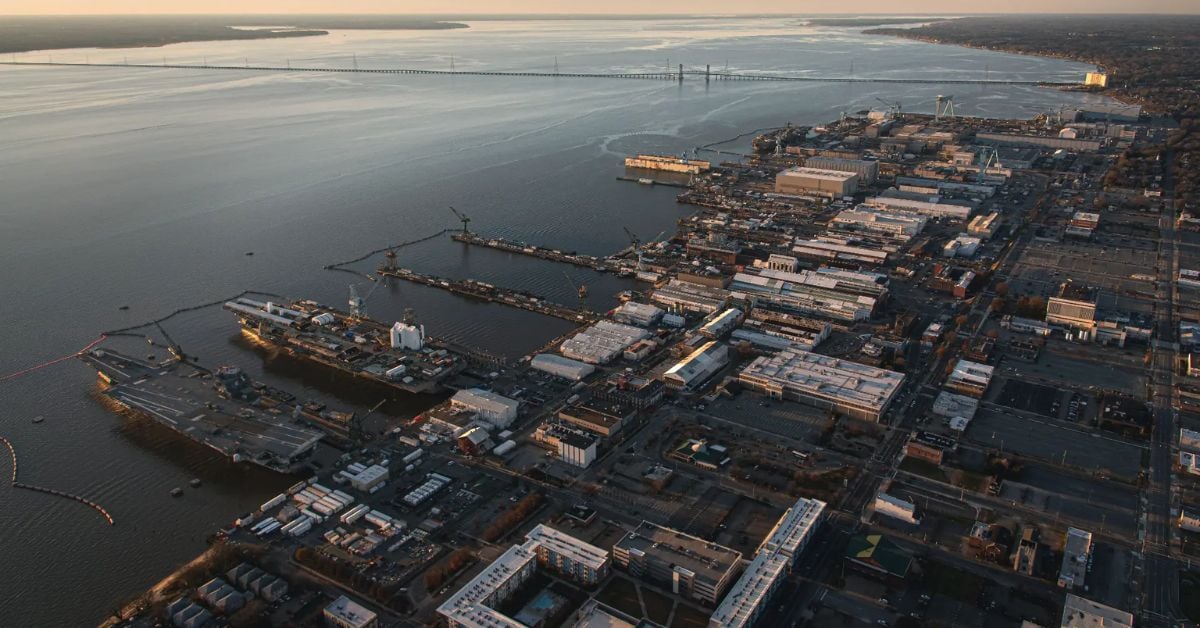
The United States Navy has signed a $ 336 million deal with HII to procure components for a nuclear-powered aircraft carrier, the CVN 82. The contract highlights the scale of infrastructure needed to build a modern carrier vessel.
The contract covers the procurement of materials for the future warship’s propulsion plant and other vital parts, which would allow the program to run on schedule as it moves towards construction.
Getting the important parts before beginning construction work would allow the Navy and the shipbuilder to secure the components which take years to build, test and deliver as per the strict safety standards of the Navy.
It also conveys to suppliers which are part of the project to gear up for delivery. The future carrier will be constructed at Newport News, which is the only U.S. shipyard which can build aircraft carriers for the U.S. Navy.
It has connections with hundreds of suppliers, though it independently handles the integration of its nuclear propulsion, aviation, hull and other major parts.
CVN82 will be an integral part of the U.S. Navy’s fleet of aircraft carriers, which are pivotal for power projection beyond U.S. waters.
They also sail as floating command centres or control bases, as seen in the conflict with Iran, while supporting surveillance platforms, aircraft and other assets.
HII is the biggest shipbuilder for the US Navy, which manufactures advanced systems for modern warships such as electronic warfare systems, unmanned systems, C6ISR, automated systems and also tests ways to boost shipbuilding output and increase the capacity of the country’s industrial base.
The U.S. Navy currently has 11 active aircraft carriers, belonging to the Nimitz-class and the Gerald R. Ford class.
Read on the original site
Open the publisher's page for the full experience