Iran Warns Tanker Crews At Kuwait, Bahrain Ports To Abandon Ships Immediately, Threatening To Target Them
Our take

The recent warning issued by Iran’s Islamic Revolutionary Guard Corps (IRGC) Navy to tanker crews operating near Kuwait and Bahrain ports represents a significant escalation in tensions within the Persian Gulf, a region already characterized by geopolitical instability. This directive, essentially demanding the abandonment of vessels, carries a direct threat of targeting, and underscores the increasing risk to maritime commerce in a vital global shipping lane. The move appears to be a calculated response to perceived actions by the United States and its allies, and reflects a broader pattern of assertive behavior from Iran aimed at projecting power and influencing regional dynamics. It’s crucial to contextualize this within the ongoing conflict in Ukraine, where Iran has increasingly supplied Russia with drones, prompting retaliatory measures and further straining relations with Western powers – as evidenced by [Ukraine Strikes Russian Black Sea Fleet Missile Carrier ‘Admiral Essen’ In Novorossiysk]. Furthermore, considering Iran's prior actions, like the claim of capturing a U.S. military unmanned submarine in the Strait of Hormuz [Iran Says It Captured U.S. Military’s Most Modern Unmanned Submarine In Strait Of Hormuz], it is evident that they are actively developing and deploying maritime capabilities to challenge the status quo.
The implications of this escalation extend far beyond the immediate threat to tanker crews. The Persian Gulf handles a substantial portion of the world’s oil trade, and any disruption to shipping lanes could have significant consequences for global energy markets. The potential for miscalculation or accidental escalation is high, particularly given the presence of multiple military actors in the region. The warning also highlights the increasing sophistication of Iran’s naval capabilities and its willingness to employ asymmetric tactics to achieve its strategic objectives. China’s advancements in submarine target tracking using warship sounds [China Uses Warship Sounds To Improve Submarine Target Tracking] demonstrate a broader trend of technological innovation within maritime domains, a trend that Iran is evidently seeking to emulate. The integrated data ecosystem required to monitor and respond to these evolving threats necessitates a robust and calibrated approach to maritime security, demanding real-time data analysis and predictive modeling.
The immediate response from international maritime organizations and governments will be critical in de-escalating the situation. Enhanced maritime domain awareness, including improved surveillance and intelligence gathering, will be essential to mitigate the risks to commercial shipping. Diplomatic efforts to engage with Iran and address its underlying concerns are also necessary, although the current climate of mistrust makes such engagement challenging. The long-term solution requires a comprehensive regional security framework that addresses the root causes of instability and promotes dialogue and cooperation among all stakeholders. The use of validated and peer-reviewed data to inform decision-making is paramount in navigating this complex geopolitical landscape. A longitudinal perspective, tracking patterns of Iranian behavior and regional power dynamics, is crucial for developing effective strategies.
Looking ahead, the question becomes whether this escalation represents a temporary tactic or a shift toward a more permanent posture of confrontation. The potential for further incidents, including the seizure of vessels or attacks on maritime infrastructure, remains a significant concern. The evolving technological landscape of naval warfare, with advancements in unmanned systems and cyber capabilities, further complicates the situation. Understanding the measurable impact of sanctions on Iran’s economy and its influence on its strategic calculations will be vital to predicting future actions. The integrated data ecosystem required for effective ocean intelligence must be continuously calibrated to adapt to these dynamic challenges, demanding a commitment to shared knowledge and global collaboration.
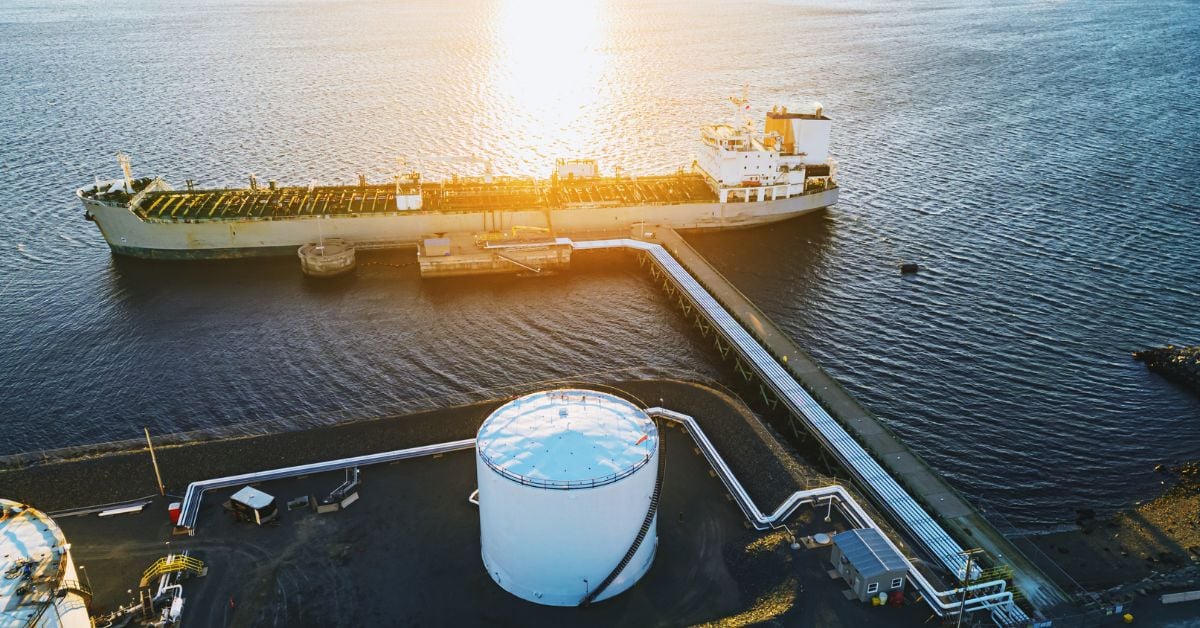
Iran’s Islamic Revolutionary Guard Corps (IRGC) Navy warned crews aboard oil tankers near ports in Kuwait and Bahrain to leave their vessels on Sept. 8, saying the ships would be targeted after the US destroyed five Iranian crude oil carriers.
The warning covers tankers that are anchored or docked at the ports, according to a statement carried by Iranian state media. It came hours after the US military said it had struck five Iranian tankers in the Gulf of Oman and the Persian Gulf.
The IRGC Navy said the warning was in response to US attacks on Iranian oil tankers. It also accused Kuwait and Bahrain of hosting US forces and supporting its actions against Iran.
On Sept. 9, Iran reported attacking 10 ships near the Strait of Hormuz in response to US attacks on its oil tankers.
US Central Command (CENTCOM) said four Iranian crude carriers were struck in the Gulf of Oman and one near Kharg Island in the Persian Gulf.
The strikes came after Iran’s IRGC attempted twice to hit a US Navy warship with ballistic missiles.
The US military stated that the warship avoided both attacks and that no American personnel were injured.
It added that the crews of the five tankers had been ordered to abandon the vessels before the ships were struck and left inoperable.
CENTCOM identified the tankers as M/T Charminar, M/T Kaviz, M/T Horizon 1 and M/T Riesco in the Gulf of Oman, and M/T Derya near Kharg Island.
Iranian state media reported a different account, saying two tankers had been hit.
One tanker was reported to be about four miles from Kharg Island, a major Iranian oil export hub. The other was reported off Jask near the Gulf of Oman.
Iranian reports said the crews were being taken ashore in lifeboats.
The IRGC Navy repeated its warning in a statement carried by Iranian state media, telling tanker crews near Kuwaiti and Bahraini ports to leave their vessels.
It said Kuwait and Bahrain “host these terrorists and are partners in their actions”.
The IRGC Navy then ordered crews to leave both anchored and docked vessels, saying the ships would be targeted.
The warning was also posted through the Iran in Hyderabad consulate handle on X. The post described the statement as an evacuation order for oil tankers near Kuwaiti and Bahraini ports.
References: News18, iranintl
Read on the original site
Open the publisher's page for the full experience