The North Atlantic’s ‘cold blob’ may signal a major current’s decline
Our take
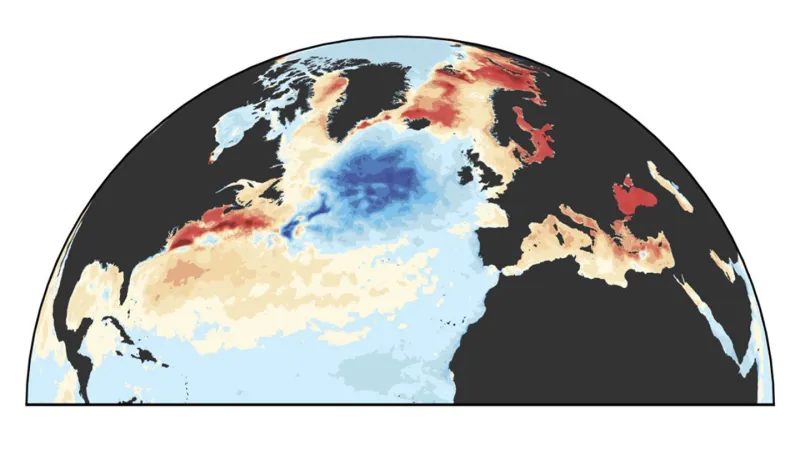
The recent findings regarding a persistent “cold blob” in the North Atlantic and its potential connection to the Atlantic Meridional Overturning Circulation (AMOC) warrant careful consideration. Researchers have observed this anomaly, a pocket of unusually cold water, and are linking it to a possible weakening of the AMOC, a crucial system of ocean currents that redistributes heat around the globe. This isn’t an isolated observation; it builds upon a growing body of evidence suggesting the AMOC is experiencing significant instability. Understanding these shifts is paramount, particularly when viewed alongside recent observations like the giant ocean swell detected by NASA that could signal El Niño’s return NASA spots giant ocean swell that could signal El Niño’s return. The interplay of these large-scale oceanic phenomena underscores the interconnectedness of the climate system and highlights the need for integrated data ecosystems, as discussed in our recent platform update Ocean Data Platform Introduction and Updates.
The AMOC's role in regulating global climate patterns is substantial. It transports warm surface waters from the tropics toward the North Atlantic, releasing heat into the atmosphere and influencing weather systems across Europe and beyond. A weakening AMOC could lead to colder temperatures in Europe, altered rainfall patterns globally, and sea level rise along the eastern coast of North America. While the exact mechanisms driving this potential decline are still under investigation, climate models consistently point to increased freshwater input from melting Greenland ice and increased precipitation as key contributors. This influx of freshwater reduces the density of surface waters, hindering their ability to sink and drive the overturning circulation. Furthermore, developments in maritime safety and international cooperation, such as the recent joint Indo-US effort to rescue seafarers Joint Indo-US Maritime Effort Saves 14 Indian Seafarers From Sinking Ship At Sea, demonstrate the critical importance of robust ocean monitoring and response capabilities, particularly as environmental conditions become increasingly unpredictable.
The significance extends beyond simply forecasting weather changes. A substantial and sustained weakening of the AMOC could trigger cascading effects across numerous ecosystems. Marine life adapted to specific temperature ranges would face displacement or extinction, impacting fisheries and overall biodiversity. Changes in ocean stratification could also affect nutrient distribution, further disrupting marine food webs. The potential for abrupt shifts in climate patterns, driven by AMOC instability, reinforces the urgency of transitioning towards more sustainable practices and mitigating climate change. Longitudinal data sets, meticulously calibrated and validated, are essential to accurately model these complex systems and predict future scenarios. Empirical evidence, gathered from a range of sources – satellite observations, oceanographic moorings, and climate models – must be integrated to achieve a comprehensive understanding.
Ultimately, the "cold blob" serves as a stark reminder of the ocean’s sensitivity to anthropogenic climate change and the potential for rapid, large-scale shifts. While the exact trajectory of the AMOC remains uncertain, the accumulating evidence demands increased vigilance and a commitment to rigorous, real-time ocean monitoring. The question moving forward is not *if* the AMOC will change, but *how* dramatically and *what* the full consequences will be for a world increasingly reliant on a stable climate. Further research focusing on improved climate indicators and advanced data assimilation techniques will be critical to better inform policy decisions and safeguard against unforeseen impacts.
Read on the original site
Open the publisher's page for the full experience