Russian Captain And Senior Crew Of Ship On Trial In Finland Over Subsea Cable Damage
Our take
The ongoing trial in Finland of the Russian captain and senior crew of the *Lady Mariia* over damage to a subsea telecommunications cable represents a significant escalation in the geopolitical risks surrounding critical infrastructure. The prosecution’s request for substantial prison sentences underscores the seriousness with which Finland views this incident, and the potential for deliberate disruption of vital communication networks. The incident itself, occurring amidst heightened tensions following Russia’s invasion of Ukraine, has understandably triggered concerns about the vulnerability of undersea cables – the backbone of global internet connectivity. Considering recent events, including the reported drone strikes on the *Lady Mariia* near Crete Video: Russian Military-Linked Cargo Ship Reportedly Struck 12 Times By Drones Near Crete, and the collision of the Tugberk Imamoglu with the Alsu off Istanbul Turkish Navy Locates Sunken Cargo Ship After Collision Off Istanbul, Search For 10 Crew Continues, the timing and circumstances raise legitimate questions about maritime security and potential state-sponsored interference. These incidents, alongside the recent fire aboard the Admiral Makarov icebreaker Russia’s 20,000-Ton Icebreaker Admiral Makarov Catches Fire During Repairs At Kronstadt Shipyard, highlight a concerning pattern of incidents affecting Russian naval vessels and associated cargo ships.
The subsea cable infrastructure is notoriously difficult to protect. While physical damage can be accidental, the scale and precision required to target specific cables, coupled with the geopolitical context, strongly suggest the possibility of deliberate acts. The global reliance on these cables for data transmission—encompassing everything from financial transactions to scientific research—makes them an attractive target for disruption. The Finnish investigation, and the potential for lengthy sentences if convictions are secured, sends a clear message to any actors contemplating similar actions: such interference will be met with serious legal consequences. Furthermore, this case has the potential to catalyze increased international cooperation on maritime surveillance and cable protection measures. The current legal proceedings are likely to generate valuable empirical data regarding the complexities of investigating and prosecuting such incidents, which can inform future policy and operational responses. The challenge lies in balancing the need for enhanced security with the preservation of freedom of navigation and the avoidance of escalating tensions.
The broader significance of this trial extends beyond the immediate legal proceedings. It underscores the urgent need for a more robust and resilient global infrastructure. Current monitoring capabilities are often reactive, relying on detecting damage *after* it has occurred. Investment in real-time, integrated data ecosystems that combine seabed sensors, satellite monitoring, and advanced analytics is crucial for proactive threat detection and mitigation. The development and deployment of validated, calibrated technologies to assess the structural integrity of cables and identify anomalous activity will be paramount. Such an approach demands a collaborative, global effort, as no single nation can effectively safeguard this critical infrastructure alone. The incident also highlights the necessity of improved maritime domain awareness, utilizing longitudinal data streams to establish baseline patterns of vessel behavior and identify deviations that warrant further investigation.
Looking ahead, the outcome of the Finnish trial will serve as a critical precedent for future cases involving damage to subsea infrastructure. The international community must also grapple with the evolving threat landscape, including the potential for hybrid warfare tactics targeting these vulnerable networks. A key question remains: how can we foster a climate of responsible maritime behavior while simultaneously safeguarding the essential communication pathways that underpin the global economy and scientific progress? The integration of ocean intelligence—leveraging real-time data and advanced analytics—will be essential to navigating this complex challenge and ensuring the continued reliability of our interconnected world.
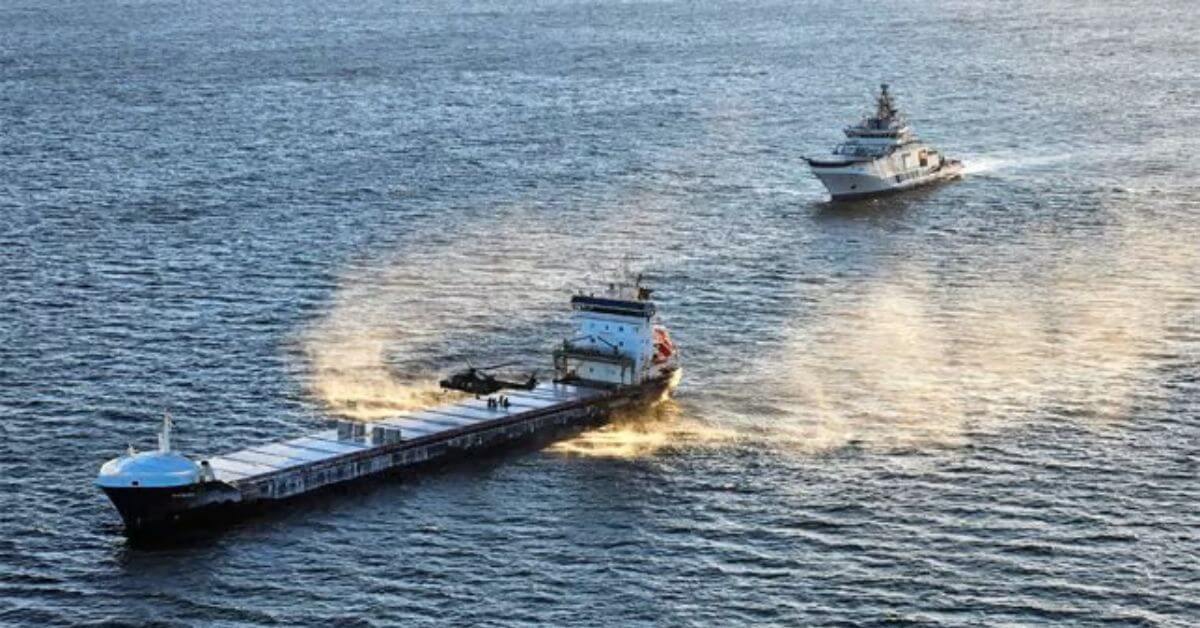
A Russian captain and an Azerbaijani crew member went on trial in Finland on Tuesday, Sept. 8, 2026, over the suspected damage of two undersea telecommunications cables in the Gulf of Finland.
The two men are accused of causing damage with the anchor of the 132-metre (433-foot) cargo ship Fitburg.
Finnish authorities stopped the vessel on December 31, 2025, while it was travelling from Russia to Israel.
The ship is registered in Saint Vincent and the Grenadines.
Finnish prosecutors say the ship’s anchor damaged two telecom cables connecting Finland and Estonia. They also accuse the crew of trying to damage eight other subsea connections.
According to the prosecution, the anchor was dragged along the seabed for at least 130 kilometres (80 miles) before the Fitburg was stopped.
The area where the anchor was allegedly dragged was outside Finland’s territorial waters, in Estonia’s exclusive economic zone. This has become a key issue in the trial.
The captain, who is Russian, and the ship’s bosun, an Azerbaijani citizen, deny the charges. They argue that Finland cannot prosecute them because the cable damage happened outside Finnish territorial waters.
The two men face charges of criminal mischief and interference with telecommunications. Finland’s National Prosecution Authority brought the charges in June.
Prosecutors are asking for prison sentences of at least two years and six months, according to the charge sheet.
According to the prosecutor, the incident caused major damage in Finland and raised a serious risk to telecommunications, electricity and gas networks.
Finland says that its courts have jurisdiction because the incident had consequences for the country.
Two other officers from the Fitburg were also investigated. Prosecutors later decided not to charge them, Finnish broadcaster Yle reported.
Per reports, a representative from the Russian embassy was at the Helsinki District Court to follow the proceedings.
In a similar case, three crew members from the tanker Eagle S were accused of dragging its anchor across the seabed and damaging 5 undersea cables in the Gulf of Finland on December 25, 2024.
The Helsinki District Court ruled last year that Finland did not have jurisdiction in that case.
That decision was overturned by the Helsinki Court of Appeal in August, which sent the case back to the district court.
The same issue is now being argued in the Fitburg trial. The damage took place outside Finland’s territorial waters, while Finnish prosecutors say the effects reached Finland.
The court will now consider the charges against the Fitburg’s captain and bosun.
References: economictimes, witness
Read on the original site
Open the publisher's page for the full experience