Red Sea Nations Strengthen Maritime Cooperation as Regional Threats Grow
Our take

The escalating maritime cooperation among Ethiopia, Yemen, Djibouti, and Somalia, as detailed in recent reports, represents a significant, albeit predictable, response to a complex confluence of regional security challenges. The rise in piracy, human trafficking, and broader geopolitical tensions within the Red Sea basin demands a coordinated and robust approach. This isn't simply a localized issue; the Red Sea is a critical artery for global trade, handling a substantial portion of maritime cargo between Asia and Europe. Disruptions here have cascading economic consequences, impacting supply chains and energy security worldwide. The recent announcement builds upon existing frameworks, but the increased commitment to joint patrols, intelligence sharing, and capacity building suggests a deeper recognition of the interconnected nature of these threats. It’s also worth noting the broader context of innovation in maritime transport – initiatives like the [Pink Corridor Project To Explore Nuclear-Powered Transatlantic Container Shipping Route] highlight the industry’s drive for efficiency and resilience, factors directly impacted by regional instability. Furthermore, the increasing focus on emissions reduction, exemplified by [NORDEN Becomes First Maritime Carrier To Deliver Verified Emissions Reductions], underscores a need for secure and reliable transit routes to facilitate these greener practices.
The dynamics at play are intricate. While piracy remains a persistent concern, the underlying causes are often rooted in socio-economic disparities and political instability within the littoral states. Human trafficking exploits these vulnerabilities, capitalizing on displacement and limited opportunities. The involvement of non-state actors, including armed groups and criminal networks, further complicates the security landscape. The reported willingness of these nations to strengthen cooperation is encouraging, but the success of these efforts will hinge on addressing the root causes of these challenges, not just the symptoms. It’s important to remember that the Red Sea's strategic importance is not lost on global powers, and the region frequently finds itself caught in the crosscurrents of international rivalries. The suggestion by a U.S. President to rename the Strait of Hormuz [U.S President Donald Trump Suggests Renaming Strait Of Hormuz ‘Trump Strait’] is a stark reminder of the geopolitical sensitivities involved and the potential for external actors to influence the region's security dynamics. A purely military response is unlikely to be sustainable; a more holistic approach that incorporates economic development, good governance, and regional integration is essential.
The integration of ocean intelligence, a core tenet of World Data Ocean’s mission, will be crucial in supporting this strengthened maritime cooperation. Real-time data streams, derived from satellite imagery, maritime sensors, and other sources, can provide invaluable insights into vessel movements, potential threats, and environmental conditions. This data, when integrated and analyzed, can inform decision-making, improve situational awareness, and enhance the effectiveness of maritime security operations. Furthermore, longitudinal data sets, collected over time, can reveal patterns and trends that might otherwise go unnoticed, allowing for proactive risk mitigation. The value of calibrated data—validated through peer-reviewed processes—cannot be overstated when dealing with sensitive security matters. This collaborative effort, coupled with advancements in ocean monitoring technology, offers a pathway towards a more secure and stable Red Sea region.
Looking ahead, the effectiveness of this strengthened maritime cooperation will depend on several factors, including sustained political will, adequate resource allocation, and the ability to overcome bureaucratic hurdles. The rise of autonomous maritime systems and the increasing reliance on digital technologies also present both opportunities and challenges. While these technologies can enhance surveillance and response capabilities, they also introduce new vulnerabilities that must be addressed. A critical question to watch is whether this collaborative framework can evolve into a broader regional security architecture that encompasses other stakeholders and addresses the underlying drivers of instability. Will the emphasis on coordinated action translate into a genuine, long-term commitment to shared ocean stewardship and a reduction in the factors that contribute to maritime insecurity?
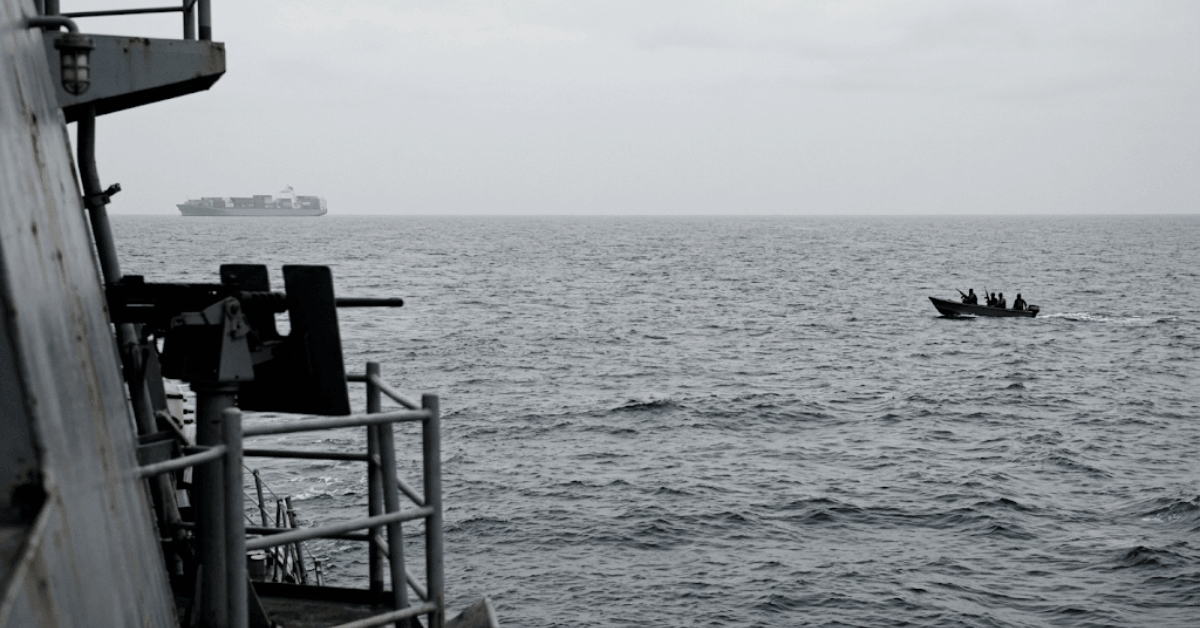
As maritime tensions ripple across parts of the Middle East, security officials from Ethiopia, Yemen, Djibouti and Somalia gathered in Nairobi this week to tackle a shared concern: how to protect the Red Sea and Gulf of Aden from growing threats that no country can manage alone.
The two-day Maritime Law Enforcement Dialogue, facilitated by the UN Office on Drugs and Crime (UNODC) with support from the European Union, INTERPOL, the International Maritime Organization (IMO), and the Intergovernmental Authority on Development (IGAD), focused on strengthening information sharing and cooperation across the region.
For officials attending, the timing was hard to ignore.
“If you are talking about threats, the current attacks on the freedom of navigation in the Strait of Hormuz have an impact on Gulf of Aden because they are affecting maritime security. Pirates use this opportunity and the distraction of the maritime forces globally to do more attacks in this area, because they know that everyone is busy looking in another direction,” said Abdurrahim Muhammad Ali of the Djibouti Maritime Authority.
Threats without borders
The Red Sea and Gulf of Aden form one of the world’s most important maritime corridors, linking regional economies to international markets. Any disruption can affect shipping routes, supply chains and the movement of goods far beyond the region.
According to Mostafa Elbanna, UNODC’s Regional Coordinator for the Red Sea and Gulf of Aden under its Global Maritime Crime Programme, the region faces a complex mix of interconnected challenges.
“This is a great time to have this kind of discussion and dialogue with different agencies and law enforcement to talk about their challenges, and also the way forward when it comes to maritime security,” he said.
Among the chief concerns are piracy, illegal fishing, trafficking in persons, migrant smuggling and narcotics trafficking. Officials say developments in one part of the region increasingly have consequences elsewhere, making information-sharing and coordinated responses more important than ever.
While piracy levels remain well below their peak more than a decade ago, Mr. Elbanna noted that countries are now better equipped to respond through stronger law enforcement, improved data collection and greater regional cooperation.
The economic stakes
For landlocked Ethiopia, maritime security is about more than law enforcement. It is an economic necessity.
Captain Kibru Mesfin of the Ethiopian Maritime Authority said most of the country’s trade passes through neighbouring Djibouti, making secure sea lanes critical to the national economy.
Disruptions to maritime routes can increase shipping and insurance costs, delay essential goods and undermine export capacity, he noted, placing additional pressure on businesses and consumers alike.
Mr. Mesfin argued that stronger links between maritime authorities, coast guards and law enforcement agencies across the region are essential to keeping trade flowing.
He called for more organized and harmonized systems for sharing maritime information among neighbouring countries, including Djibouti, Yemen and Somalia.
Establishing a National Maritime Information Centre and strengthening regional connections, he said, would help authorities access timely information needed to support maritime security and decision-making.
A shared challenge
Officials from across the region stressed that the threats they face are often the same, regardless of national borders.
Mr. Ali listed maritime terrorism, illegal fishing, robbery, trafficking, irregular migration and smuggling among Djibouti’s primary concerns.
“The practical outcome is to get closer and share information from Yemen, Somalia and Ethiopia. We have the same challenges,” he said.
Throughout the dialogue, participants discussed ways to improve maritime domain awareness, strengthen operational cooperation and develop more coordinated responses to incidents at sea.
What came through loud and clear was that in a region where criminal networks and security threats move easily across borders, cooperation remains one of the most effective tools for protecting seafarers, safeguarding trade and maintaining stability along some of the world’s busiest shipping routes.
Read on the original site
Open the publisher's page for the full experience