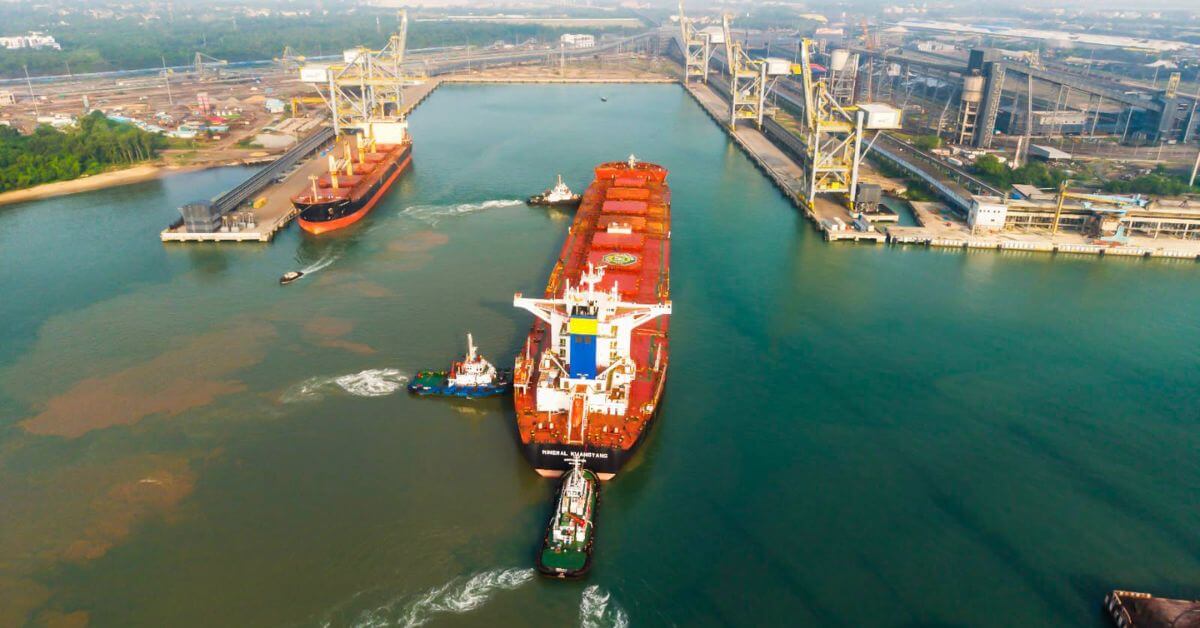
The designation of Paradip Port as a "Mega Port" under the Indian Ports Act, 2025, is a decision that carries measurable weight for Eastern India's maritime framework. It is the only port along the eastern coast to receive this status, and that distinction matters. This is not a ceremonial title. It signals a calibrated shift in how regional infrastructure is assessed, prioritized, and integrated into broader logistics networks. For an ocean-facing economy, such classification is a practical tool for directing investment and operational focus, not a badge of prestige alone.
What makes this announcement worth pausing on is the timing and the regional context. Eastern India has long been viewed as an emerging corridor, yet its port infrastructure has often lagged behind the western hubs in terms of modernization and throughput capacity. By anchoring Paradip with a formal mega port status, the government is effectively signaling that this is the node to watch. The move aligns with a broader pattern of maritime investment across the region, one that includes Eighty Nations Urge Reopening of Vital Strait of Hormuz Shipping Lane and the strategic upgrades seen in Alaska’s Base Kodiak to Gain Enhanced Arctic Capabilities with New Pier. These are not isolated projects; they are threads in a global reassessment of chokepoints, cold-water routes, and the real-time logistics that underpin trade.
For readers who track maritime policy, the practical takeaway is this: Paradip's new status will likely accelerate decisions on draft depth, rail connectivity, and hinterland linkage. It also raises expectations for data transparency and performance benchmarking, the kind of ocean intelligence that modern port management cannot ignore. We would tell a reader asking about this that the real measure will be in the next five years, specifically whether the port's operational metrics, turnaround times, and intermodal connections improve in ways that match its new classification. The title is a commitment, not a conclusion.
There is also a comparative angle worth considering. The recent labor unrest over the Chattogram port lease, detailed in Dispute Over Chattogram Port Lease Sparks Labor Union Protest, reminds us that port expansion is never purely technical. It involves workforce trust, governance, and the social license to operate. Paradip's growth will need to manage similar frictions as volumes increase and operational demands intensify. The question is not whether the port will grow, but whether its growth will be inclusive and transparent enough to avoid the friction seen elsewhere.
Our read is that this designation should be treated as a signal for shippers, planners, and investors to recalibrate their Eastern Corridor assumptions. Watch whether Paradip begins to attract dedicated berth investments or new liner services within the next two quarters. That will be the clearest indicator that the status is translating into measurable capacity gains. Until then, the designation is a necessary condition, but not yet a sufficient one, for the maritime transformation it promises.