MoU Signed To Develop Next-Generation Ethanol-fuelled 50,000 DWT Medium Range Tanker
Our take
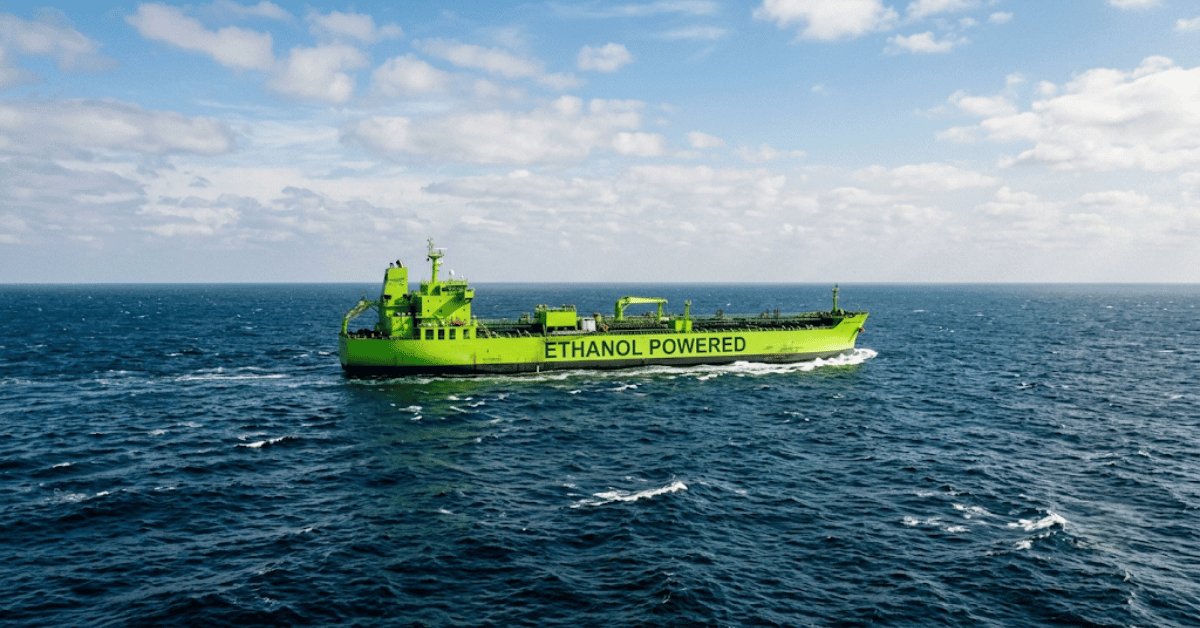
The maritime sector’s ongoing transition towards decarbonization continues to manifest in innovative, albeit incremental, steps. The recent memorandum of understanding (MoU) between K Shipbuilding and Lloyd’s Register to develop an ethanol-fueled 50,000 dwt medium-range (MR) tanker signals a tangible exploration of alternative fuel pathways beyond the more widely discussed LNG. This initiative arrives amidst a surge of activity focused on alternative fuels, as evidenced by recent developments such as the approval from American Bureau of Shipping for a 22,000 m³ LNG bunkering ship featuring LNG-ammonia dual-cargo capability New 22,000 m³ LNG Bunkering Ship Concept Receives AiP from American Bureau of Shipping and collaborative trials validating onboard emissions monitoring technology for LNG carriers Major LNG shipping firms Launch Trial To validate Onboard Emissions Monitoring Tech. The pursuit of sustainable marine resource management, as highlighted in research exploring computational intelligence frameworks for oceanic data analysis A computational intelligence framework for multimodal oceanic data analysis and predictive modeling in sustainable marine resource management, underscores the need for diversified approaches to reduce the industry’s environmental impact. While ethanol presents a potentially lower-carbon alternative to traditional fossil fuels, significant challenges remain in scaling production and ensuring sustainable sourcing.
The choice of ethanol as a fuel warrants careful consideration. Unlike some other biofuels, ethanol's lifecycle carbon footprint is highly dependent on feedstock and production methods. First-generation ethanol, derived from food crops like corn, raises concerns about land use change and food security. Second-generation ethanol, produced from non-food biomass such as agricultural waste or forestry residues, offers a more sustainable pathway but faces technological and economic hurdles. The feasibility assessment undertaken by K Shipbuilding and Lloyd’s Register will be crucial in determining the viability of this approach, particularly concerning the fuel’s energy density compared to conventional marine fuels and the necessary modifications to existing tanker designs to prevent corrosion and ensure safe handling. Securing an Approval in Principle (AiP) will be a significant milestone, demonstrating that the concept meets established safety and performance standards, but it is merely the first step in a lengthy process of development and deployment. The 50,000 dwt size is strategically chosen, representing a common segment within the MR tanker fleet, potentially allowing for broader applicability should the technology prove successful.
Beyond the technical aspects, the broader implications for the shipping industry are noteworthy. The move towards alternative fuels is not simply about switching to a different energy source; it necessitates a fundamental rethinking of supply chains, infrastructure, and operational practices. Ethanol bunkering infrastructure is currently limited, and establishing a reliable and geographically dispersed network will be essential for widespread adoption. Furthermore, the regulatory landscape surrounding biofuels is evolving, and clear and consistent standards will be needed to ensure environmental integrity and prevent unintended consequences. The industry's increasing focus on data-driven decision-making, exemplified by the ongoing trials of onboard emissions monitoring systems, will also play a critical role in optimizing fuel consumption and verifying the environmental benefits of alternative fuels like ethanol. Calibration and validation of measurement systems, coupled with longitudinal data collection, will provide empirical evidence to support the transition.
Looking ahead, the success of this ethanol-fueled MR tanker project will hinge on several factors, including the availability of sustainably sourced ethanol at competitive prices, the development of robust bunkering infrastructure, and the ability to demonstrate a clear reduction in lifecycle greenhouse gas emissions compared to conventional fuels. The integration of this new fuel technology into an increasingly complex and interconnected maritime ecosystem requires a collaborative approach, involving shipbuilders, classification societies, fuel producers, and policymakers. A critical question remains: will the challenges associated with ethanol production and distribution prove insurmountable, or will this initiative pave the way for a more sustainable and diversified maritime fuel landscape?
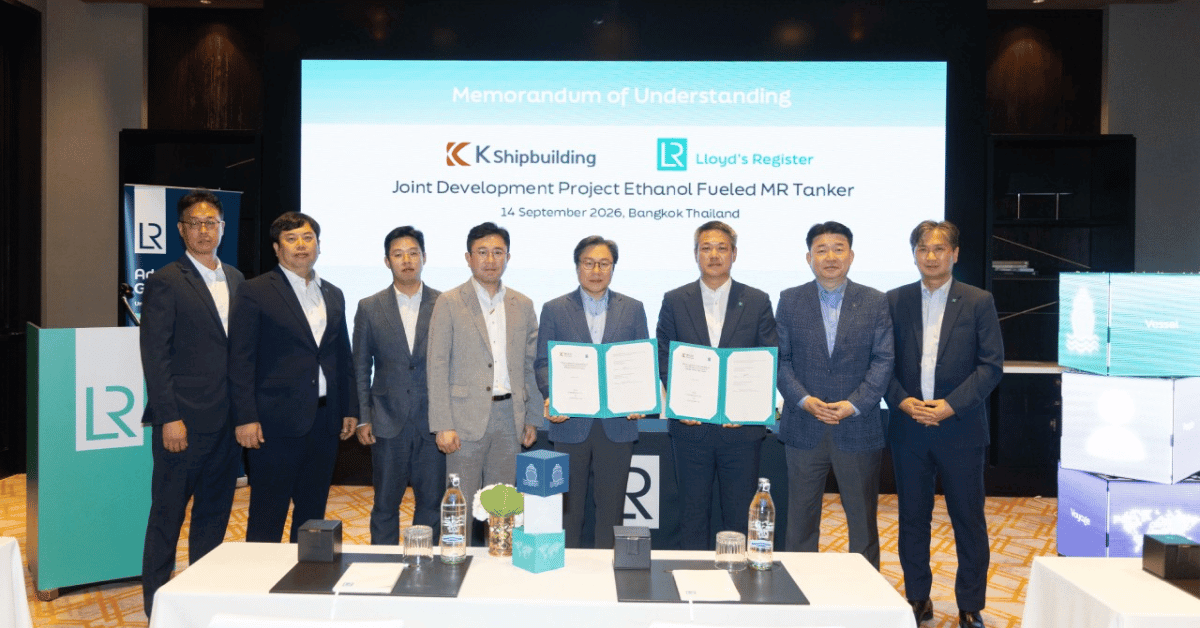
K Shipbuilding and Lloyd’s Register have signed a Memorandum of Understanding to jointly develop a 50,000 dwt, ethanol-fuelled medium-range tanker.
Announced at Gastech 2026 in Bangkok, the joint development project will assess the technical feasibility, safety and regulatory compliance of a new ethanol-fuelled tanker design, with the objective of achieving Approval in Principle (AiP) from LR and creating a commercially competitive vessel concept for the global product tanker market.
LR will undertake technical reviews covering vessel arrangements, stability, structural requirements and fuel tank integration, while K Shipbuilding will lead the vessel design and development programme.
The project will also examine opportunities to optimise vessel design and operational efficiency while ensuring compliance with applicable class rules and international regulations.
Theo Kourmpelis, Global Business Director for tankers, Lloyd’s Register, said: “Ethanol is already a familiar cargo across the product tanker trades, which makes the MR segment a practical place to assess it as a fuel. As ethanol production and seaborne trade continue to develop, owners active in these trades are well placed to connect its role as a cargo with its use onboard.
“This project will give owners a clearer basis for evaluating ethanol within their fleet strategies, and help lay the groundwork for its broader uptake across the tanker sector.”
Andy McKeran, Chief Growth Officer, Lloyd’s Register, said: “Shipping’s energy transition is unlikely to be delivered through a single fuel solution. Shipowners are increasingly looking at a range of fuel options and want confidence that emerging technologies can be implemented safely, efficiently and in compliance with evolving regulations.
“This project will help deepen industry understanding of ethanol’s potential in the tanker sector and provide owners with greater insight into how alternative fuel solutions can be incorporated into commercially viable vessel designs.”
Tae-Hyun Koh, Chief Technology Officer, K Shipbuilding, said: “We see growing interest in fuel flexibility as shipowners make long-term investment decisions in an increasingly complex regulatory environment. Through this collaboration with Lloyd’s Register, we aim to develop a practical and competitive ethanol-fuelled MR tanker design that addresses both operational and market requirements.”
Press Release
Read on the original site
Open the publisher's page for the full experience