Iran Claims Attacks On 10 Ships Near Strait Of Hormuz After US Sinks 5 Iranian Tankers
Our take
The recent claims of attacks on ten ships near the Strait of Hormuz, following the reported sinking of five Iranian tankers by the United States, represent a significant escalation of tensions in a strategically vital waterway. This volatile situation demands careful scrutiny, particularly given the region’s history of maritime incidents and its critical role in global energy transport. The Strait of Hormuz, a narrow chokepoint, sees approximately 30% of the world’s seaborne oil pass through it daily, making it a crucial artery for global energy markets. The interplay of geopolitical maneuvering, accusations of escalating actions, and the potential for miscalculation underscores the fragility of the current environment. This echoes earlier warnings, such as [Iran Warns Tanker Crews At Kuwait, Bahrain Ports To Abandon Ships Immediately, Threatening To Target Them], highlighting a pattern of increasingly assertive actions by Iran aimed at disrupting maritime traffic. The seizure of a U.S. unmanned submarine by Iran, as detailed in [Iran Says It Captured U.S. Military’s Most Modern Unmanned Submarine In Strait Of Hormuz], further illustrates the complex dynamics at play and the increasing prevalence of asymmetric warfare tactics in the region.
The reported attacks, if verified, would have far-reaching consequences, impacting insurance rates, shipping routes, and potentially disrupting the flow of oil, leading to price volatility. The lack of independent verification for both the Iranian claims and the U.S. actions complicates the situation. It’s imperative to consider the potential for disinformation or propaganda being utilized to advance specific agendas. The broader context of regional power struggles, including the ongoing conflict in Ukraine and the shifting alliances between nations, must also be factored into any assessment. The recent case of [Norway Helps 69 Russians Stranded In Arctic After Ship Arrest On Ukraine’s Request] demonstrates the wider impact of international sanctions and legal actions on maritime operations, a parallel that highlights the interconnectedness of global trade and geopolitical events. The immediate concern is the safety of seafarers operating in the area and the potential for further escalation if these accusations and counter-accusations remain unaddressed.
Beyond the immediate security implications, this situation underscores the critical need for enhanced maritime domain awareness and data-driven decision-making. Real-time, validated data on vessel movements, environmental conditions, and potential threats is essential for mitigating risks and ensuring the safe passage of ships. Integrated data ecosystems, combining satellite imagery, sensor networks, and artificial intelligence, can provide a more comprehensive picture of the maritime environment, enabling proactive responses to emerging threats. The ability to calibrate predictive models using longitudinal data is paramount for anticipating potential flashpoints and implementing preventative measures. Peer-reviewed research on maritime security trends and climate indicators impacting the region can further inform policy decisions and resource allocation. Ocean intelligence, derived from a calibrated and integrated data ecosystem, becomes increasingly vital in navigating such complex and volatile scenarios.
Looking ahead, the stability of the Strait of Hormuz, and indeed the broader Persian Gulf, hinges on de-escalation and renewed diplomatic efforts. The risk of accidental conflict remains high, and the potential for wider regional instability is palpable. The long-term implications for global energy security and maritime trade are significant. The question now is whether the international community can facilitate a constructive dialogue to address the underlying tensions and establish a framework for sustainable maritime security in this strategically critical region, or if we are destined for a protracted period of heightened risk and uncertainty.
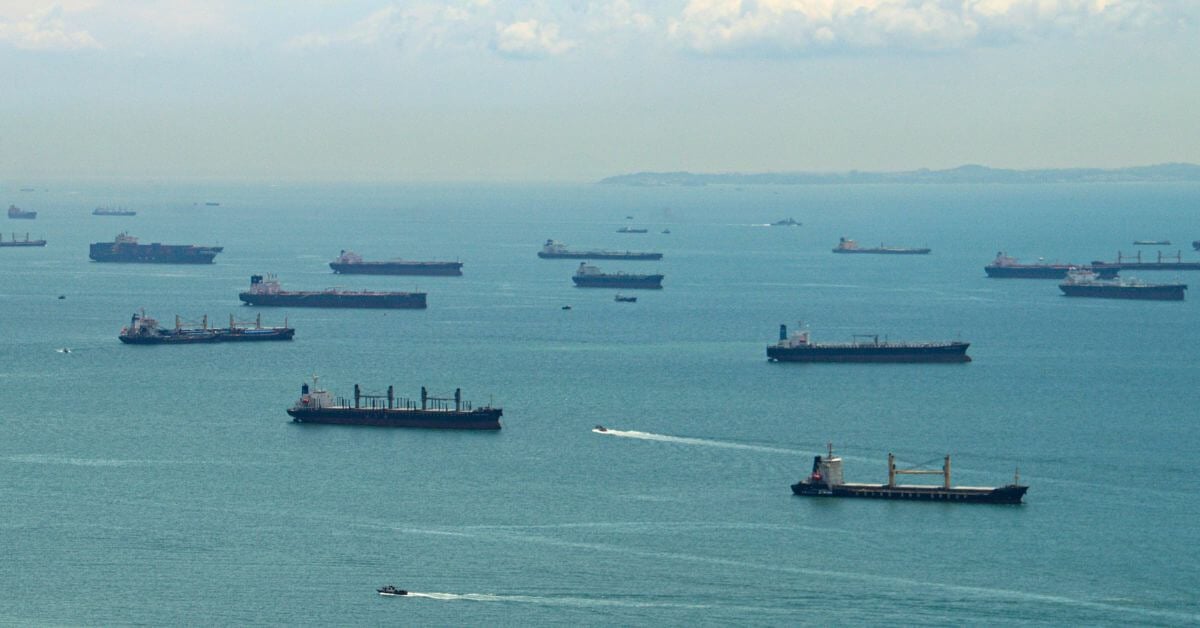
Iran has claimed that it has attacked 10 ships near the strategic Strait of Hormuz after the United States sank five Iranian oil tankers.
Several merchant ships were also reported to have been hit in the northern Gulf and Gulf of Oman, on both sides of the Strait of Hormuz.
Iran said it fired on 2 US ships and 8 oil tankers in response to the US strikes.
The US strikes were in retaliation for Iran’s Islamic Revolutionary Guard Corps attack on a US Navy warship twice over two days.
The warship successfully avoided both the attacks and no personnel were injured, CENTCOM said.
The US then struck and destroyed five Iranian oil tankers namely, M/T Charminar, M/T Kaviz, M/T Riesco, and M/T Horizon 1 in the Gulf of Oman, and M/T Derya near Kharg Island.
The US military released a video showing the tankers on fire before they sank.
CENTCOM forces destroyed five Iranian crude oil carriers, Sept. 8, after the Islamic Revolutionary Guard Corps (IRGC) targeted a U.S. Navy warship with ballistic missiles twice over the past two days. The U.S. warship successfully evaded the attempted Iranian attacks and… pic.twitter.com/Gi8a2tloN1
— U.S. Central Command (@CENTCOM) September 8, 2026
After the attacks, the US said it is attacking Iranian tankers in response to attacks that threaten its warships. It reported it had struck 10 Iranian tankers over the previous week.
“Iran continues to try to hit U.S. naval ships, and for every time they do that or try to do that, they’re going to lose tankers,” US
Secretary of State Marco Rubio told reporters during a visit to Colombia.
Iran’s Foreign Ministry criticised the US attacks on its tankers and warned that they could lead to further escalation.
Iran added that it had launched ballistic missiles at US forces at the Al-Azraq base in Jordan.
Jordan said it intercepted 18 missiles. The other two landed harmlessly in unpopulated areas. A US official said all American troops were safe.
Iran’s Revolutionary Guard said it would step up its response if more attacks took place. It also said Iran would soon publish maps of a larger restricted sea zone reaching as far as Chabahar, near Pakistan.
References: theguardian, Reuters
Read on the original site
Open the publisher's page for the full experience