Indian Navy Receives First Indigenous Multi-Purpose Vessel ‘Samarthak’
Our take
The commissioning of the ‘Samarthak,’ India’s first indigenous multi-purpose vessel, represents a significant advancement in the Indian Navy’s operational capabilities and underscores a growing trend towards adaptable, modular naval assets. This vessel’s ability to launch and recover various aerial, surface, and underwater targets for training exercises directly addresses the need for realistic and cost-effective combat simulations. The development aligns with broader efforts to reduce reliance on foreign suppliers and bolster domestic defense manufacturing, a strategy increasingly vital in a shifting geopolitical landscape. The focus on indigenous development is further exemplified by the India & UK To Jointly Develop Full Electric Propulsion Tech For 4 Large Indian Naval Platforms initiative, highlighting a commitment to integrating cutting-edge, sustainable propulsion systems into future naval platforms. Furthermore, the ongoing efforts to ensure the safe transit of merchant vessels, as demonstrated in the Indian Navy Monitors Safe Transit Of 2 Merchant Ships Through Bab-el-Mandeb Strait, underscore the Navy’s expanded role in regional security and maritime domain awareness.
The ‘Samarthak’ isn’t simply a training platform; its modular design allows for adaptability to a wide range of scenarios, providing a versatile asset for both offensive and defensive operations. The capacity to deploy and recover underwater targets, in particular, speaks to the growing importance of anti-submarine warfare (ASW) in modern naval strategy. Given the increasing sophistication of underwater threats and the critical role of the Indian Ocean in global trade routes, strengthening ASW capabilities is a strategic imperative. This capability also complements recent advancements in unmanned systems, as exemplified by the ZeroUSV Demonstrates World-First Autonomous Deployment Of Multiple Surface Drones From A USV, showcasing India’s interest in leveraging autonomous assets to enhance maritime surveillance and operational effectiveness. The integration of such systems with a vessel like ‘Samarthak’ will significantly expand the reach and responsiveness of naval forces.
The shift towards multi-purpose vessels reflects a broader paradigm shift within modern navies worldwide. Traditional, specialized vessels are increasingly being replaced by platforms capable of performing a wider range of missions, optimizing resource allocation and enhancing operational flexibility. The ‘Samarthak’ exemplifies this trend, moving away from single-purpose assets towards a more integrated and adaptable naval force. This approach is particularly relevant for nations like India, which face diverse maritime challenges ranging from piracy and terrorism to natural disasters and protecting vital sea lanes. The validated performance of this vessel will undoubtedly influence future naval acquisitions and design philosophies, potentially serving as a model for other nations seeking to enhance their maritime capabilities with cost-effective, adaptable platforms. The emphasis on indigenous development further strengthens India’s position as a significant player in the global defense industry.
Looking ahead, the real-time data generated from ‘Samarthak’s’ operations, particularly concerning target engagement and system performance, will be invaluable for refining training methodologies and optimizing future naval designs. A crucial question to monitor is how effectively the Indian Navy will integrate the data collected from ‘Samarthak’ and similar platforms into its broader ocean intelligence framework. The ability to leverage this data—calibrated against empirical evidence—to inform strategic decision-making and enhance operational readiness will be a key indicator of the vessel’s long-term impact and the Navy's overall commitment to data-driven ocean stewardship.
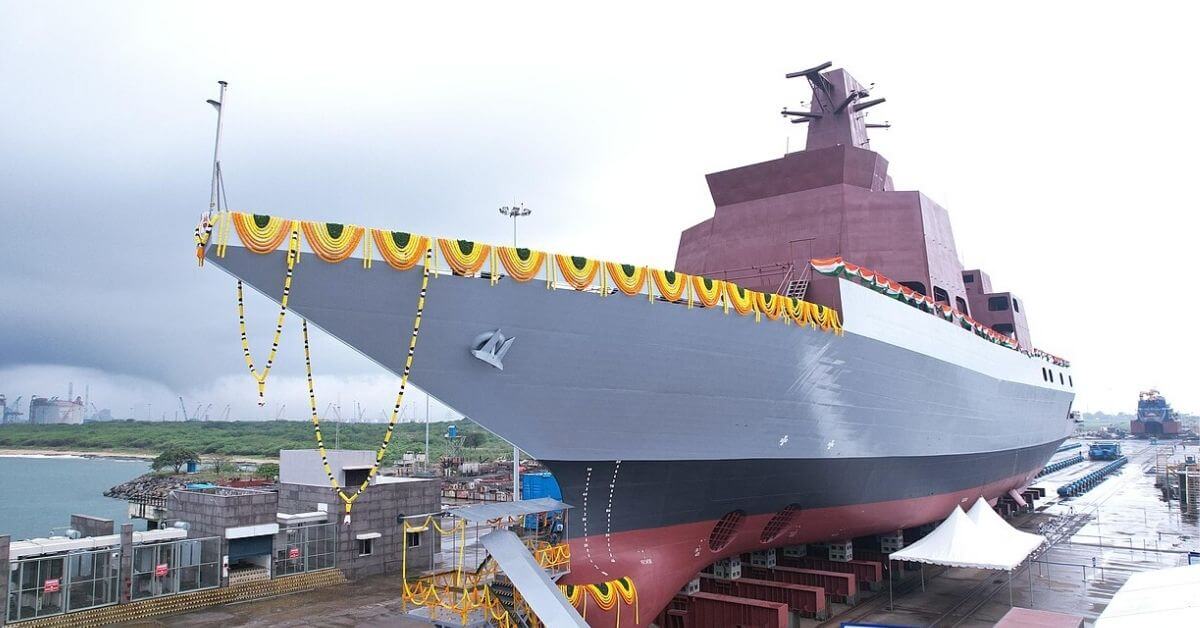
The Indian Navy has taken delivery of Samarthak, its first locally built Multi-Purpose Vessel (MPV), constructed by Larsen & Toubro (L&T) at its Kattupalli shipyard near Chennai.
The vessel was delivered on Thursday, Aug. 27. More than 75% of the vessel’s components are made in India. It will mainly be used to test and evaluate new naval weapons, sensors and other systems.
The vessel can also be used to monitor and survey maritime areas, carry out patrols offshore, and assist in humanitarian and disaster relief missions.
Samarthak has a displacement of more than 3,750 tonnes and can reach a maximum speed of 15 knots. It is about 107 metres long and 18.6 metres wide.
The vessel can launch and recover different types of aerial, surface and underwater targets for gunnery and anti-submarine warfare exercises.
It can also operate autonomous, remote-controlled and unmanned surface and aerial vehicles.
Samarthak can launch and recover torpedoes and tow other ships. It can also handle heavy-lift work, salvage operations and sea pollution.
The vessel can support logistics missions to India’s island territories and humanitarian operations. It also has limited hospital facilities.
Samarthak was built under an ₹887 crore “Buy (Indian)” contract signed by the Ministry of Defence and L&T on March 25, 2022.
The vessel was initially scheduled to be delivered in May 2025, but the delivery timeline was later changed.
The ship was launched at Kattupalli on Oct. 14, 2024. Admiral Dinesh K. Tripathi, who was then Chief of Naval Staff, presided over the launch ceremony.
Samarthak is the first of two Multi-Purpose Vessels ordered under the contract. The second vessel, INS Utkarsh, was launched on Jan. 14, 2025.
It is currently undergoing tests and sea trials before being handed over to the Navy.
The name Samarthak means “The Proponent”. The Navy said the name represents Samarthak’s role in different missions.
The Ministry of Defence said the vessel will support India’s domestic defence industry. The Navy has not yet announced its commissioning date.
References: ddindia, idrw
Read on the original site
Open the publisher's page for the full experience