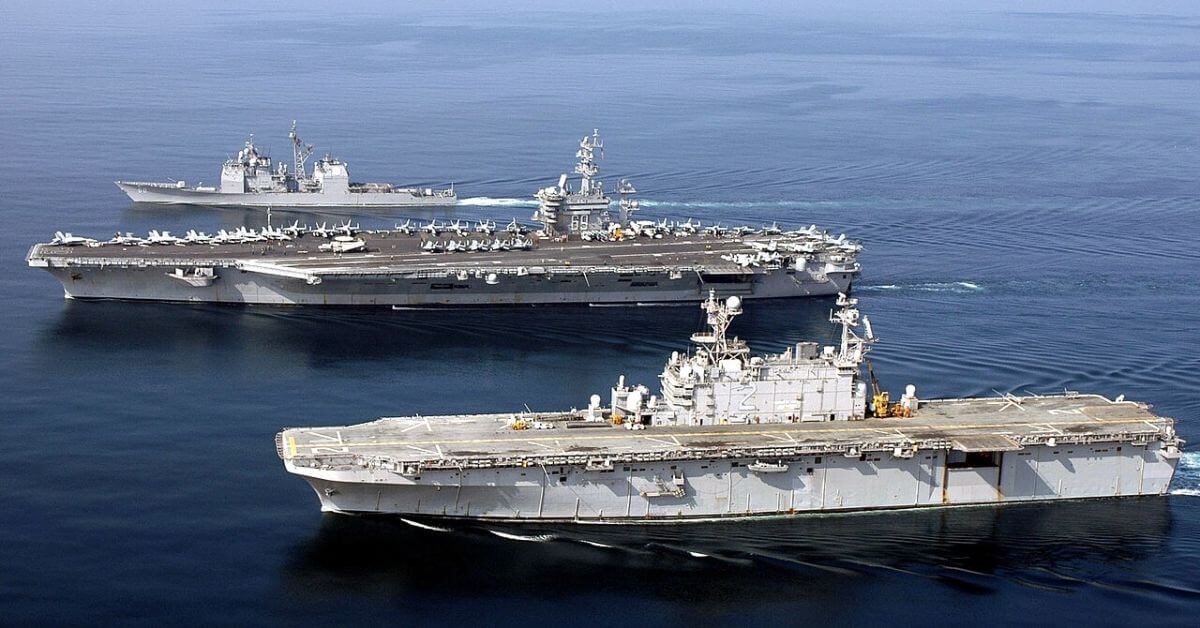
The USS Dwight D. Eisenhower's recent incident during carrier recovery operations, injuring four sailors, is a stark reminder that even the most advanced naval platforms remain vulnerable to the hazards of high-tempo flight operations. While the Navy has not yet released the specific cause, the event underscores a fundamental truth for the fleet: human factors and mechanical reliability must evolve in lockstep with strategic ambition. This is not a call for alarm, but for calibrated scrutiny of the systems and procedures that govern carrier aviation.
The injury report arrives alongside two significant Navy developments that, together, frame the stakes. The service is actively accelerating autonomous systems integration for enhanced maritime operations, creating a new center to embed robotic and autonomous capabilities into daily operations. Meanwhile, the W93/Mk7 nuclear warhead programme advances to engineering and manufacturing phase, signaling a long-term commitment to strategic deterrence. These parallel tracks, automation and nuclear modernization, demand that the Navy's most complex human-machine interfaces, like carrier flight decks, are both validated and resilient. A mishap during recovery operations is not an isolated safety report; it is a measurable data point on the risk profile of the integrated systems the service is betting on.
For our readers, researchers, policymakers, and naval analysts, the practical takeaway is this: the Navy's push toward autonomous systems does not eliminate the need for empirical, longitudinal safety data on current operations. The new autonomous integration center must draw directly from lessons learned during incidents like the Eisenhower's. Without a feedback loop that treats every injury or near-miss as a calibrated input for system design, the transition to higher automation risks repeating avoidable errors. The carrier fleet is a living laboratory for human-machine teaming, and this incident is a real-time indicator that the laboratory demands rigorous, peer-reviewed attention.
What to watch next: the Navy's investigation report, when released, should specify whether the recovery mishap involved a mechanical failure, a procedural gap, or a human error that could be mitigated by the autonomous systems now being developed. If the root cause points to a limitation in situational awareness during high-stress deck operations, it would validate the integration center's mandate, and accelerate its timeline. If it points to a hardware flaw, it will test the service's willingness to pause and recalibrate rather than push forward on schedule. The fleet's ability to turn this incident into measurable improvement, not just a memo, will determine whether the next generation of carriers and their autonomous counterparts are genuinely safer than the ones operating today.