Gray whales are entering San Francisco Bay and many aren’t surviving
Our take
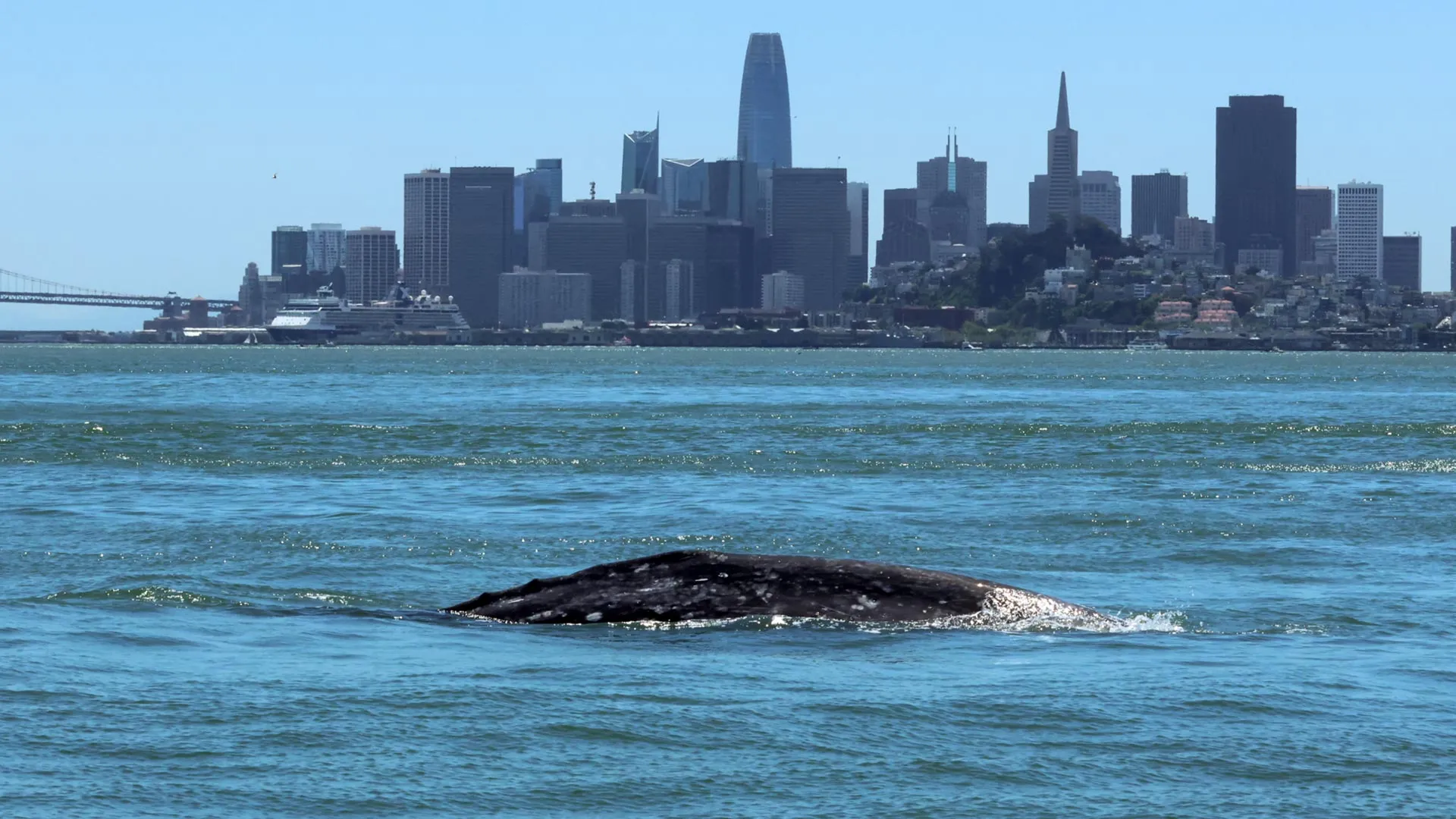
The migration patterns of gray whales have long been a testament to the resilience and adaptability of nature. However, recent observations reveal a troubling trend: these majestic creatures are venturing into increasingly perilous territories, such as San Francisco Bay. As climate change disrupts their Arctic food supply, gray whales are forced to alter their routes, leading them into crowded waters where the risks of ship strikes are alarmingly high. In fact, nearly one in five whales that enter the Bay do not survive, raising urgent questions about the implications of these shifts for both the whales and the ecosystems they inhabit. This situation is outlined in detail in articles like For gray whales, San Francisco Bay is becoming a deadly pit stop and Gray whales (Eschrichtius robustus) in San Francisco Bay experience high mortality and have limited affiliation to known foraging groups, which explore how these shifts in behavior signal broader ecological changes.
The fact that gray whales are adapting their migration routes in response to changing environmental conditions is not just a story of survival; it is a stark reminder of the profound effects of climate change on marine biodiversity. The disruption of the whales' traditional feeding grounds in the Arctic illustrates a cascading impact on the entire marine food web, where the loss of one species can reverberate through the ecosystem. This alteration in migration patterns highlights a critical intersection of environmental science and conservation efforts. It underscores the need for a concerted global response to protect not just the whales, but the intricate web of life that depends on healthy oceanic systems.
Moreover, the high mortality rate associated with these new migration routes raises important questions about the effectiveness of current marine traffic regulations and the potential need for more stringent protective measures. As the waters become busier with vessels navigating the bustling Bay, it becomes increasingly essential to consider how human activity intersects with wildlife conservation. The tragic fate of these whales serves as a poignant call to action for policymakers and marine stakeholders alike. We must ask ourselves: what can be done to mitigate these risks? Improved navigation protocols, speed restrictions in critical habitats, and increased public awareness about marine wildlife could play vital roles in safeguarding these creatures during their vulnerable migrations.
As we reflect on the plight of gray whales, we must also recognize the broader implications of their struggles. The challenges they face are indicative of the urgent need for comprehensive climate action and marine stewardship. Understanding these dynamics not only enriches our knowledge of marine ecosystems but also emphasizes our responsibility in preserving them. As we look to the future, it is imperative that we engage in a dialogue about sustainable practices that harmonize human activity with the needs of marine life. How can we ensure that technological advancements in shipping and navigation do not come at the expense of our ocean's inhabitants? This is a question worth pondering, as the fate of gray whales may very well reflect the health of our oceans as a whole.
Read on the original site
Open the publisher's page for the full experience
Related Articles
- For gray whales, San Francisco Bay is becoming a deadly pit stopClimate change could be forcing gray whales to seek food in San Francisco Bay, where vessel strikes may be driving rising deaths.
- Gray whales (Eschrichtius robustus) in San Francisco Bay experience high mortality and have limited affiliation to known foraging groupsTerrestrial and marine species are exhibiting distributional shifts due to climate change and resource availability. As food webs are impacted, some species have moved into areas of increased human activity, encountering anthropogenic hazards. A coastal marine species that undertakes a long migration between breeding and foraging ranges, the Eastern North Pacific (ENP) population of gray whales (Eschrichtius robustus) is especially vulnerable to changes. Subgroups of ENP gray whales, including the Pacific Coast Feeding Group and the (Puget) Sounders, have adapted to exploit alternative feeding grounds as prey availability declines in the Arctic. Novel to known migration phenology, gray whales have been observed seasonally since 2018 in San Francisco Bay (SF Bay), California. We evaluated subgroup identity and mortality of gray whales in SF Bay from 2018–2025 using photo-identification. Data were collected through vessel-based surveys, opportunistic effort, and community submissions. We identified 114 individual whales of which eight were matched to a subgroup, indicating gray whales utilizing SF Bay are not merely a range extension by foraging subgroups. Only four gray whales were resighted within SF Bay between years. Using photographs, 21 individuals were successfully matched to carcasses and a minimum mortality rate of 18% was determined. Blunt and/or sharp force trauma consistent with vessel strike was determined to be the cause of death for 30 of 70 carcasses, and for nine of 11 matched animals where a cause of death was determined. Sounder and PCFG matched whales were more likely to survive SF Bay than ENP individuals, though minimum length of stay did not influence mortality. This work confirms that gray whales entering SF Bay are highly susceptible to vessel strike mortality and highlights a crucial need to identify and implement adaptive management strategies to mitigate injuries and mortality as whales continue to utilize novel habitat.