DP World Names Its First Methanol Dual-Fuel Vessel ‘DP World London’
Our take
The maritime sector’s ongoing transition toward decarbonization continues to gain momentum, exemplified by DP World’s recent naming of the *DP World London*, its first methanol dual-fuel vessel. This development, while perhaps not revolutionary in isolation, represents a significant step forward in the practical application of alternative fuels and aligns with broader industry efforts to reduce greenhouse gas emissions. The shift is particularly relevant given the ongoing challenges within critical maritime routes, as highlighted by the situation impacting thousands of seafarers and ships trapped in the Strait of Hormuz [6,000 Seafarers And 400 Ships Remain Trapped Amid Six Months Of Strait Of Hormuz Uncertainty]. Furthermore, the increasing need for robust climate data collection, even within competitive environments like The Ocean Race, underscores the importance of integrating technological advancements to monitor and understand the ocean’s changing conditions [Sailors competing in The Ocean Race Atlantic will collect climate data from weakening Gulf Stream]. The *DP World London*'s introduction signals a tangible commitment to these evolving realities.
Methanol, as a fuel source, presents a compelling alternative to traditional heavy fuel oil, offering the potential for significantly reduced carbon emissions, particularly when produced from renewable sources. Dual-fuel capabilities are crucial for a pragmatic transition; they allow vessels to operate on both methanol and conventional fuels, providing flexibility and mitigating risks associated with the nascent methanol bunkering infrastructure. DP World’s choice reflects a considered approach, balancing immediate operational needs with a long-term vision for sustainable shipping. This isn’t merely about adopting a new fuel; it’s about integrating this technology into existing operational frameworks and demonstrating its viability at scale. The U.S. Navy's preparation of the USS Theodore Roosevelt for deployment [U.S Navy Prepares Aircraft Carrier USS Theodore Roosevelt For Middle East Deployment To Relieve USS George Washington] also illustrates the wider strategic importance of adaptable and technologically advanced maritime assets, a parallel that underscores the relevance of DP World's investment.
The broader significance of the *DP World London* lies in its demonstration effect. As one of the world's largest port operators, DP World’s adoption of methanol dual-fuel technology sends a strong signal to the industry and its suppliers. It incentivizes investment in methanol production and bunkering infrastructure, accelerating the development of a comprehensive ecosystem required for widespread adoption. The integrated data ecosystem that is becoming central to ocean monitoring and understanding, as championed by organizations like World Data Ocean, relies on such advancements in operational efficiency and technological innovation. This vessel represents a practical application of those principles, providing real-time data on fuel consumption, emissions, and operational performance that can contribute to the broader understanding of maritime sustainability. The longitudinal data generated from its operation will be invaluable for validating models and refining strategies for decarbonizing the shipping industry.
Looking ahead, the key question becomes the pace and scale of methanol adoption across the global shipping fleet. The availability of “green methanol” – produced from renewable sources – remains a critical bottleneck. While the *DP World London* represents a positive step, the true environmental benefit hinges on the widespread availability of sustainably sourced methanol. Furthermore, the broader implications for port infrastructure and supply chain logistics require careful consideration. The integration of methanol bunkering facilities into existing port operations will necessitate significant investment and coordination. Observing the performance and operational data from the *DP World London* and similar vessels in the coming years will be crucial for assessing the long-term viability and scalability of methanol as a cornerstone of a decarbonized maritime future.
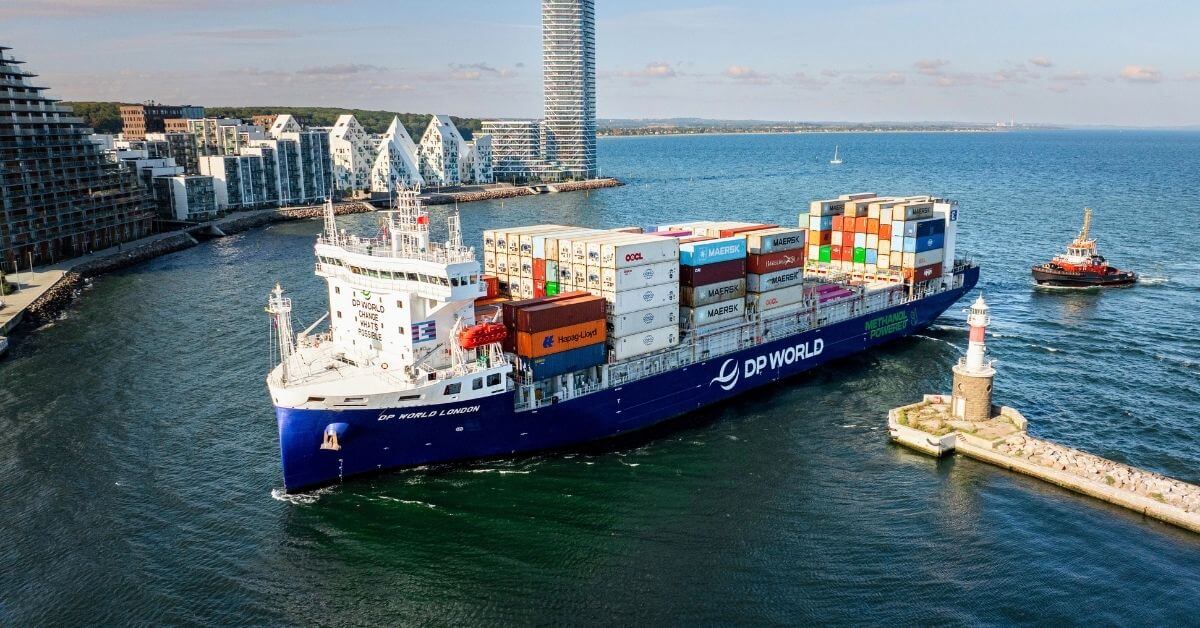
DP World’s Marine Services business, Shipping Solutions (“Shipping Solutions”), has named its new methanol dual-fuel vessel, DP World London, at a ceremony in Aarhus, Denmark, marking a milestone in the company’s investment in more connected, resilient and lower-carbon supply chains.
Shaped by trade, the sea and an outward-looking mindset, Aarhus provides a fitting stage for the introduction of the vessel. The city has long connected businesses and communities in Denmark with markets around the world. The unveiling of DP World London brought together executives, customers, partners, employees, the vessel’s captain and crew, the Mayor of Aarhus and the vessel’s godmother, to honour an important maritime tradition in the city where Shipping Solutions’ journey began.
Founded in Aarhus in 1977 as Unifeeder, DP World’s Shipping Solutions business has grown into a leading feeder and shortsea operator, serving customers across Europe and beyond. Today, it forms part of DP World’s integrated Marine Services portfolio. Naming DP World London in the city where the business began reflects both its heritage and continued investment in fleet modernisation.
Martin Gaard Christiansen, CEO, Shipping Solutions EAM, DP World, said: “This is a proud moment for our Shipping Solutions team. Aarhus is where our story began, and it remains central to our character. Our DNA is about staying close to customers, keeping our word, staying calm in volatile markets and finding practical solutions when conditions change. This dual-fuel vessel reflects both our heritage and the future we are building.”
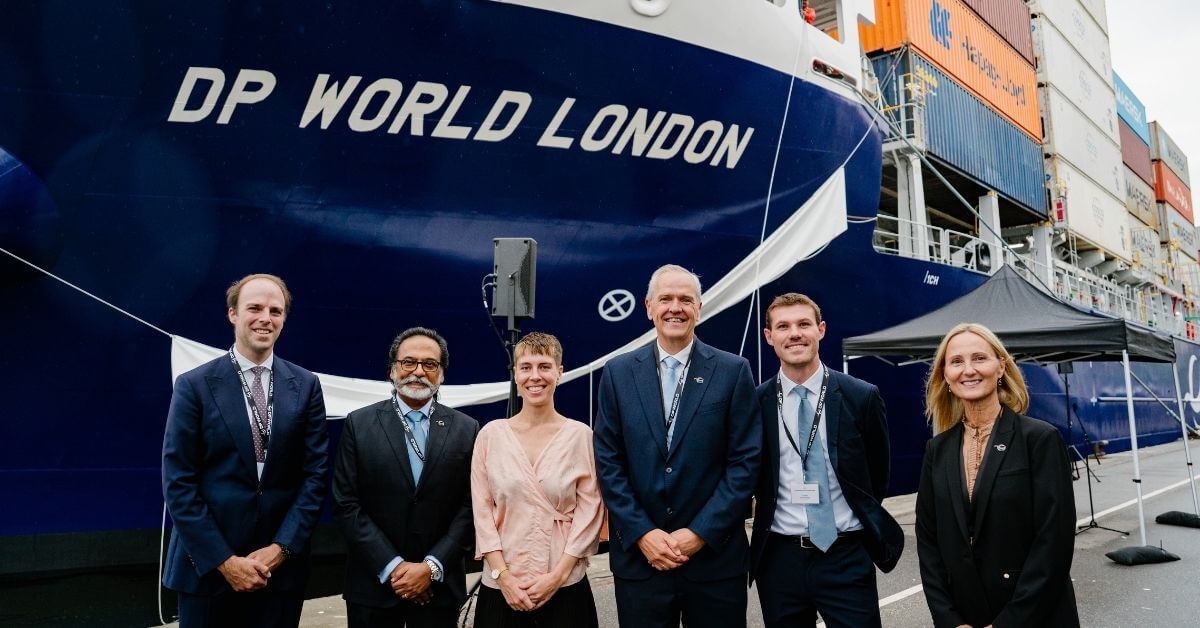
Ganesh Raj, Global Chief Operating Officer, Marine Services, DP World, said: “The future of maritime trade will be shaped by resilience, connectivity and more sustainable transport solutions. This methanol dual-fuel vessel is a tangible example of how DP World is investing in practical innovation to provide customers with more reliable, flexible and lower-emission shipping solutions. It also strengthens our integrated network, reinforcing our ability to deliver seamless supply chain solutions across ports, terminals, marine services, inland logistics and freight forwarding, while helping keep global trade moving.”
The DP World London is a 1,250 TEU container vessel built in China and delivered in April 2026. Owned by Germany’s Elbdeich Reederei and operated by DP World’s Shipping Solutions business, the Portugal-flagged vessel will operate on the North Europe service.
Measuring 148 metres in length, the vessel is equipped with a modern five-cylinder main engine and Exhaust Gas Recirculation (EGR) technology to reduce emissions and support compliance with international environmental standards. It completed its first bunkering in Rotterdam on 25 June 2026 with Unibarge as the bunkering partner and Methanex supplying the methanol.
The naming of DP World London follows the recent introduction of DP World Indus to the company’s coastal shipping fleet in India, demonstrating DP World’s continued investment in its fleet across key trade corridors.
Read on the original site
Open the publisher's page for the full experience