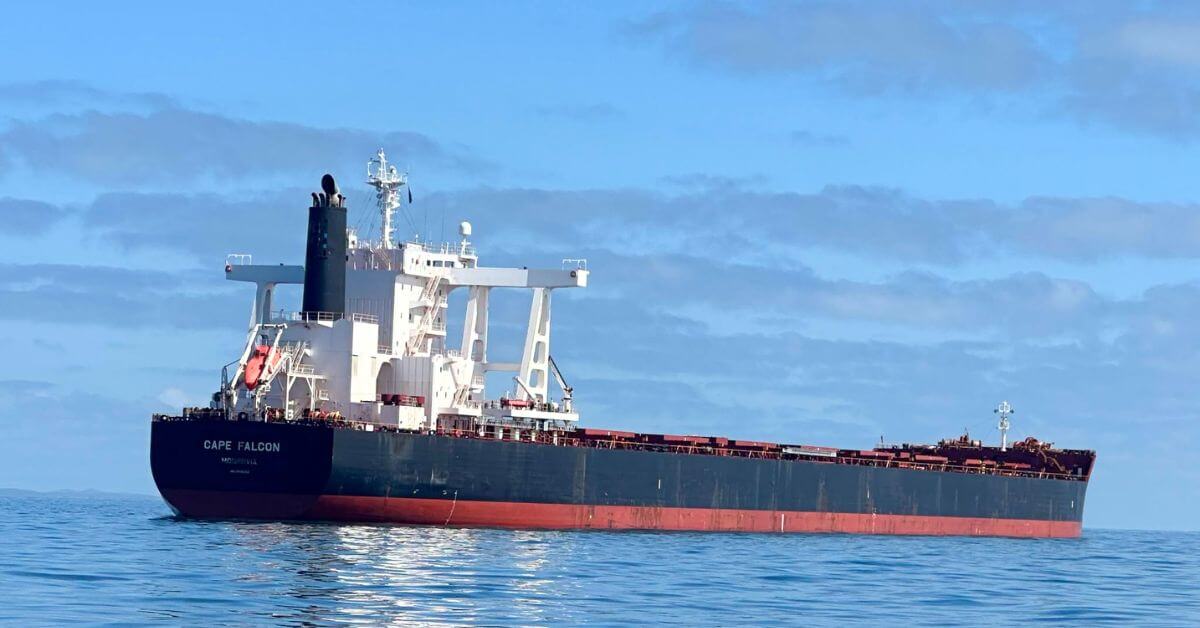
Six days on a charted shoal is a long time for a hull to sit still, and the refloating of the bulk carrier near Gladstone is a quiet piece of operational news with loud implications. Every groundings pulls the same question into focus: how much of the journey is navigation, and how much is simply waiting on the tide? The vessel is free, the port approaches are clear, and the investigation into what held the ship in place will now begin in earnest. For our readers, the practical takeaway is not the successful pull itself, but the reminder that bulk carriers do not operate in a vacuum. They move through a corridor of weather, draft, and human judgment, and any single failure in that chain turns a routine transit into a weeks-long disruption. Compare that with the Cargo Ship Fire Prompts Evacuation Near Mykonos; Incident Under Investigation, where a fire forced all 29 crew off a Greek-flagged vessel in September. One incident ends with a ship refloated; the other ends with an evacuation. Both are measured in hours, but the difference between a grounding and a fire is the difference between a problem you can see and one you can only contain.
Incidents like these cluster in our feed for a reason. The Fatal Attack on Bulk Carrier Near Oman Highlights Maritime Security Risks involved a crew member killed after an attack on the MV Cape Dao, and the Fatal Attack on Cargo Ship Highlights Black Sea Shipping Risks underscores how a regional conflict can turn a flag state into a liability. A grounding near Gladstone is not a security incident, but it shares a common thread with those more violent events: the margin for error at sea is thinner than the public assumes. The ship off Australia was not under threat from a missile or a blaze. It was simply in the wrong place, and it took six days to move it. That is the part worth sitting with. We build vessels that can cross oceans, but we still cannot command a tide to turn on schedule. The practical question for operators and insurers is not whether groundings happen, but what data from the hull will reveal once it is drydocked. Was it bottom contact, anchor drag, or a navigational error? That answer will matter more than the news cycle suggests.
What we would tell a reader who asks about this is straightforward: treat the refloating as the beginning, not the end. The ship is free, but the port's schedule is now a variable, and every hour spent recovering from a grounding is an hour not spent moving iron ore or coal. For those who watch the ocean through a scientific lens, this is a reminder that the integrated data ecosystem we talk about, the real-time monitoring of currents, depth, and traffic, is only as good as the willingness to use it before the keel touches bottom. The takeaway worth quoting is this: a successful refloat is not a successful voyage. It is a repair bill with a weather window attached. Watch for the casualty report, and watch how quickly the next scheduled call at Gladstone returns to normal. The ship has moved on. The question of why it stopped in the first place is still on the table.