Bulgaria To Acquire 7 Minehunters From The Netherlands & Belgium To Demine Black Sea
Our take

The recent agreement between Bulgaria, the Netherlands, and Belgium to transfer seven minehunter ships to Bulgaria represents a tangible escalation of maritime security concerns in the Black Sea. The situation is directly linked to the ongoing conflict in Ukraine, where the deliberate deployment of naval mines has become a recognized tactic. As evidenced by Russia Strikes Ukrainian Ports, Industrial Plants, Storage Sites & Retailers With 258 Drones & Missiles Overnight, Russian military actions have increasingly targeted critical infrastructure, including port facilities essential for grain export. The resultant minefields pose a significant and persistent threat to commercial shipping, impacting global food security and disrupting established trade routes. The backlog of vessels awaiting clearance near the Danube's Sulina Canal, as detailed in Over 70 Ships Await Clearance Near Danube’s Sulina Canal To Load Ukrainian Grain, underscores the immediate and practical consequences of this naval mine threat.
This transfer of minehunters isn't merely a bilateral agreement; it signals a broader pattern of collaborative effort amongst NATO allies to bolster regional security. Bulgaria, bordering the Black Sea, is particularly vulnerable and has been actively seeking to enhance its naval capabilities. The Netherlands and Belgium, possessing advanced minehunting technology and expertise, are contributing significantly to this effort. The deployment of these vessels will provide Bulgaria with a crucial tool to identify, mark, and neutralize mines, facilitating the safe passage of commercial vessels and ultimately easing the bottleneck impacting Ukrainian grain exports. The commitment of littoral states to maintain open shipping lanes, as highlighted in Littoral States Pledge To Keep Straits Of Malacca And Singapore Open For Global Shipping, although focused on a different geographic region, reinforces the global recognition of the importance of secure maritime corridors for international trade and stability. The situation in the Black Sea serves as a stark reminder of the fragility of these corridors and the proactive measures required to safeguard them.
The reliance on specialized minehunting vessels highlights the complexities of modern naval warfare and the evolving nature of maritime threats. These ships are equipped with sophisticated sonar systems and remotely operated vehicles (ROVs) to detect and identify underwater hazards. The process of mine clearance is painstaking and requires highly trained personnel and precise calibration of equipment. Furthermore, the presence of mines creates a long-term operational challenge, as new mines can be deployed and existing ones can be shifted by currents and weather patterns. The integrated data ecosystem needed to monitor these threats effectively requires real-time data from multiple sources, including satellite imagery, hydrographic surveys, and underwater sensors—a concept closely aligned with World Data Ocean’s focus on ocean intelligence. The investment in these capabilities underscores a shift towards a more proactive and data-driven approach to maritime security.
Looking ahead, the effectiveness of Bulgaria's minehunting operations will depend not only on the capabilities of the transferred vessels but also on the integration of these assets into a broader regional maritime security architecture. Longitudinal data collection on mine locations and environmental factors will be essential for developing predictive models and optimizing minehunting strategies. The long-term implications of this conflict on the Black Sea's maritime ecosystem, including the potential impact of mine debris on marine life, remain to be fully understood. A crucial question to watch is whether this collaborative approach to mine countermeasures will be replicated in other regions facing similar maritime security challenges, and how advancements in autonomous underwater vehicle (AUV) technology will reshape the future of mine detection and neutralization.
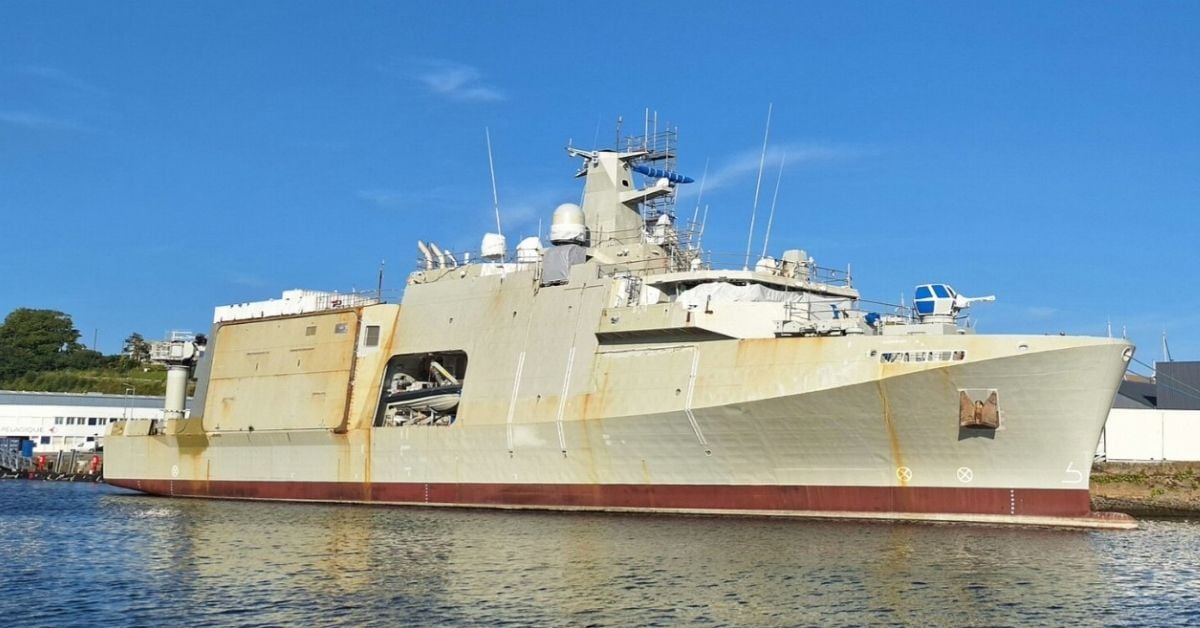
Belgium and the Netherlands will be supplying 7 minehunter ships to Bulgaria as the countries focus on enhancing their joint maritime security capabilities to protect ships in the Black Sea from dangerous naval mines.
The countries also signed a memorandum of understanding to undertake joint crew training, supply additional equipment and spare components for the ships if required.
In a meeting of NATO members held in July, Romania, Turkiye and Bulgaria agreed that a task force combining their forces must be established to clear the Black Sea of floating mines which threaten shipping and critical infrastructure such as pipelines and underwater cables.
The three countries, along with Ukraine, Georgia and Russia, who share the Black Sea and have ports on its coast, founded a task force to de-mine the strategic waterway following the 2022 Russian invasion of Ukraine.
The parliament of Bulgaria approved the sale contract with the Netherlands on Wednesday. Under the agreement, Bulgaria would get 3 vessels capable of destroying mines and mine-like foreign objects.
Another deal was signed between Bulgaria, Belgium and the Netherlands for 4 other mine hunter ships.
Top officials from the Netherlands said the country would ensure that the ships are in perfect condition, along with their onboard systems and equipment, before delivering them to Bulgaria, which would pay for the repairs and restoration so that all 7 ships meet the combat readiness benchmarks of NATO.
Defence Minister of Bulgaria, Dimitar Stoyanov, said that acquiring the mine hunter vessels is especially necessary. He elaborated that the country already has three with the same technical capabilities, and the other seven would further add to its abilities to demine the Black Sea region.
Read on the original site
Open the publisher's page for the full experience