Over 70 Ships Await Clearance Near Danube’s Sulina Canal To Load Ukrainian Grain
Our take

The current congestion near the Sulina Canal, with over 70 vessels awaiting clearance to load Ukrainian grain, underscores the precariousness of global food security and the escalating geopolitical tensions impacting maritime trade routes. This bottleneck, a direct consequence of ongoing conflict, highlights the fragility of established supply chains and the potential for disruption to vital agricultural exports. The situation is further complicated by recent incidents in other critical waterways, such as the Tanker Catches Fire After Being Hit By ‘Unknown Projectile’ In Strait Of Hormuz, demonstrating a broader pattern of instability and potential threats to maritime navigation. Russia’s recent claims of striking vessels and port infrastructure in the Black Sea, as reported in Russia Says It Struck 4 Vessels At Black Sea Port Of Pivdennyi And One At Odesa, amplify these concerns and suggest a deliberate effort to restrict access and disrupt grain shipments.
The Sulina Canal is a critical chokepoint for vessels transiting between the Black Sea and the Mediterranean, representing a vital artery for Ukrainian grain exports. The accumulation of ships signifies not just a logistical challenge, but also a growing economic burden for Ukraine, its trading partners, and ultimately, global consumers. The delayed shipments contribute to price volatility in global grain markets, exacerbating food insecurity in import-dependent nations, particularly in Africa and the Middle East. The extended deployment of the US Navy Aircraft Carrier Abraham Lincoln To Dock In Thailand After Record 200 Days At Sea further contextualizes the strategic importance of maritime security and the ongoing need for robust naval presence to ensure the safety of commercial shipping lanes. This situation necessitates a calibrated response, balancing the need for humanitarian aid with the realities of a complex and potentially dangerous geopolitical landscape.
The implications extend beyond immediate food security concerns. The disruption to grain exports impacts the global economy, influencing commodity prices, agricultural trade flows, and potentially triggering broader inflationary pressures. Furthermore, the increased risk of maritime incidents, as demonstrated by the tanker fire and reported strikes, highlights the vulnerability of critical infrastructure and the need for enhanced maritime domain awareness and security measures. The reliance on a limited number of chokepoints for global trade exposes the inherent fragility of the system and underscores the importance of diversifying supply routes and investing in resilient infrastructure. Validated data on shipping patterns, cargo volumes, and geopolitical risk factors is essential for developing effective mitigation strategies and ensuring the continued flow of essential goods.
Looking ahead, the situation at the Sulina Canal serves as a stark reminder of the interconnectedness of global trade and the potential for conflict to disrupt essential supply chains. The continued instability in the Black Sea region, coupled with ongoing tensions in other key maritime corridors, demands a proactive and data-driven approach to risk management. A critical question is whether alternative export routes can be effectively scaled to compensate for the disruptions, and whether international collaboration can yield a sustainable solution to ensure the unimpeded flow of Ukrainian grain and mitigate the risk of further food security crises. Longitudinal monitoring of maritime traffic patterns, coupled with empirical analysis of geopolitical developments, will be crucial for anticipating future challenges and developing robust response strategies.
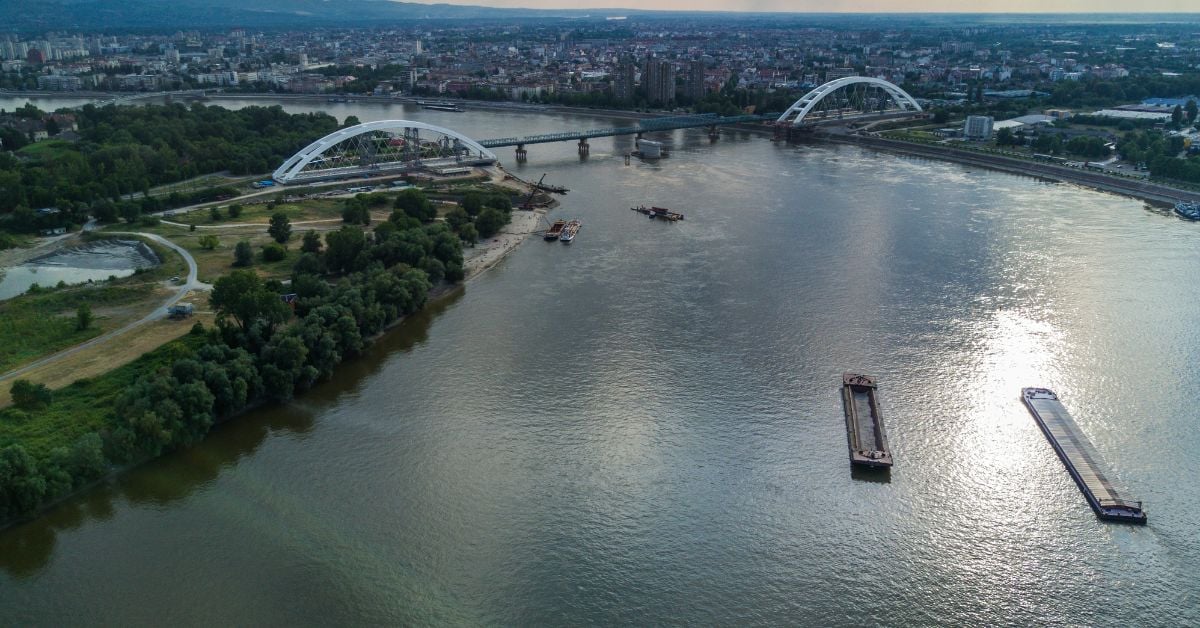
Russian attacks at Ukrainian Ports in the Black Sea have forced shippers to rely on facilities on the Danube for exporting grain.
However, river ports have a limited capacity, so grain shipments are getting delayed since they have to compete with other cargoes, including fuel.
The situation has worsened due to a lack of pilots and frequent suspension of operations due to air raids in the region. According to reports, 70 ships are stuck near the Sulina Canal, waiting to load grain at Ukrainian Ports.
Ukraine is among the largest exporters of grain in the world and its black sea ports handle 90% of this grain, which now has to be rerouted through coastal ports.
Sulina Channel is witnessing a bottleneck of over 50 vessels, with just 5 to 7 moving towards Ukrainian ports on the Danube every day. An extra day adds up to 8000 dollars to the freight rates, an official said.
The congestion could increase in the coming days as recent weather reports predict two days of rough weather, leading to the closure of the channel.
This is not the first time that Ukraine has depended on the Danube ports. When Russia had once blocked the facilities in the Greater Odesa, Kyiv fell back on coastal facilities. Danube ports handled 2.5 metric tonnes in a single month from 2022 till 2023.
Though the current cargo volumes are below the above-mentioned figures, shipments are increasing slowly and could peak if Russia continues its attacks on Ukraine’s seagoing ports.
Volume of grain shipped via the Danube river ports was 11 times more than in July, according to railway operator Ukrzaliznytsia.
The Sulina Channel is a vital waterway on the eastern part of Romania, and connects the Danube River to the Black Sea. It lies at the mouth of the Danube and is its distributary, spanning 71.7 kilometres. It offers a direct route for ships sailing to and from the river to the open seas.
Read on the original site
Open the publisher's page for the full experience